


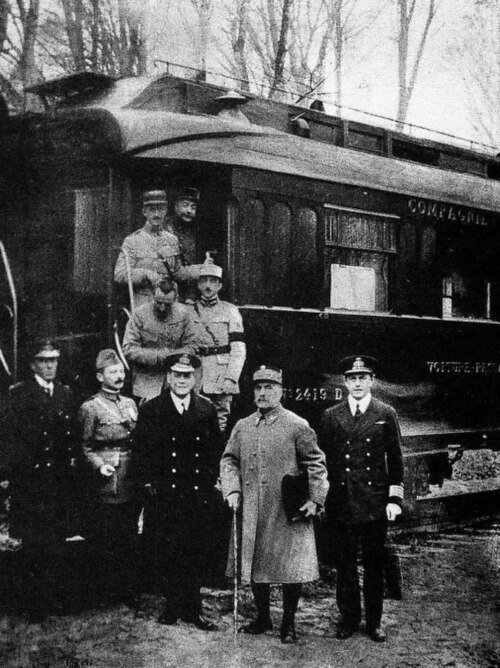
We are inside a railway carriage halted in the woods of Compiègne, in Picardy. It is 5:00 a.m. on November 11, 1918. On one side sits the German plenipotentiary, on the other the Allied powers: with the signing of the Armistice, the fighting of the First World War comes to an end. Among the clauses of the document, however, appears a request that was unusual for the time: the handover of every Fokker D.VII. Why would a single aircraft model end up “at the top of the list of aircraft to be handed over”? To understand that, we need to take a step back. In the early days of aviation, airfoil sections were extremely thin. Thickness was thought to be almost a pointless luxury, something that weighed the structure down without bringing aerodynamic benefits. The thin airfoil theory, formalized by Hermann Glauert in the 1920s, described a wing as a cambered line of zero thickness, capable of generating lift through curvature and angle of attack alone. Within that ideal mathematical framework, thickness did not appear among the causes of lift and was therefore treated mainly as a structural penalty. But the history of aviation is full of moments when practice forces theory to level up. During the First World War, the Dutch aircraft designer Anthony Fokker, working in Germany, began experimenting with thicker wings free of external bracing wires. The real turning point came with the Fokker Dr.I (1917), the triplane flown by the “Red Baron”: a compact fighter that used one of the first truly effective thick airfoils of the modern era, with a relative thickness around 13% of the chord, nearly twice the standard of the time.
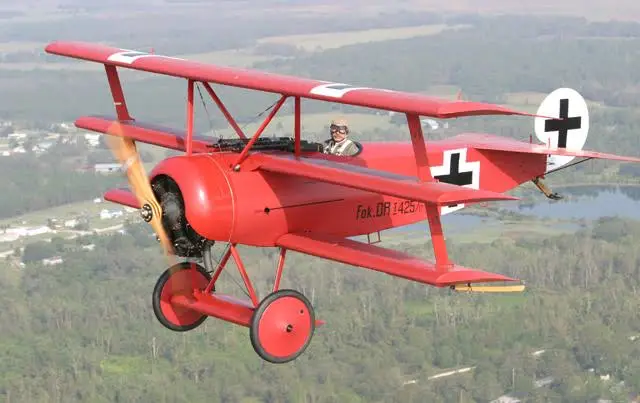
That thick airfoil was not merely “sturdier”: at low speeds, the Dr.I could fly at higher angles of attack without immediately stalling; this translated into exceptionally tight turn radius and superior manoeuvrability. Engineers soon understood why: a thicker wing delays flow separation, allows a higher maximum CL (on the order of ~1.6 versus ~0.8 for many contemporary thin sections), and makes stall’s behaviour gentler and more predictable. Thickness also opened a crucial structural door: a “deeper” wing can house stiffer spars and ribs, which means fewer external wires and struts, the main sources of parasitic drag on traditional biplanes. In short: a thick wing not only lifted more; it also made the aircraft aerodynamically cleaner.
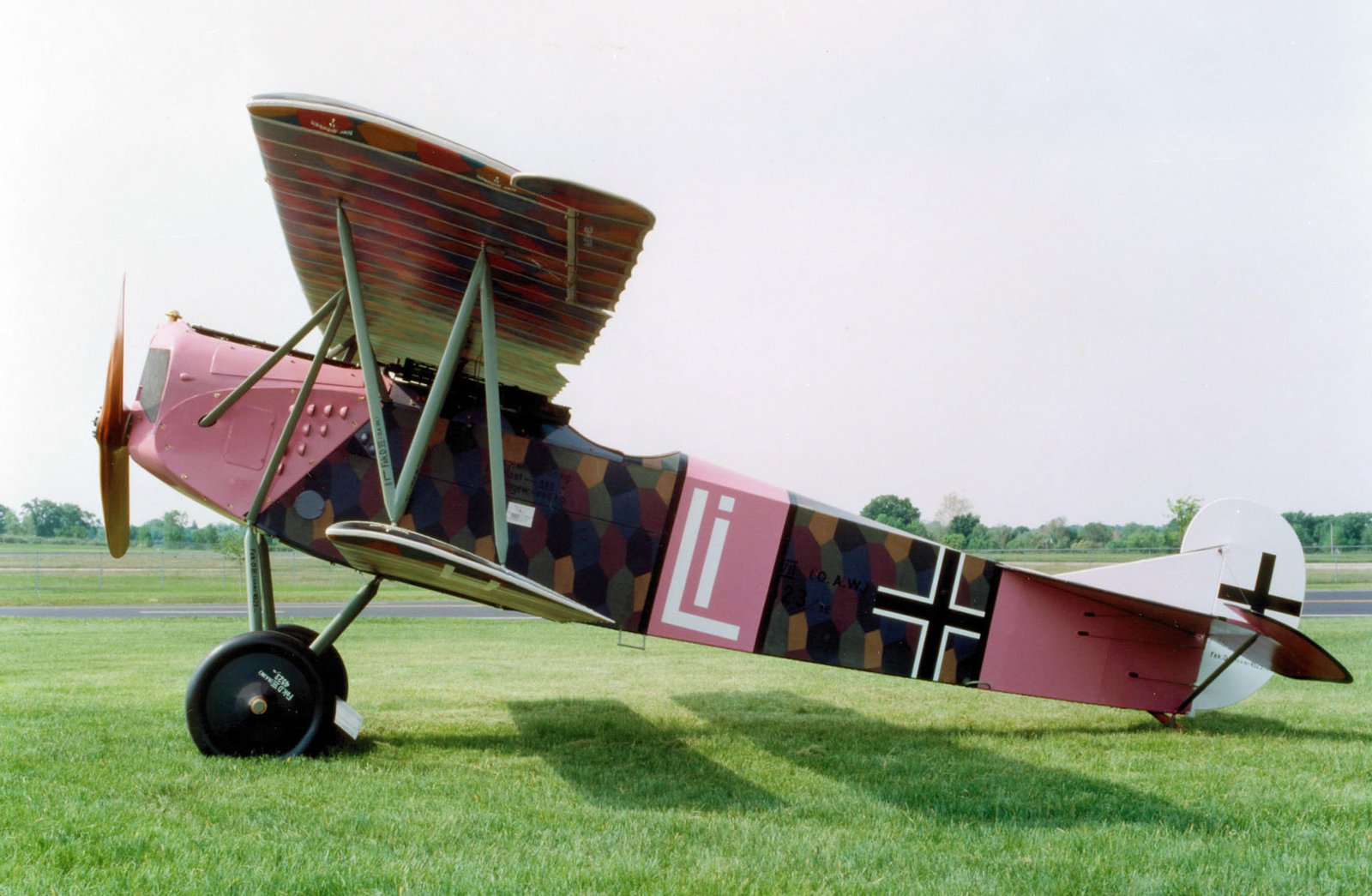
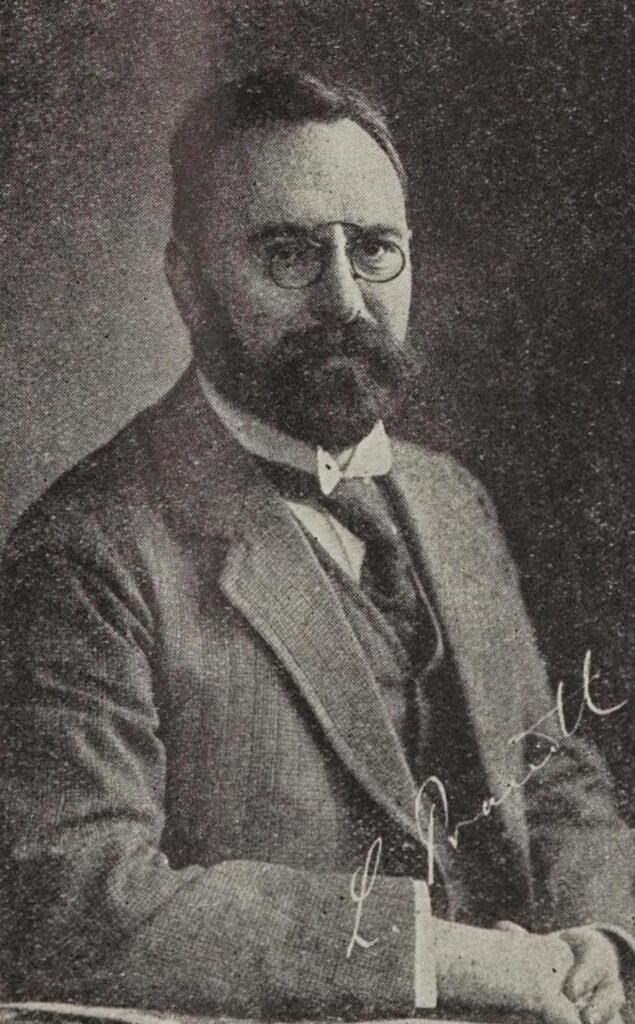
This insight reached full maturity in the Fokker D.VII (look at top picture), a direct evolution of the Dr.I and arguably the best German fighter of the war. The D.VII combined a thick airfoil, a tidier cantilever-like wing structure, and a “forgiving” stall, becoming so feared that it drew the Allies’ political attention. When the Armistice was signed on November 11, 1918, the list of war material to be handed over included a strikingly specific demand: “Firstly all D.VII’s” It is in this climate that Ludwig Prandtl’s laboratories in Göttingen became the gravitational centre of modern aerodynamics. There, for the first time, a systematic wind-tunnel program tested hundreds of real airfoils: no longer wings “imagined” as thin curves, but physical wings with thickness and a real trailing edge. Those experimental campaigns produced the Göttingen airfoil family, the first scientifically catalogued sections and the direct ancestors of the NACA series and modern airfoils.
The shift from thin to thick airfoils was not just a technical upgrade. It was a change of mindset, accelerated by war and then carved into international politics so much that a single aircraft, the D.VII, ended up “first on the list” of aircraft to be handed over. From that moment on, lift would no longer be thought of as the magic of a line in the wind, but as the concrete result of an optimized three-dimensional shape.
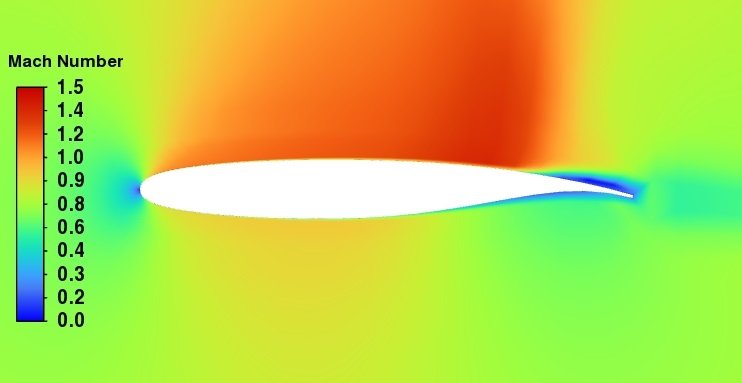
In the 1930s the United States, through the NACA, launched similarly systematic campaigns to understand how thickness, camber, and thickness distribution affect lift, drag, and stall, creating standardized airfoil series (the famous NACA families) that would dominate for decades. Today that thread runs all the way to airfoils designed with CFD and inverse optimization, to supercritical sections on airliners (in the picture), and to laminar-flow wings on the most efficient aircraft: the tools change, but the core idea is the same one born a century ago between wind tunnels and dogfights. The wing is not a line, it is a shape to be carved into the wind.
Sources:
- Terms of the Armistice with Germany, 11 November 1918 (official text of the Compiègne Armistice; clause on the D.VII). U.S. Department of State, FRUS. Storia del Dipartimento di Stato
- Peter Garrison, “Bernoulli or Newton?” AOPA Flight Training Magazine (1998). Popular-science article on the Göttingen 298 airfoil, ~13% thickness, and the maneuvering/structural advantages of the Fokker Dr.I and D.VII. aopa.org
- Michael Eckert, “Ludwig Prandtl and the growth of fluid mechanics in Germany” (2017). Historical-scientific context on the Göttingen school and airfoil cataloguing. ScienceDirect
- TU Delft, “Airfoils” – AE1110x transcript/lecture notes. Historical and technical overview of NACA series and the systematic approach to airfoil research. delftxdownloads.tudelft.nl
- Università di Genova, “Anatomy of airfoils and their performance” (lecture notes). Overview of major airfoil families (Göttingen, NACA, Eppler, supercritical, etc.) and links to modern airfoils. dicat.unige.it