


Introduction
Modern aircraft cabins are carefully controlled to maintain life-sustaining conditions at high altitudes, where environmental control systems supply breathable air.
Although commercial aviation is very safe, rare incidents like fume events have prompted engineering and regulatory discussions about cabin air quality and long-term exposure.
Cabin Air Systems and Bleed Air Architecture
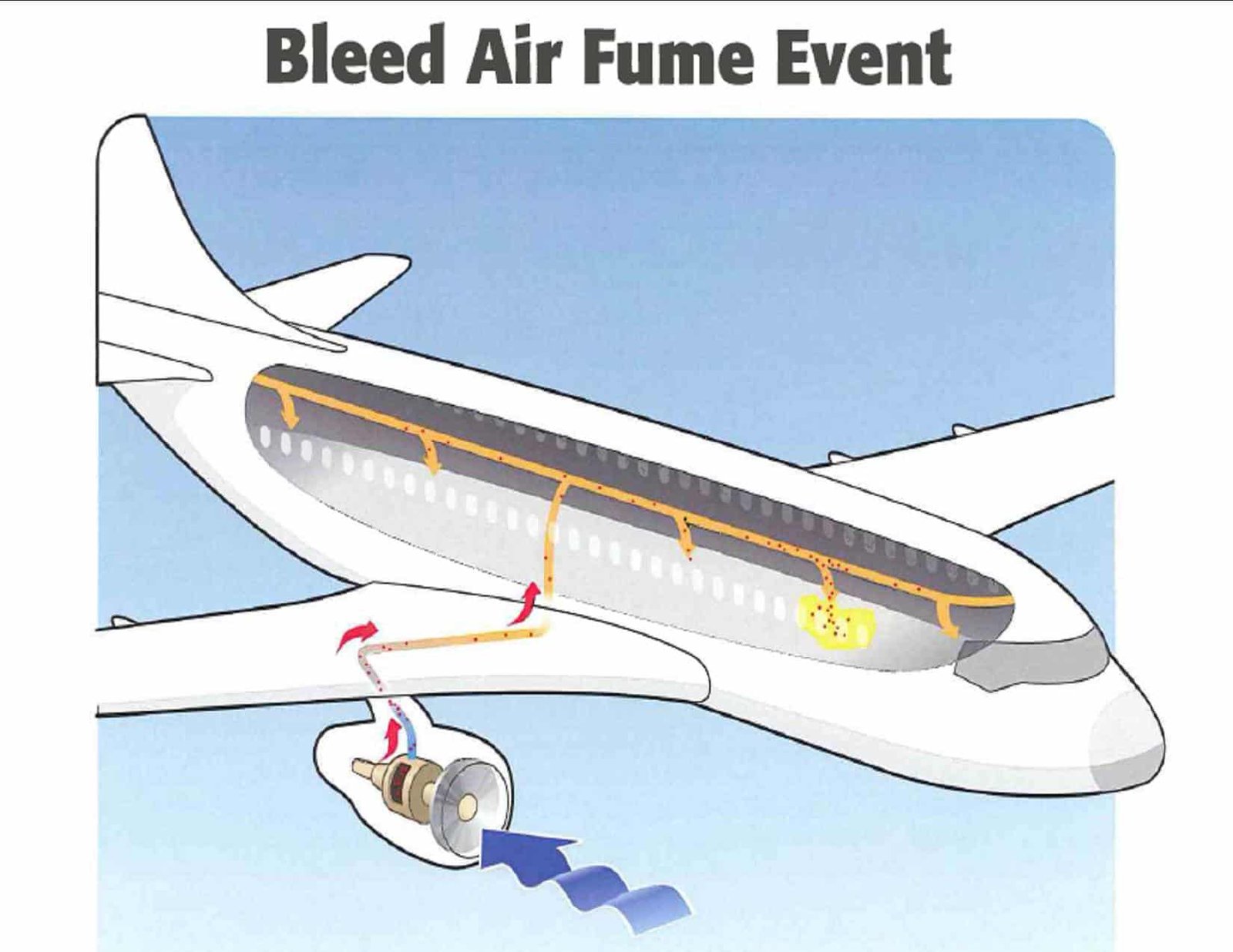
In most conventional commercial aircraft, the cabin air is supplied by the bleed air system. The system extracts the high-pressure air from the compressor stages of the aircraft engines. Afterwards, the air is cooled, conditioned and mixed with the recirculated air. The cabin air is typically refreshed every two to three minutes to ventilate it.
This architecture offers many advantages when it comes to designing an aircraft. It reduces the system’s complexity by using already compressed air, minimises additional weight and integrates efficiently with other onboard systems. However, since the bleed air is taken directly from the engine compressor section, it is not separated from the engine lubrication systems. Instead, it relies on a seal to prevent engine oil from entering the air flow.
What is a Fume Event?
A fume event refers to a situation where contaminants such as engine oil or hydraulic fluid enter the bleed system, thereby being introduced to the cabin and cockpit.
When these fluids are exposed to high temperatures, which is the case in an engine, they undergo thermal decomposition. This process can generate airborne compounds, some of which have been identified as potentially harmful under certain exposure conditions.
Such events are usually associated with the degradation of the seal, transient pressure imbalances or even mechanical wear. Many reports of unusual odours or visible haze have drawn the attention of regulatory authorities and researchers.
Reported Health Effects and Scientific Debate
Most of the reported short-term symptoms include headaches, dizziness, irritation of the eyes and throat or nausea. Currently, the main concern of the crews is the effects it might have in long-term exposure.
The term “aerotoxic syndrome” has been used to describe a range of cognitive and neurological symptoms. However, the medical and scientific community has not reached a universal consensus regarding the long-term effects.
At present, regulatory bodies such as EASA and the FAA continue to review data and sponsor further research in this area.
Engineering and Certification Considerations
When designing an aircraft, engineers must consider multiple variables. Some of those are weight, redundancy, energy efficiency, reliability and maintenance accessibility. Introducing additional filtration systems or real-time contaminant sensors would imply more costs, complexity and potential failure points.
Engineering decisions involve trade-offs across the whole architecture of the aircraft. Bleed systems were adopted not because they were flawless, but because they represented the optimal solution at the time of the design.
The discussion regarding the fume events highlights an essential principle in aerospace engineering: safety is not static. It evolves with operational experience, scientific understanding and technological advance.
Future Developments
Currently, some of the newest aircraft are being designed with a bleedless system, like the Boeing 787. It uses electrically driven compressors instead of engine bleed air to supply the cabin. This design eliminates the direct pathway between the engine lubrication systems and the cabin air supply.
In parallel, seal materials are constantly being improved and the maintenance procedures reinforced. As health and environmental concerns arise, future aircraft designs may incorporate additional mitigation strategies.
Conclusion
Fume events represent a rare yet relevant issue in modern aviation. While current environmental control systems meet established certification standards, it is of high importance to keep improving them. As scientific understanding and technology advance, future aircraft designs may incorporate improved monitoring systems or alternative architectures to reduce risks.
To conclude, this issue reinforces an essential principle: aircraft are not only engineered machines, but controlled environments designed to protect the people within them.