


Introduction
Have you ever wondered what happens to these aircrafts when they are unable to fly after spotting a big commercial jet soaring through the clouds? They don’t simply vanish. Rather, they take a final flight to a particular location. The peaceful, expansive spaces known as airplane boneyards are located far from crowded international airports and hectic baggage claims. These resting places are much more than just metal junkyards. They are useful sources for aviation parts, well-organized storage areas, and sizable recycling facilities. Let’s investigate the fascinating realm of aircraft boneyards.
The Desert
A map of the most famous airplane boneyards in the world will show you that they are primarily located in deserts. The global centre for aircraft storage is the American Southwest, especially Arizona, California, and New Mexico. However, why is that? These are some reasons of that:
- Metal is damaged by moisture. The dry desert air helps keep the aircraft’s structure intact for years or even decades by preventing rust and corrosion.
- The weight of commercial airplanes can reach hundreds of thousands of pounds. They would sink into the mud in a normal field. Facilities can avoid spending millions on paving expansive parking lots because the solid, baked desert ground functions as natural concrete.
- Aircraft requires a lot of space. The vast, empty desert offers cheap, practically infinite space. For these machines, time stands still in the desert. Under the scorching sun, the dry air preserves aviation history like a natural time capsule.
Mothballing, Scrapping and Stripping: The Method
A plane doesn’t simply park itself when it gets to a boneyard. Based on its future, it goes through a meticulous, multi-step process:
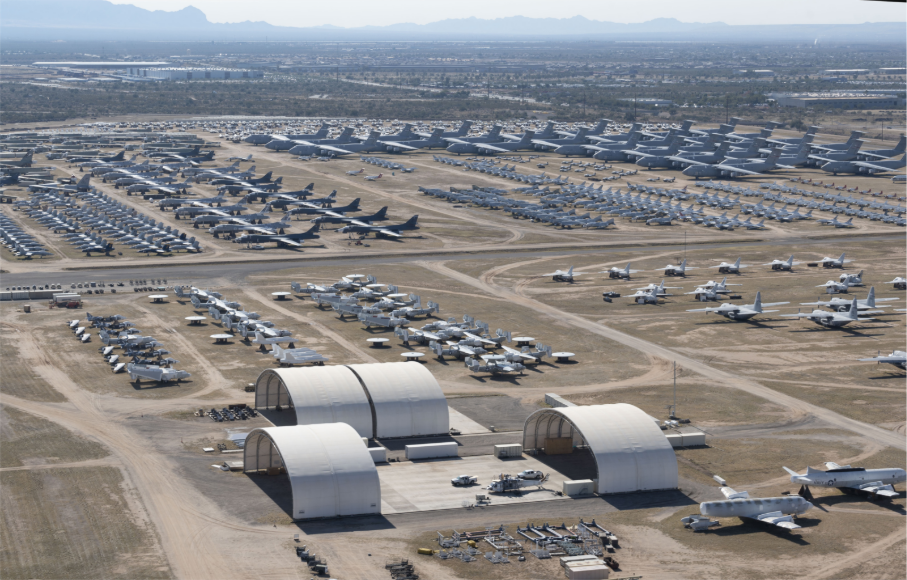
1. Mothballing: Arrival planes are sent to boneyards for short-term storage if an airline closes its doors or if international travel declines (like during the 2020 pandemic).The engines and windows are sealed with a unique white, reflective latex substance known as Spraylat after all hazardous fluids have been drained. This shields the electronics from the sun and keeps the interior cool. These aircraft receive routine maintenance and are prepared to take to the skies if the market requires them.
2. Part Harvesting: An aircraft becomes a supplier of parts if it is permanently retired. Airplanes are expensive, and their components are highly valuable. The aircraft’s most crucial parts are meticulously removed by mechanics. These harvested parts are sold to airlines around the world after being recertified, and they frequently travel millions of miles on other aircraft.
3. The Last Shred: Only the aluminium shell remains after a plane has been fully disassembled. Large industrial shredders and guillotines are brought in at this point. The fuselage is disassembled, melted, and recycled. There could be a piece of a 1990s Boeing 747 in that soda can that you use today!
The Most Well-Known Boneyards
The most well-known boneyards are in the United States, however there are also storage facilities in Spain, Australia, and the United Kingdom.
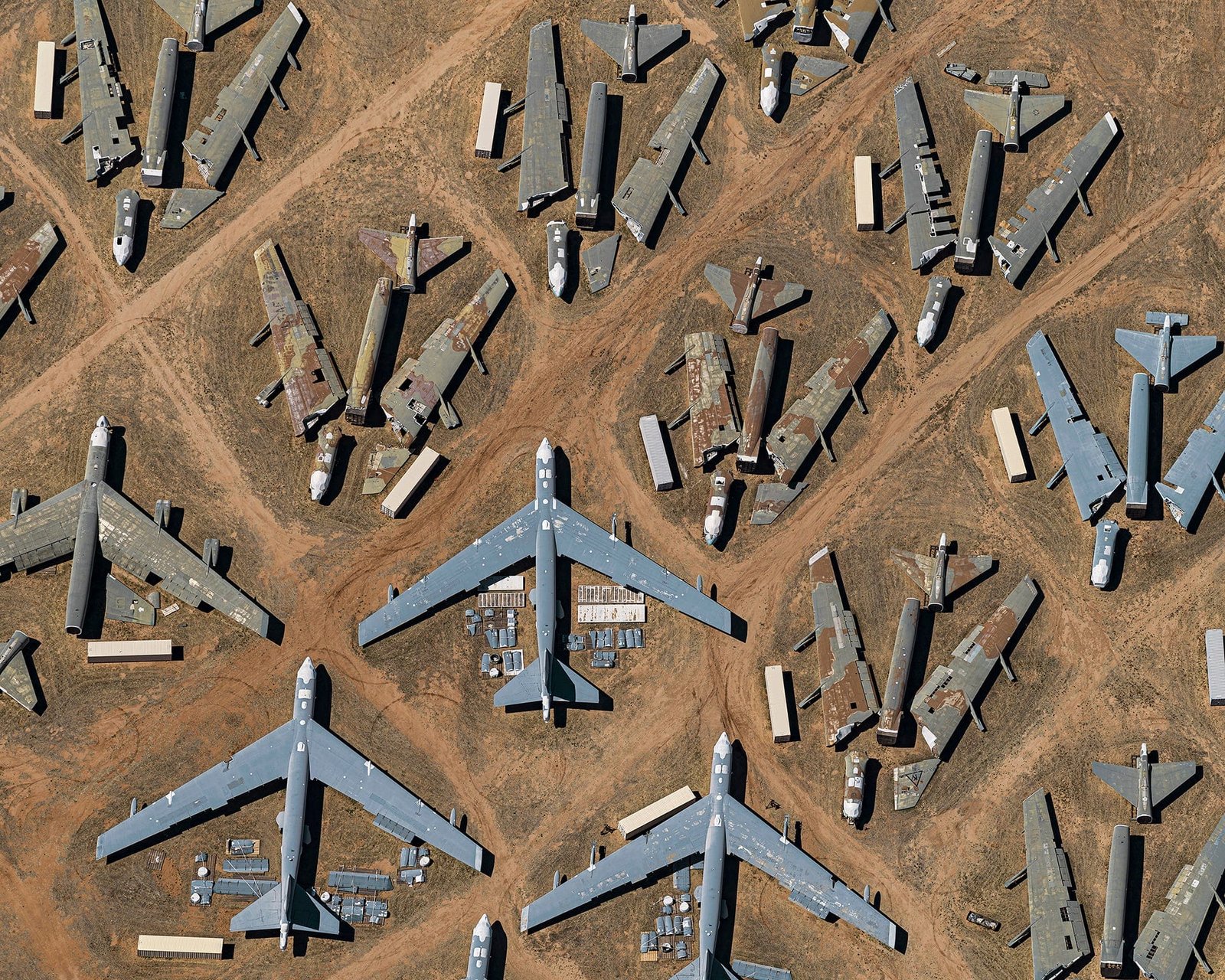
The top boneyard is the 309th Aerospace Maintenance and Regeneration Group (AMARG) at the Davis-Monthan Air Force Base (AMARG), which is situated in Tucson, Arizona. It is more than 2,600 acres in size and can accommodate almost 4,000 military aircraft. The rows of retired jets, and cargo planes make it visually arresting.
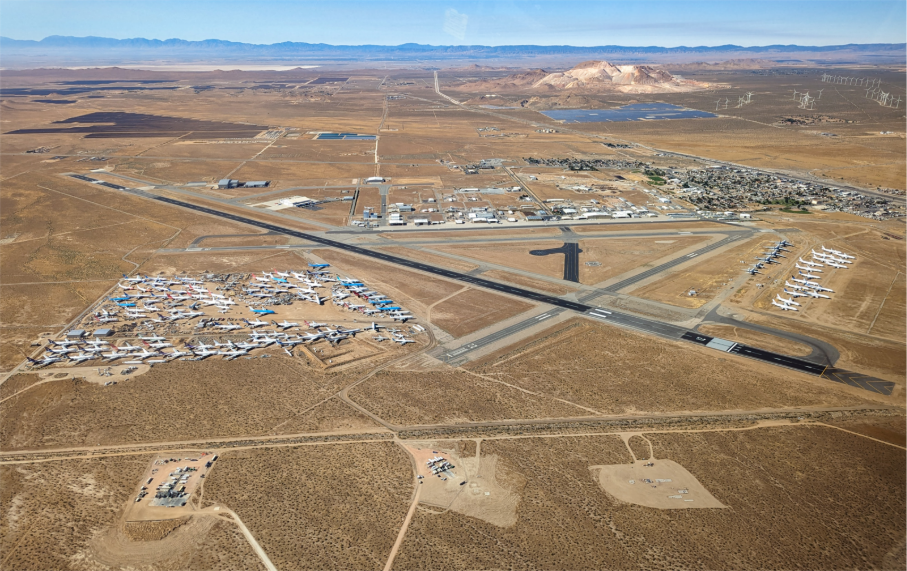
Mojave Space and Airport is in the California desert. It is well-known for housing retired Boeing 747s and Airbus A380s and for serving as a testing ground for private spaceflight companies and experimental aircraft. Commercial airlines frequently use Southern California Logistics Airport, which is located on the edge of the Mojave Desert. This facility can house hundreds of people who are waiting for better economic times during significant aviation downturns.
A Second Life
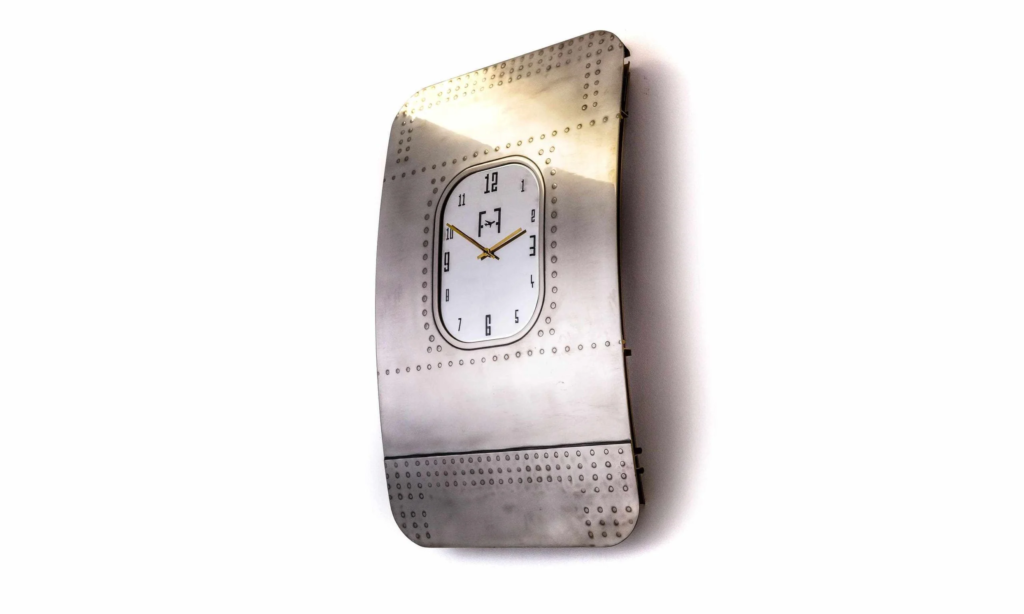
Not every disassembled aircraft is recycled into generic aluminium. In recent years, aviation upcycling has become increasingly popular. Cutting-edge businesses are purchasing parts of retired aircraft and turning them into upscale, luxury products. These days, you can find wall clocks made from cockpit instruments, conference tables made from Boeing 777 wings, and even personalized luggage tags made from a retired Jumbo Jet’s fuselage. This is a fantastic way to make sure that these incredible flying machines’ legacy lives on.
Conclusion
Contradictions can be found in airplane boneyards. They signal the end of flight, yet they are also the beginning of rebirth, where parts are recycled so other planes can fly, and where metal is remelted to create the future. Next time you fly, take a moment to think about the incredible life cycle of the machine that’s carrying you through the clouds.
References