

No concept or idea is more tightly related to liberty than flight. The myth of Icarus describes the invention of flight as a way to escape captivity and even today, in spite of the fact that aviation is part of our everyday life, expressions like “wings of freedom” of “free as a bird” remind us of this timeless linkage.
However there have been moments in history where such a linkage has been taken very literally, giving birth to some of the most audacious escape attempts ever conceived.
Today I would like to talk about one of them. This is the story of three allied prisoners-of-war who decided, in the cold and boring days of their captivity, to build nothing less than a whole full-size glider to escape their jail. The build took about a year and demonstrated unparalleled ingenuity from the interned officers, considering the difficulty in providing the materials and solving the technical problems that such an endeavour implied.
The prisoners would have been freed in 1945 by the allied, and so the glider never flew, and however we know that it would have probably made it to the sky thanks to a replica built in 2012 we will probably never know if such effort was motivated more by the desire for freedom or simply by the inextinguishable love for flight of those three aviators.
Building the glider
Flt. Lieutenants Leslie James Edward “Bill” Goldfinch and Henry L. Lamond were hospitalized in Kalamata, Greece in April 1941 after a crash landing with their Short Sunderland. Days later they were captured as the hospital fell into the Germans hands.
Flight Lieutenant John William Best experienced the same destiny in May, when a fuel shortage forced him to land his Martin Baltimore in Kalamata. The three were first sent to “Stalag Luft III” prisoner-of-war camp in Sagan, Germany.
They soon tried an escape by digging a tunnel to reach a small airfield and steal a plane, however they were soon recaptured and sent to a far more secure prison, called “Oflag IV-C” located in the Colditz Castle, in Saxony. Being built on a cliff 75m high it was considered pretty much inescapable. Goldfinch however noticed in a winter day how the snow flakes carried by the wind were rather flying upward above the building than around it, suggesting one of the craziest evasion attempts ever conceived.
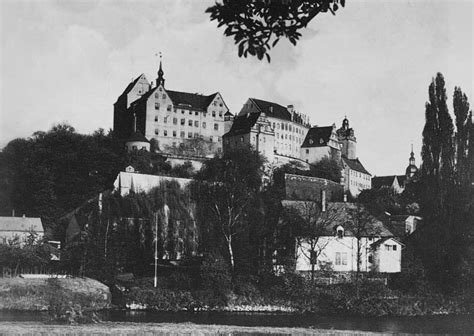
He suggested to build a glider out of wood and fabric in the roof of the fortress to soar from the top of the building to the valley beneath, crossing the river Mulde, landing in a meadow and finally escaping.
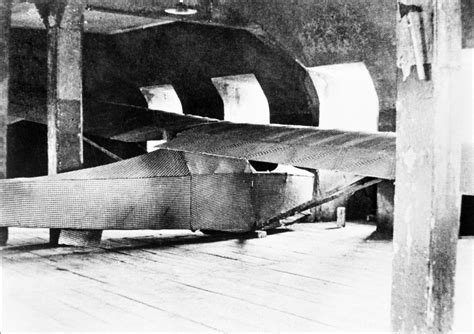
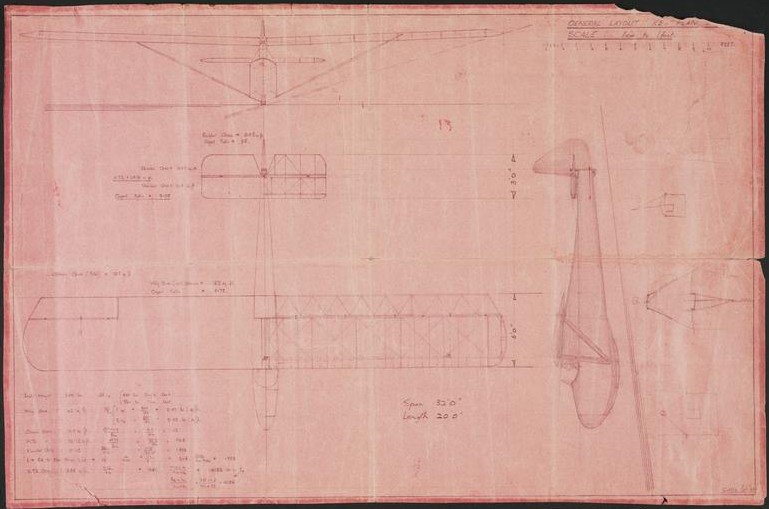
The plane, 30 ft in wingspan and 560 lb heavy when loaded with two people, was designed thanks to a book on aircraft design found in the prison library.Construction begun in early 1944. The wood required for the build was obtained from the room furniture and floor boards. The fabric, doped with some boiled millet, came from the mattress covers. Two hand saws were made out of gramophone springs, while the glue was obtained by barter.
While the production of the small parts could happen in the individual rooms of the prisoners, the final assembly required more space and took place in the attic. In order to hide it from the guards a fake wall was made out of cardboard to separate the workshop from the rest of the attic. The prop was painted exactly like the actual wall to give the illusion of an empty, although shorter, room.
The takeoff should have been carried on from the roof of the castle, using a short wooden ramp and a bath tub filled with concrete as a ballast to sling the glider into the sky at sufficient speed
By the end of the year the construction of the glider was finished, however the rapid advance of the allies convinced the everyone that such an attempt was not any more worth the risk.
In April Colditz was finally liberated and the prisoners released. Nothing is known about the final fate of the glider, however in 2012 a BBC series arranged a reconstruction of the event with a full size rc glider which was actually launched from the castle’s roof.
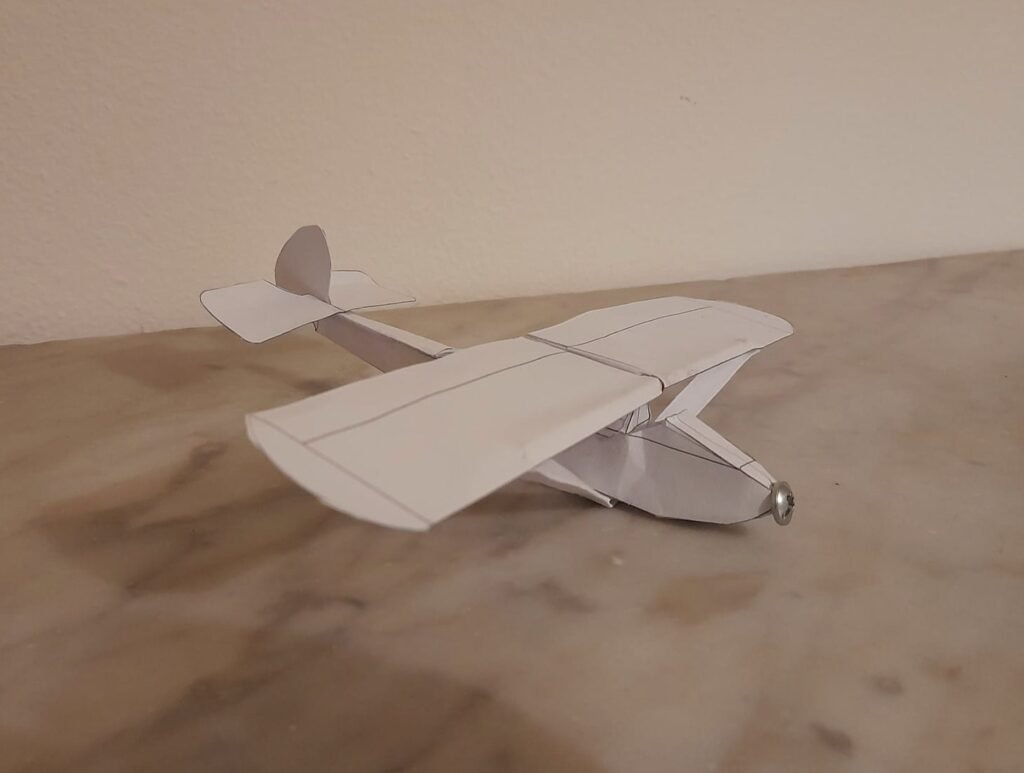
Build your own Colditz Glider
You will find attached below the .pdf layouts for the Colditz Glider paper model.
The required tools and materials are similar to the ones required for the Bleriot XI and consist in:
- Scissors or modelling knife
- Glue
- Ruler
- Barbeque bamboo skewer
- A4 Paper
- Printer