



If you are a motorhead EUROAVIAn like myself, you might already know many racing fans consider that we have entered a new “Golden Age” in sportscar racing, particularly in the World Endurance Championship (WEC) and the International Motorsports Association’s (IMSA) Sportscar Championship. With 18 cars in the Hypercar class in the former, and 12 in the GTP class in the latter, hypercar prototypes have been the show-stealers for the last couple of seasons.
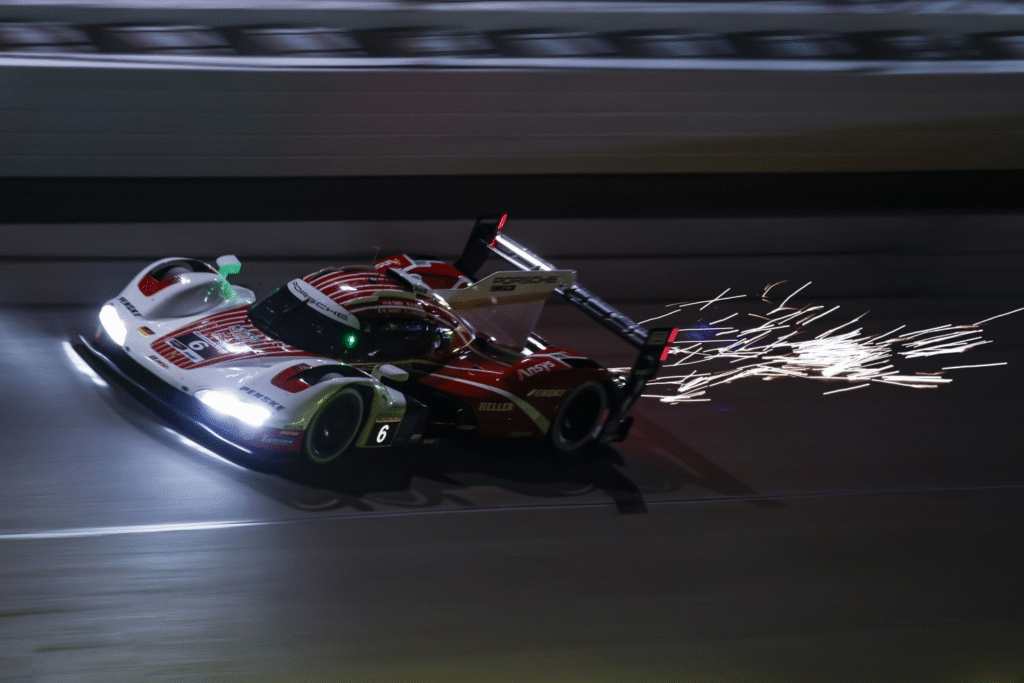
With close racing from start to finish, newer teams being in contention for podiums and wins, and an exponential increase in fans, many manufacturers like Hyundai (under the brand Genesis), Ford and McLaren, have recently announced their project to enter the sport in 2026 and 2027 under the LMdH regulation.
So, how is it possible that this branch of motorsport, which seemed to be dying before 2020, has suddenly become so successful?
The answer is, of course, technical regulations.
This article aims to focus on aerodynamic regulations on the LMH and LMdH certification, both of which compete against each other both in WEC and IMSA, but engine regulation, balance of performance and an increasing social media reach have also helped this sport.
So, firstly, what’s the difference between an LMH and LMdH car?
Essentially, an LMdH is a RWD car with a set chassis and a part-hybrid combustion engine. This chassis is made to an aerodynamic “default” standard, so essentially, they are all pretty similar in that aspect.
The LMH regulation is where it gets crazier.
You can basically build anything you want (including any kind of petrol/hybrid engine and transmission), as long as it fits within the sizes and the aerodynamic coefficients set by the organisation. This basically means that, when designing the car, drag and downforce are not something to maximize, but a set value that can be achieved by a number of means, and restricted to only having one adjustable passive aerodynamic surface.
This means that you have cars like the Toyota GR010 with a hybrid AWD powertrain, with an enormous front splitter racing against the pure petrol, RWD V12 of the Aston Martin Valkyrie (which by the way is also a road-legal car with some modifications), with a huge rear wing. Both cars achieve the same aerodynamic goal using different configurations, but the cars will handle completely differently, due to different weight distribution and stability, which spices up the competition.


Another example is the Peugeot 9×8, which ran the 2022 and 2023 seasons without a rear wing!

So, you might be wondering, how did this thing manage to create the required downforce? The answer is Ground-Effect. The car’s floor was cautiously designed and it was fitted with an adjustable rear diffuser. This essentially speeds up the air under the car, and lowers its pressure, meaning that due to higher pressure on top of the car, there is circulation around it, which, of course, creates a suction force downwards.
This design managed to get the team a podium in Monza 2023, but Peugeot eventually dropped the rear diffusor for a proper wing, because the diffusor setup was really unstable over bumpy tracks such as Imola or Sebring.
Endurance racing is a challenging sport, the cars having to withstand operating at peak performance for 24 hours in the biggest races, you can see why manufacturers who want to take pride in the reliability of their craft would like to compete in them. To win (or just be able to finish) a race like the 24 Hours of Le Mans is something that companies take pride in.
This sport serves as a technological playground for car manufacturers like Toyota, Ferrari or Aston Martin, all of which have implemented technologies developed for their race cars into street-legal cars.