
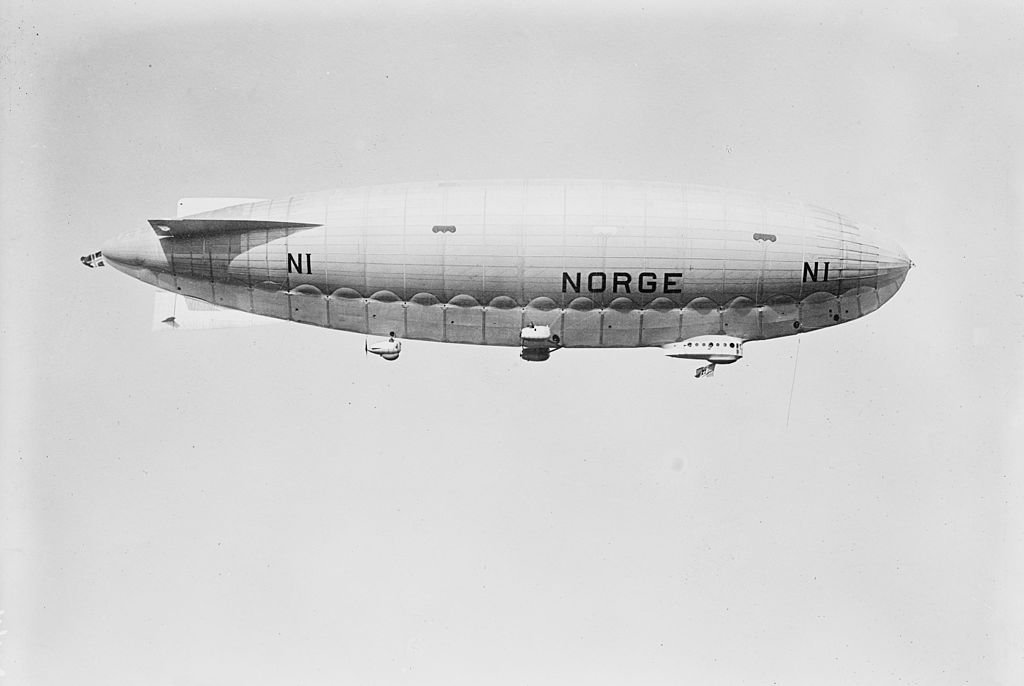

Today the human species is trying to explore new planets and is looking forward to new corners of the universe, less than a century ago we hadn’t explored places yet like the North Pole and we didn’t know how looked like. Many explorers tried to reach it, but their missions failed, we needed new solutions to get there, and, in this scenario, the Italian military engineer Umberto Nobile proposed a new configuration for reaching it, a semi rigid airship called N1. A semi rigid airship is a lighter than air vehicle whose lift is generated by a gas envelope, while its structural integrity is supported by a combination of internal pressure and a longitudinal keel, unlike a non rigid blimp where the envelope shape depends almost entirely on overpressure. The keel distributes forces along the airship length, reducing local stress on the fabric and allowing higher payload capability without requiring excessive envelope pressure, which is crucial when the gondola, engines, fuel, and scientific equipment must remain securely supported over long distances. The envelope provides buoyant lift according to Archimedes’ principle, so the useful lift depends on the density difference between the surrounding air and the lifting gas, multiplied by the displaced volume. Because lift varies with temperature, air density, and gas conditions, airship performance is tightly linked to weather, especially in polar environments where low temperatures can contract the lifting gas, reduce pressure, and affect the hull shape. Long range operation also requires careful ballast and trim management, since fuel burn, icing, and payload shifts change the center of gravity and can introduce significant pitch moments. In Nobile’s designs, this was addressed through a keel intended to keep critical loads supported even when envelope conditions changed, while internal ballonets helped regulate pressure and trim by adjusting the air volume inside the envelope.
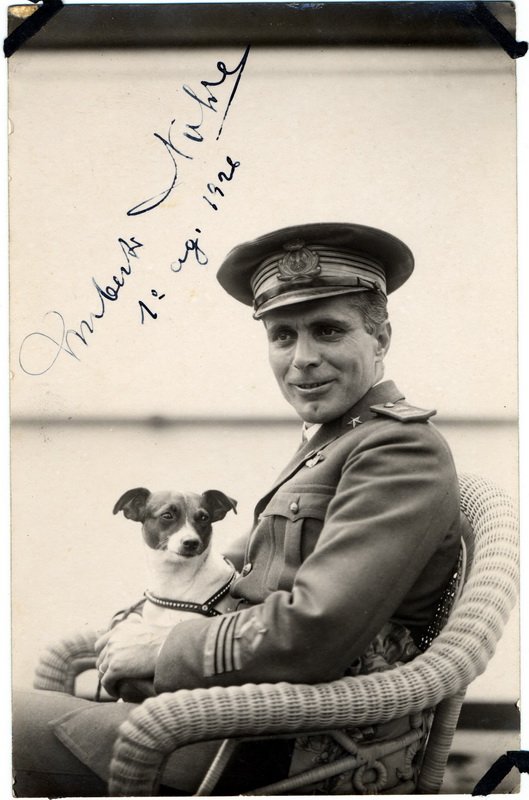
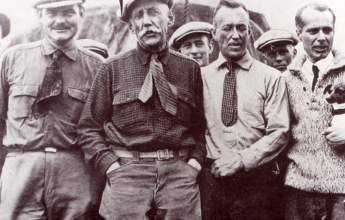
To achieve this seemingly impossible feat Nobile needed the help of the Norwegian Roald Amundsen, the first man who reached the Sout Pole, who bought the airship, and the American Lincoln Ellsworth that financed a large part of the expedition. (In the pic Riiser-Larsen, Amundsen, Ellsworth, Nobile and his dog) These three men guided the operation and on April 10 of 1926 the airship took off from Roma Ciampino Airport with a new name given by Amundsen “Norge” and with a crew formed mostly by Norwegians and Italians. Sharing the stage for these three figures was not easy at all, because everyone wanted to be in charge of the mission and everyone had his reasons to claim it. On May 12 of 1926 after lots of arguments and kilometers the airship reached the North Pole. After that their radio contact with the Norge was lost, everyone thought that the operation had become a tragedy but the airship managed to reach Alaska the 14th of May with the amazement of the Alaskans that had never seen a structure like that. The press of the time celebrated the expedition as the impossible that became possible and Umberto Nobile was greeted in Italy and promoted to General of the Italian Air Force.
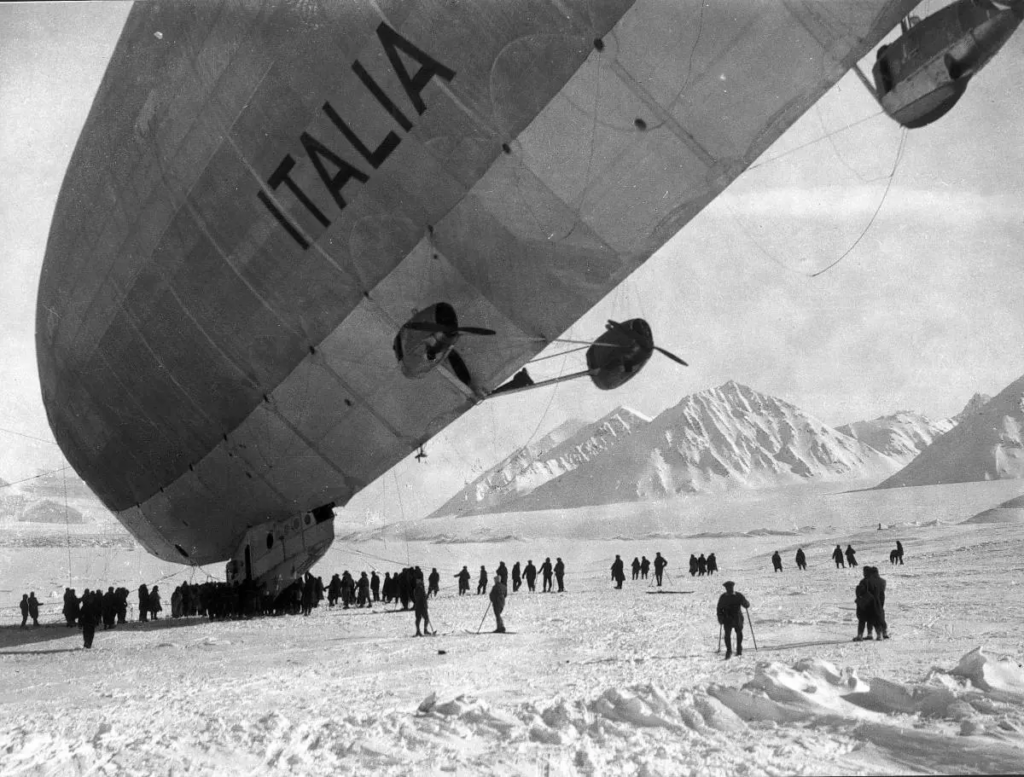
With the enthusiasm of the first great achievement the Italian General Umberto Nobile decided to try the impossible again, this time as commander of the operation, reaching the North Pole with a new airship named “Italia” with the aim of letting two scientists to land from the airship and allow them to study the atmosphere and the surface of the North Pole. Unfortunately, once there the control gondola crashed because of the weather conditions, nine people were thrown out of the cabin while the remaining ones unfortunately were lost because the airship took off again due to the loss of weight. The SOS messages were received after many days, the survivors relied on a Red Tent, the tools and the supplies dropped when the airship crashed for survival. After 48 days a Soviet icebreaker called Krasin saved them and even Amundsen, knowing the conditions of his old friend-rival, boarded a plane to rescue him, unfortunately he didn’t make it but this gave him honor and the status of a true legend.
In the end the Italia disaster triggered a huge international effort, even from countries that had not taken part in the mission, and we still have a lot to learn from this story because in a time where national pride often dominates the narrative, nature reminded everyone of how fragile we are and that cooperation is not about flags but about the willingness to try, for human lives.