

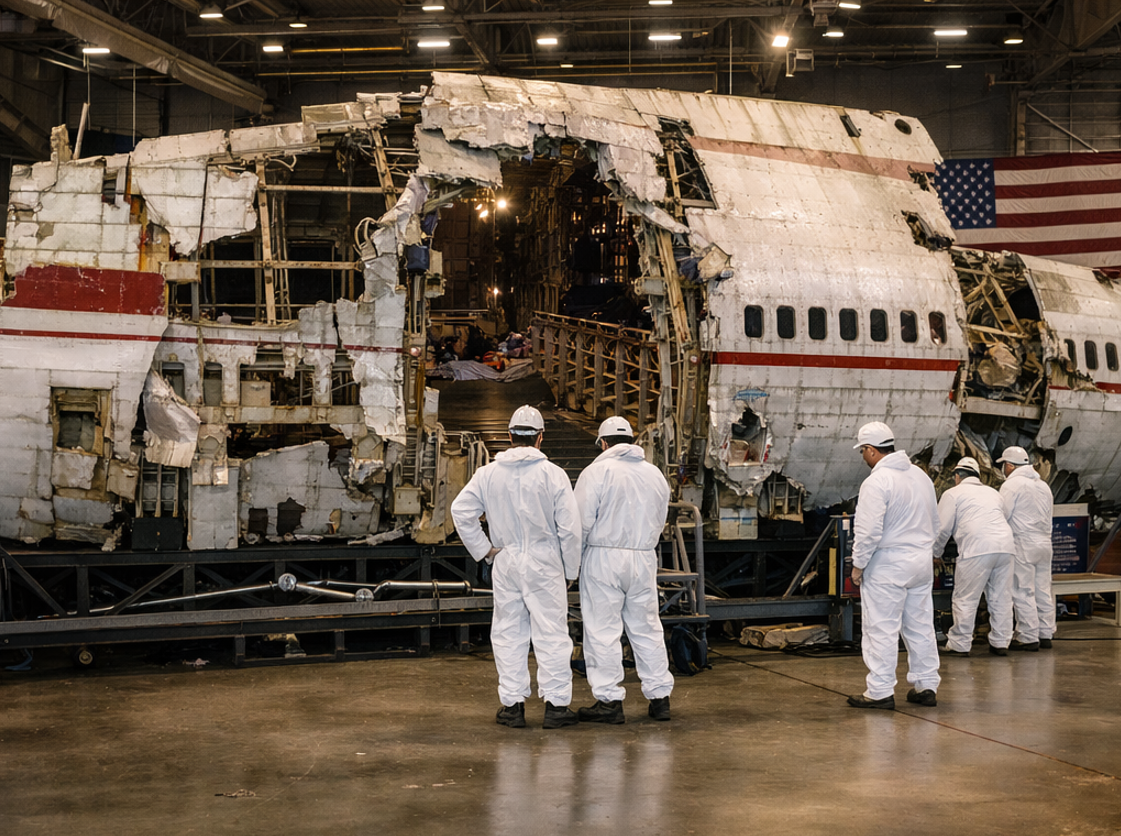

On July 17, 1996, TWA Flight 800 took off from New York to Paris. The aircraft was a Boeing 747-100. There were 230 passengers and crew on board. About 12 minutes after takeoff, the plane suddenly exploded in the air and fell into the Atlantic Ocean near Long Island. Nobody survived.
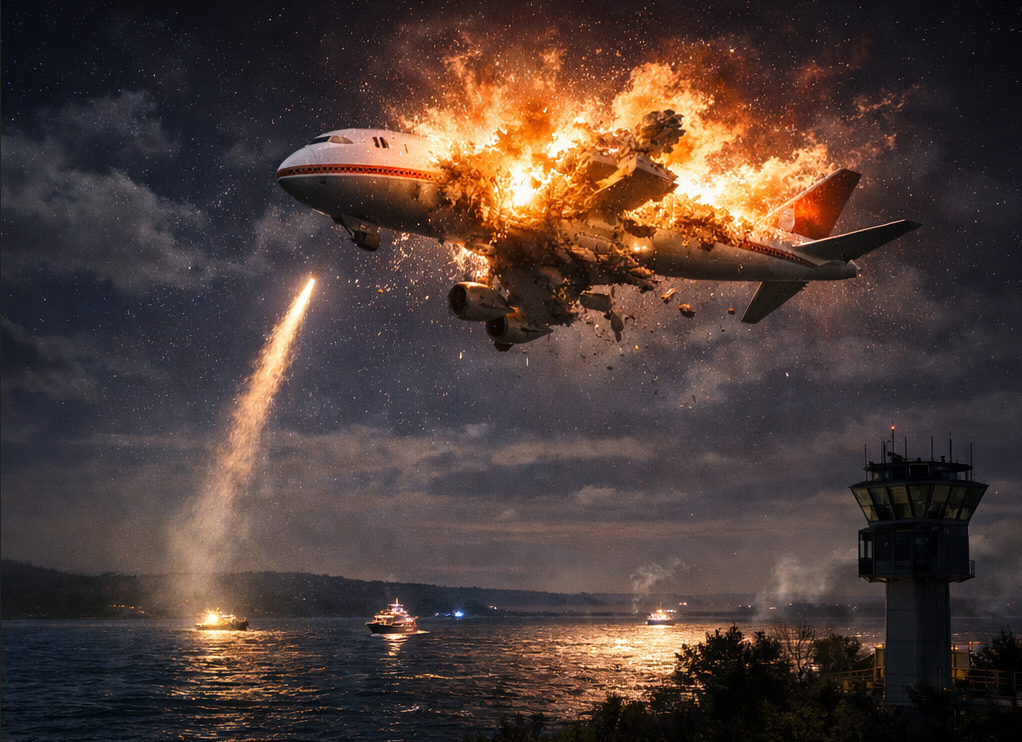
After the accident, the U.S. National Transportation Safety Board investigated the crash. According to the official report, the cause was an explosion in the center fuel tank. Fuel vapors inside the tank were ignited by an electrical spark. The investigators said there was no evidence of a bomb or a missile.
However, many people did not believe this explanation. More than 100 eyewitnesses said they saw a bright light going up from the sea toward the plane before the explosion. Some described it as a rocket or a missile trail. Because of these reports, a conspiracy theory appeared. The theory claimed that the aircraft was accidentally hit by a missile during a military exercise.
On the night of the crash, the U.S. Navy was active in the area. This made the theory stronger in the eyes of the public. Some former pilots and engineers said the number of similar eyewitness stories was too high to ignore. They also found it unusual that most of the wreckage was recovered and rebuilt in a hangar, which is rare in air accident investigations.
Officials answered these claims by saying eyewitnesses were confused. They explained that the bright light was actually the fireball from the explosion, seen at night and misunderstood. They also stated that no missile parts or explosive materials were found on the wreckage.
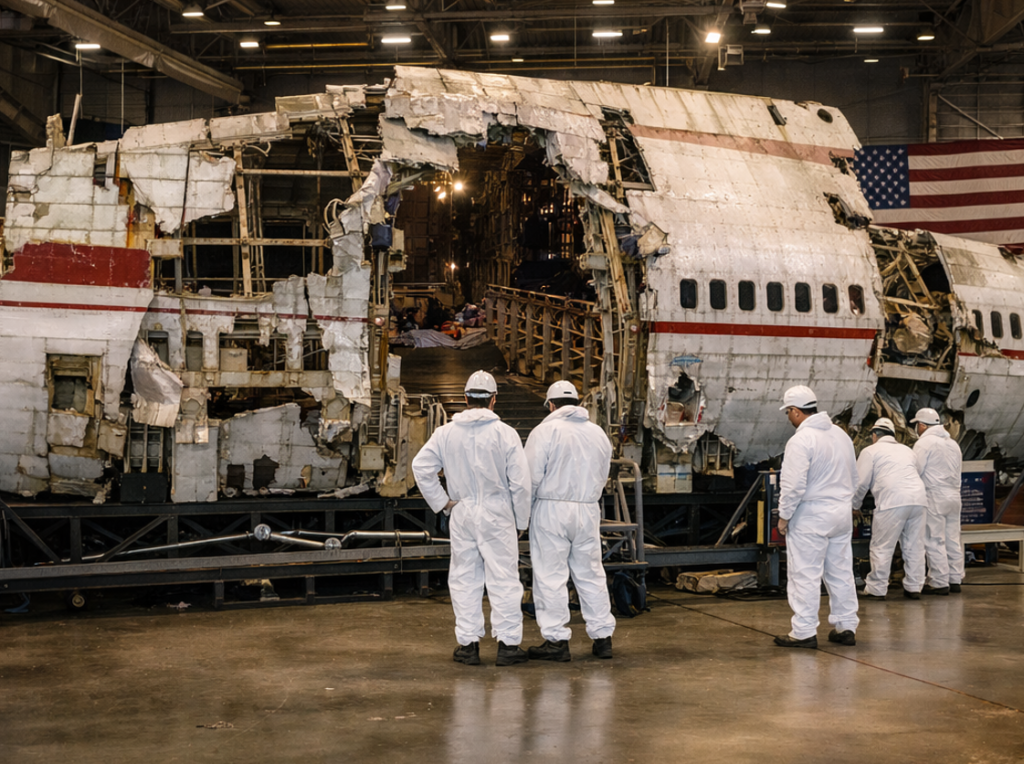
Today, TWA Flight 800 is still a debated case. Some people accept the technical failure explanation, while others believe important information was hidden. Even after years of investigation, the accident remains one of the most controversial events in aviation history.
What do you think?
A tragic technical accident, or a mistake that was never fully explained?