

In May 1927 Charles Lindberg flew solo from New York to Paris, crossing the Atlantic Ocean in what would have been one of the most famous flights of the early years of aviation.
His plane, the Spirit of St. Louis would have become the most widely recognised plane of that age, but what if I told you that things could have gone in a completely different way and a European immigrant could have shared a bit of that glory?
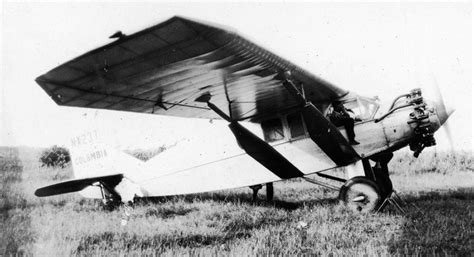
This is the story of engineer Giuseppe Bellanca and his airplane “Columbia”, which flew non-stop from New York to Berlin just a couple weeks after Lindbergh.
A missed opportunity
Giuseppe Mario Bellanca was born in Sciacca, Italy in 1886. He graduated in engineering and started designing and building airplanes in a barn near Milan. In 1909, towed by a car, he flew his first glider.
However his work didn’t receive that much interest in Italy at that time and so he emigrated to the US. He opened a flight school in New York and used his savings to carry on his projects until 1916 when, thanks to the increased interest in airplanes due to WWI, he was finally hired to design two trainer biplanes at the Maryland Pressed Steel Company.
In 1926 he was working for Wright Aeronautical. The engine manufacturer needed an airframe to demonstrate the performance of their new Wright Whirlwind engine, and he built two parasol wing monoplanes, the WB1 and the WB2.
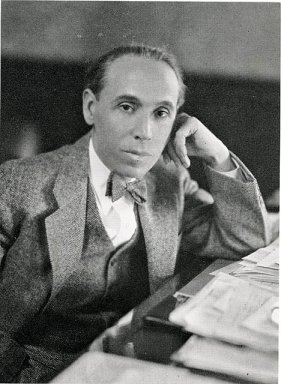
In January 1927 he started a partnership with the entrepreneur Charles Levine. Levine bought the manufacturing rights of the WB2 and planned to fly it from New York to Paris. In April 1927 the WB2 prototype, now renamed “Columbia” set off in New York and flew above the airfield for 51h, setting a new endurance record and clearly proving its suitability for the transatlantic endeavour.
Charles Lindberg meanwhile had offered to buy the plane for 15000$ announcing his will to fly solo but was rejected twice.
The first time he went to the Wright company directors, who considered the idea of flying solo for two days straight quite insane and said to him “Well, supposed you land in the middle [of the ocean], that won’t be such a good ad.”
The second time he clashed with Levine who agreed to sell the airplane only at the condition of choosing the rest of the flight crew. At that point Lindbergh gave up on the comfortable and proven six-seater Bellanca, bought a modified Ryan M2 for 6000$ from a company in San Diego and took off for Paris in the morning on May 10. That last minute Ryan M2 which didn’t even have a frontal windshield would have been remembered forever as the “Spirit of St. Louis” while the “Columbia” was sitting on the airfield waiting for Lavine and Bellanca’s company aviators to find an agreement on who would have flown that plane.
On June 4, Lavine himself and his pilot Clarence D. Chamberlin set of for Berlin. 42h later they landed in a field near Eisleben, refuelled and flew to Berlin the following day.
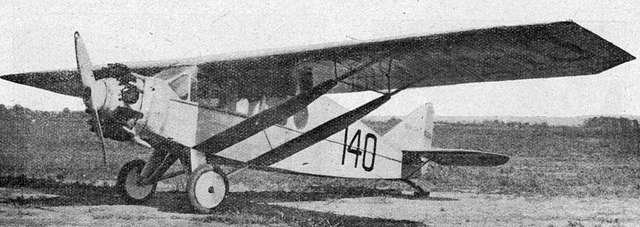
Their endeavour was not less significant than Lindberg’s one, especially considering the significantly longer distance travelled to land in Germany, despite that Bellanca and Chamberlin would have never become as famous as him.
Bellanca’s long range aircrafts would have however remained popular for several years for record breaking attempts everywhere in the world, and some of the designs his company produced in the post WWII period are even still in production today as general aviation airplanes
Build your own Bellanca Columbia
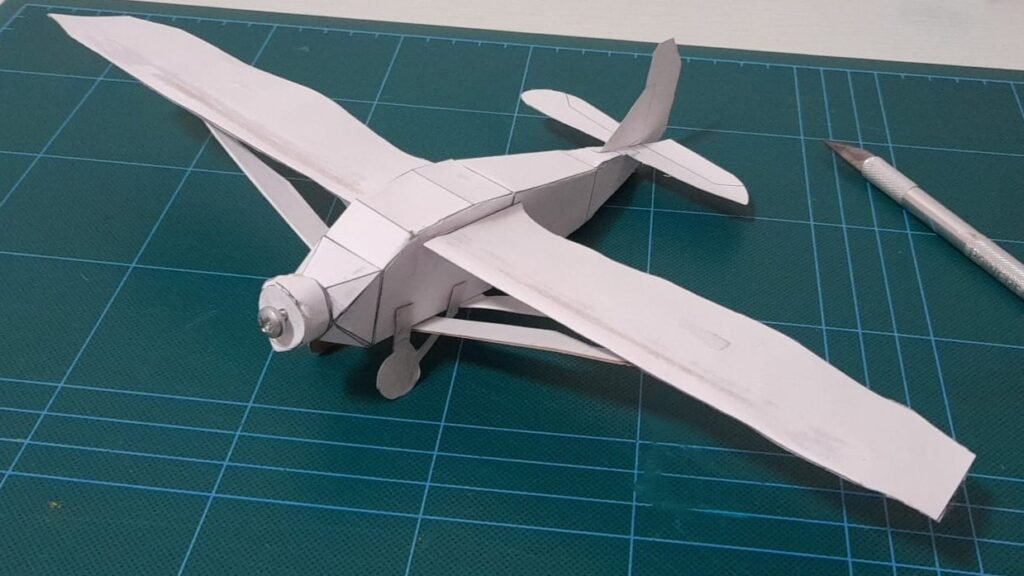
You will find attached below the .pdf layouts for the Wright-Bellanca WB2 “Columbia” paper model.
The required tools and materials are similar to the ones required for the previous models and consist in:
- Scissors or modelling knife
- Glue
- Ruler
- Barbeque bamboo skewer
- A4 Paper
- Printer
The main difference respect to the previous models consists in the fact that the fuselage is divided into four main sections: the tail, the cockpit, the engine mount and the engine. They are meant to be assembled separately and then glued together.