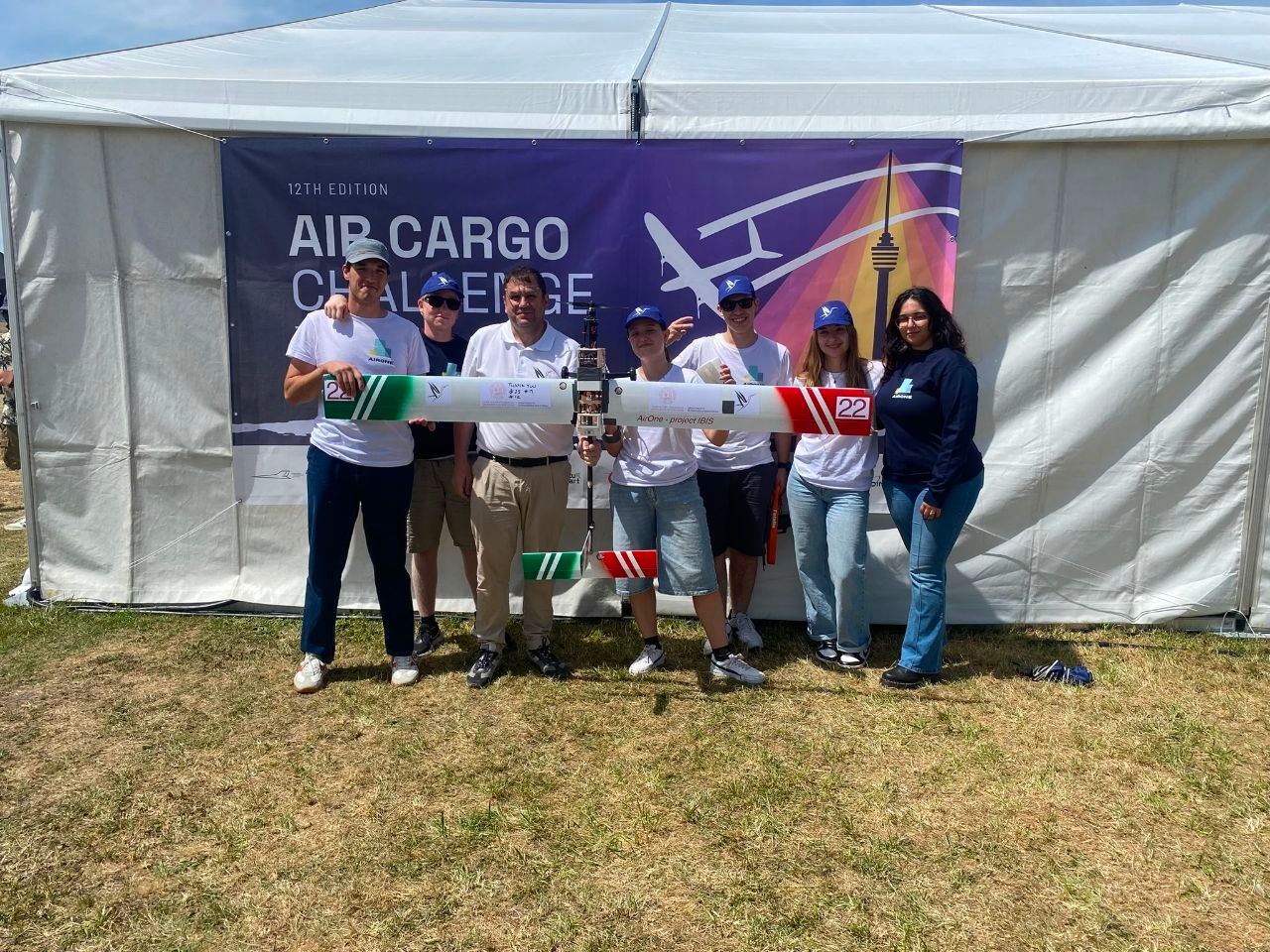


This year was the very first time that AS Forlì-Bologna took part in the ACC, under the name of Team 22 – AirOne. It was an amazing experience, full of ups and downs: with a budget that would barely cover a person’s monthly expenses, and with a severely understaffed team, we managed to design and build a drone that could fly (pretty fast as well) and did not sever any heads during the competition. Underwhelming, I know… We’ll try to behead them next time in Udine.
Leading up to the ACC
In the weeks leading up to the competition, we were very busy preparing. We held our pilot at gunpoint and forced him to practice flying every single day; we did a lot of impulsive shopping for spare parts; we snooped through other teams’ Instagram pages and talked trash about them to hype ourselves up (at the end they were effectively better than us, but we needed some motivation).
The scoring for the technical reports was published together with the reports themselves, and when we browsed them, we quickly realized how broke we were compared to most other teams. Our plane was the lightest, smallest and with the least payloadt; our strategy was quite different from that of most teams, which usually means you’ve done something wrong. We chose to carry the minimum required payload and fly as fast as we could, to rack up points for the distance we covered. We didn’t really care for the scoring, mostly because our goal for this year was not to win, but to build the infrastructure for a technical team that could grow in the upcoming years.
A couple of days before setting off for Germany, during a test flight, one of the aircraft’s wings snapped and broke in the air, so the plane fell from a height of a few meters and the fuselage pretty much exploded. When we saw the crash, we frantically ran through the airfield: the avionics, engine and most of the parts were intact, but we were unable to fix the plane in time for the competition, so we resorted to using our spare, which (thank God) we had built expecting that something would go wrong with the first one. Off to a great start!
The competition
For the trip, we rented a van for 9 people and nicknamed it with stupid names every time we needed to talk about it, accompanying the various names a very profound discussion on the gender of the vehicle: our driver decided it was female and its name was Giorgia.
After a 13-hour roadtrip and a lot of overpriced gas station food, we finally got to Stuttgart; unexplainably, one team member slept through about 11 of those hours. Two of us went to buy the groceries for dinner but got stuck in the elevator, and were rescued by the others only because the food was also stuck with them. We tried to make pasta at around 11 p.m. but realized that our Airbnb had no strainer, no grater, no oven and not even the trace of a cutting board, but engineering is all about problem solving, so we made do. Pasta costed an insane 2.5€ a bag (about 4 times the Italian price) while beer is apparently considered a basic necessity, sold for 0.8€ a bottle (minus 0.25€ of cashback if you bring back the bottle), surprised cheaper than water.
The next day, while wasting about 30 km worth of fuel trying to find parking, we managed to go to the technical inspection. To everyone’s surprise, nothing was built wrong and everything was accepted; the only thing out of place were the aircraft dimensions that had been modified, which resulted in a lot of penalty points, but not as many as we expected. With a lighter hart we closed off the first day with a mild success.
We almost cried when we found out that during the competition itself there were only vegan options for lunch, but the food was surprisingly tasty. We also noticed Germany’s quirky obsession with making every drink fizzy: water, alcohol, soft drinks, juice… The reason for this was beyond us.
We had three unsuccessful flights in a row. On the first try, during takeoff, a small cap flew off from the top of the fuselage and the flight was disqualified; we got rid of all the caps and proceeded to cover the fuselage in duct tape to prevent it from happening again. On the second try, one of the landing gear tyres was shot to the side because the runway was a lot bumpier than we expected. We flew anyway because the judges weren’t immediately sure if we were disqualified or not; after landing safely, we ran back to the table and absolutely covered every inch of the aircraft in glue and tape to make sure nothing would break loose again.
The next day, on our third flight, one of the landing gear wheels unscrewed itself, so we were disqualified once more. We were all fuming, but our professor pointed out that those wheels were too small for that bumpy runway: luckily, some lovely people from Sidney were nice enough to gift us some of theirs, so we replaced our wheels and got ready for the next flight attempt. We also fixed a small problem with adverse yaw that we had noticed while flying, by mixing the ailerons and rudder on the same stick. Everyone on the flying field was an angel, helping us with whatever advice or guidance they could offer us.
There’s no great story without a major challenge happening in between: the afternoon of the second day, we brought our aircraft to the airfield once more. As with all previous attempts, the wind picked up right before we had to fly, and our very light plane is not fond of wind gusts. He likes to deviate from its course and throw tantrums like a child being said no to some candy.
We had such bad luck with weather conditions and loose parts up to that point, that we had pretty much given up on scoring any good points, but we were there for the love of the game. It took a couple of tries to get it off the ground because it kept scooting off the runway. When it finally left the ground with its characteristic wobbly path, a violent wind gust flipped it on its belly: it fell from the sky for a couple of meters and landed on the grass. Half the team ran over to assess the damage, but it was very clear that the injuries had been deadly.
It was about as nerve-wracking as watching your own child fall and break their leg.
We carried the wreckage inside and laid its pieces on our table, and a first-aid team of modellists gathered around it to figure out if it could be saved.
The team from Akamodell Munchen showed up with a whole hardware store worth of glue, tape and tools; many people from Milan were also concerned and wanted to help, so we all got to work.
The wing bayonets on both sides had broken the slot they were fitted into; the fuselage ribs were all cracked (what a surprise, for 3mm thick plywood); the payload rack was in many more pieces than it should have been; and, of course, the vinyl sheet that wrapped the fuselage was, uhm, it was no more.
We fixed the tube that held both bayonets with some carbon composite and unidirectional carbon, so the load would fall partially on the rest of the structure.
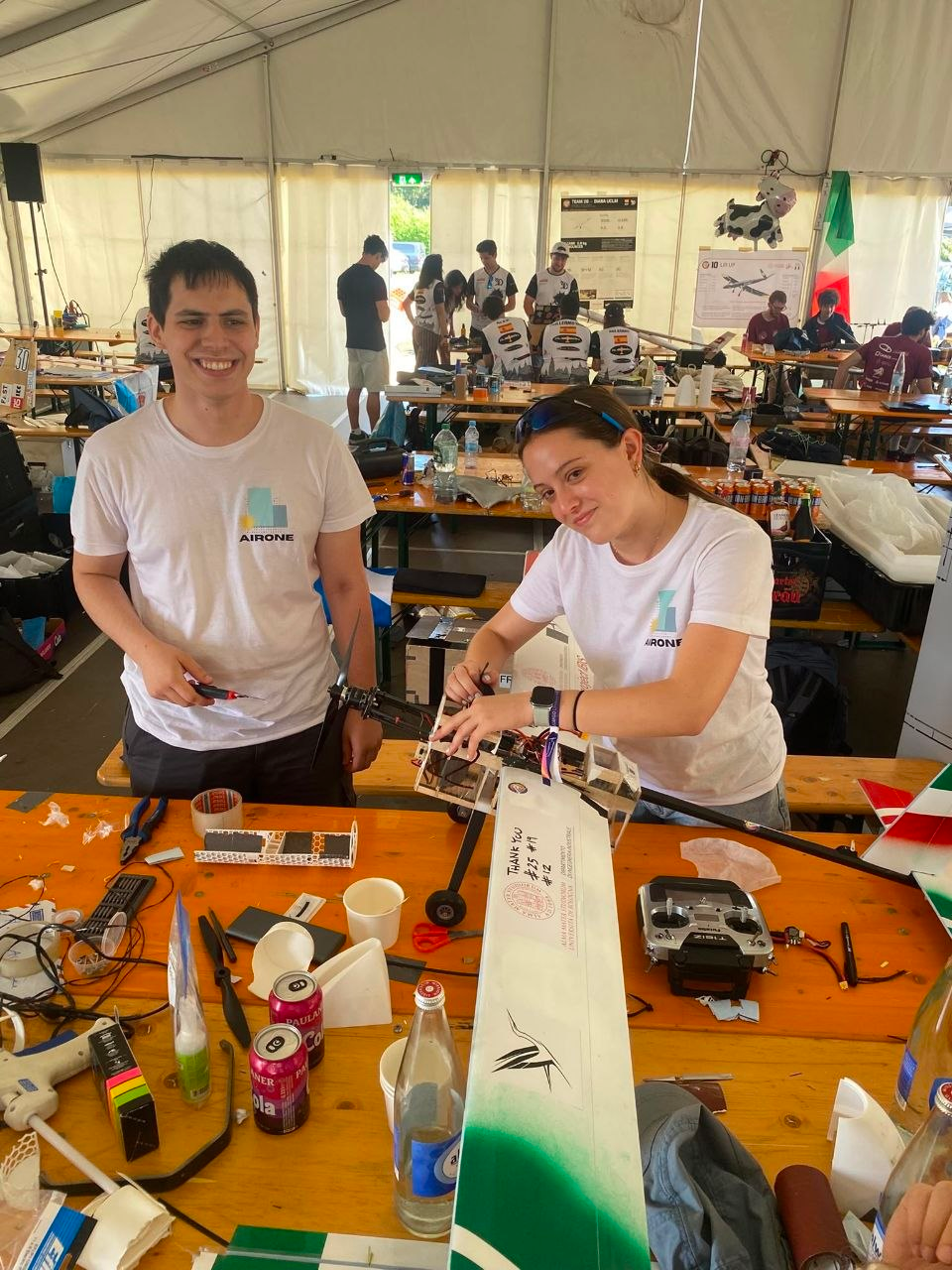
Since modern problems require modern solutions, we patched up the ribs using some popsicle sticks and some more carbon. We drenched the payload rack in epoxy glue to hold it together, and because some pieces had been blown to smithereens, we stuck two landing gear wheels so they would act as a spacer for the two cans we were loading on the drone.
We couldn’t save the 3D-printed nose, so we just got rid of it. We also wrapped the entire fuselage with clear tape, so our poor drone is see-through now.
Our professor, who is also a sailboat instructor, told us that when another team helps you out during a sailing competition, it’s a custom to write “Thank you” and their team number on your boat (or plane, in this case) to show the value of sportsmanship. So that’s what we did, and here’s what our beauty looks like now:
I believe I can fly
With not much hope, on the final day, we brought our plane to the line for the last time. After his near-death experience, we didn’t think he could lift off, and the first few tries were unsuccessful. Our pilot ran a half-marathon to go pick up the plane and bring it back on the runway after every rejected takeoff.
There he was, our boy, scratched and battered, but still trying his best.
The crash took away half of his original parts, but it didn’t take away his dreams.
And just like a bumblebee, who doesn’t know it shouldn’t be able to fly, he tried anyway: and he made it.
On the fourth try, with the crowd behind us cheering, he left the ground. He climbed and climbed and it looked like the flight path had stabilized; but sadly, at one point, we started losing a lot of altitude, and it looked pretty clear that it had gone to rest in the wheat field. It’s fine, we thought, he had a good life, let it rest like a warrior deserve.
And then he rose again.
Somehow, our pilot made a spectacular recovery, and against all odds, he could get the plane back up. The adrenaline was rushing, people were screaming, and none of us could believe it.
We brought it back down: despite all of his dislocated joints and broken bones, the landing was safe, and we got to bring our plane home (somewhat) intact.
At the end of the day, we might not have climbed the rankings, but we sure had the sickest fits.
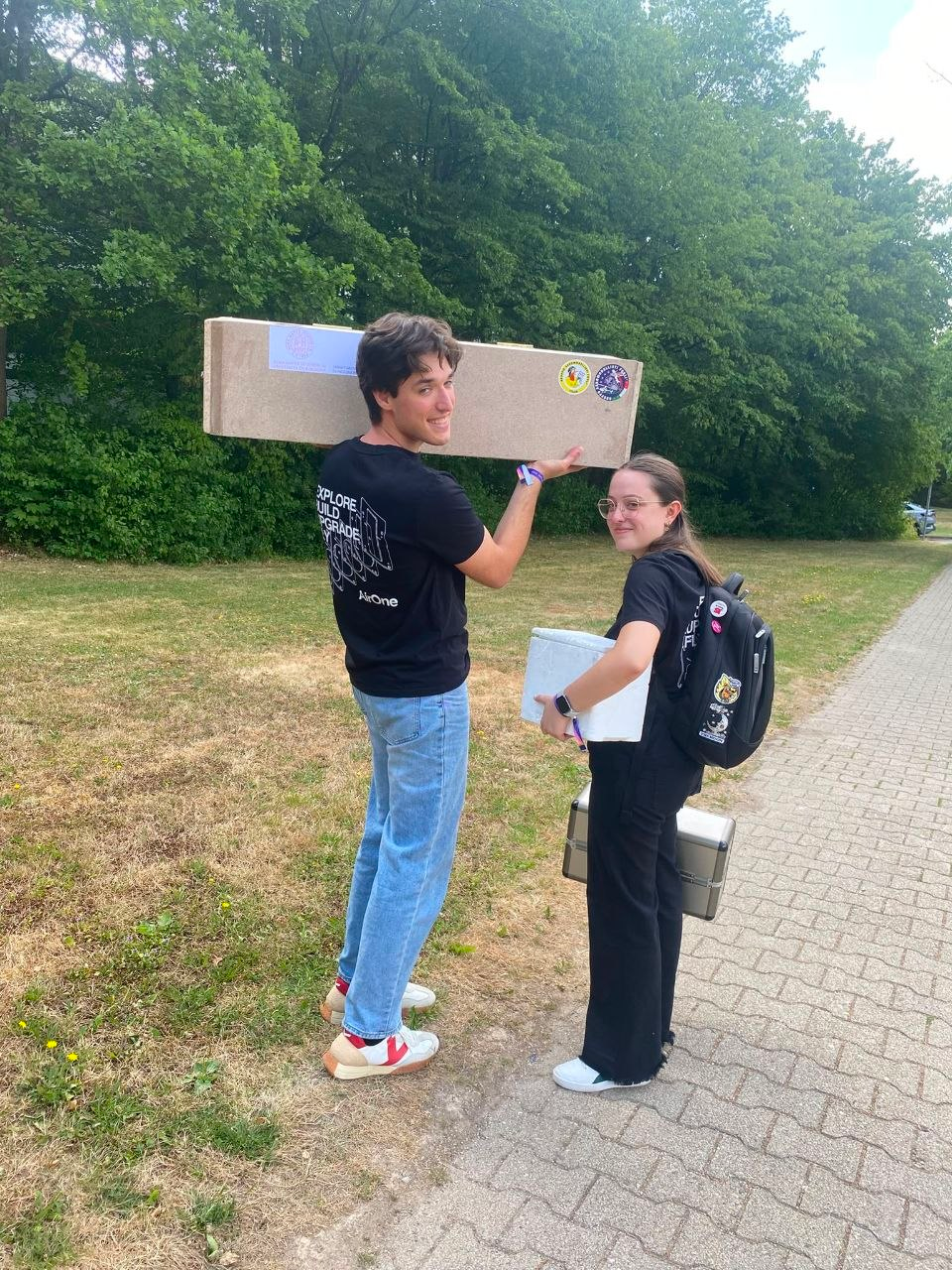
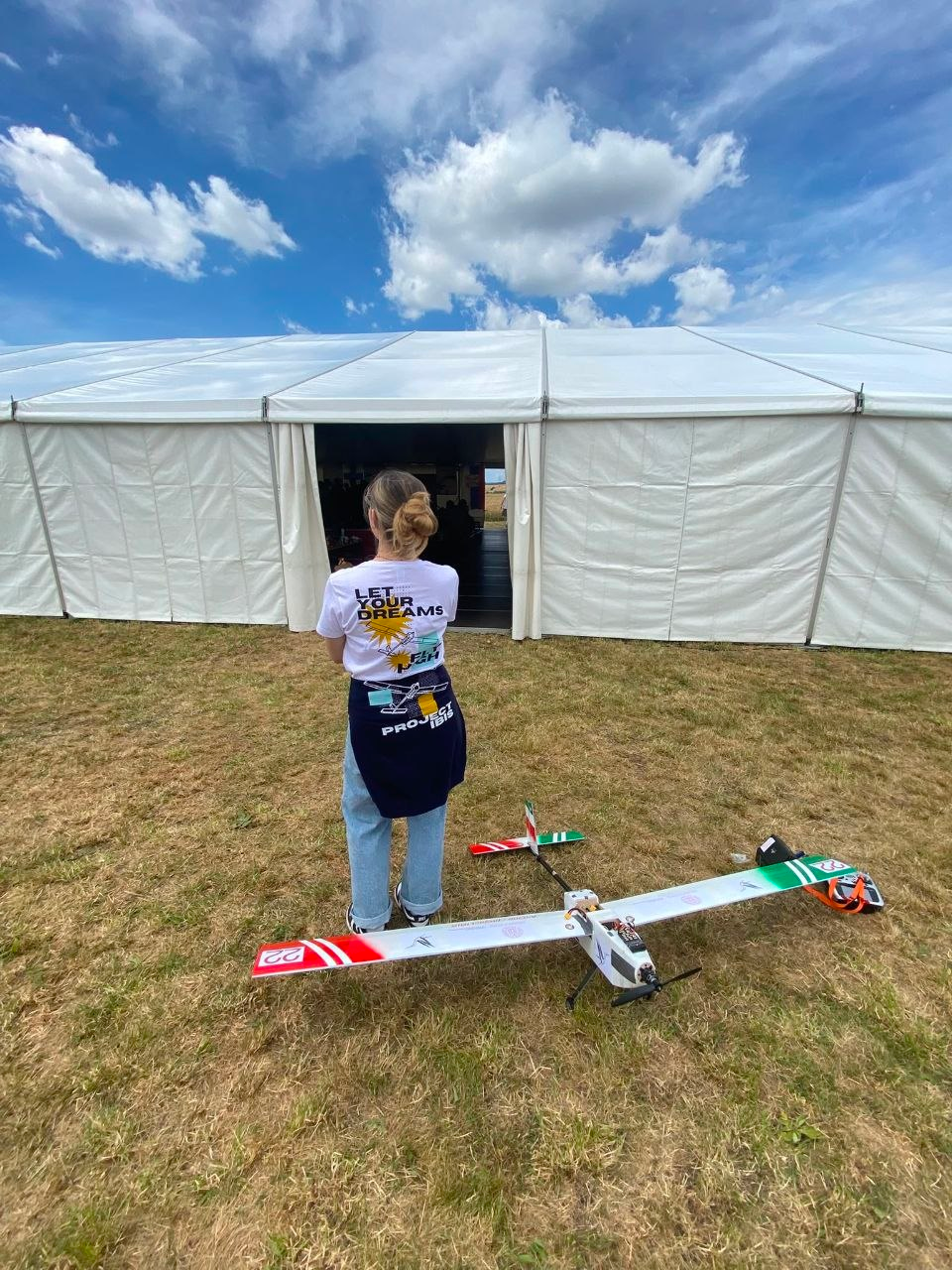
Thanks again to #12 Fly-Mi, #19 AkaModell Munchen, #25 Sydney for their great help and to AkaModell Stuttgart for hosting a great competition. See you in two years in Udine!