
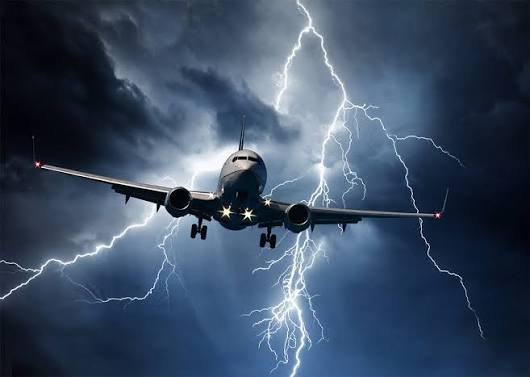

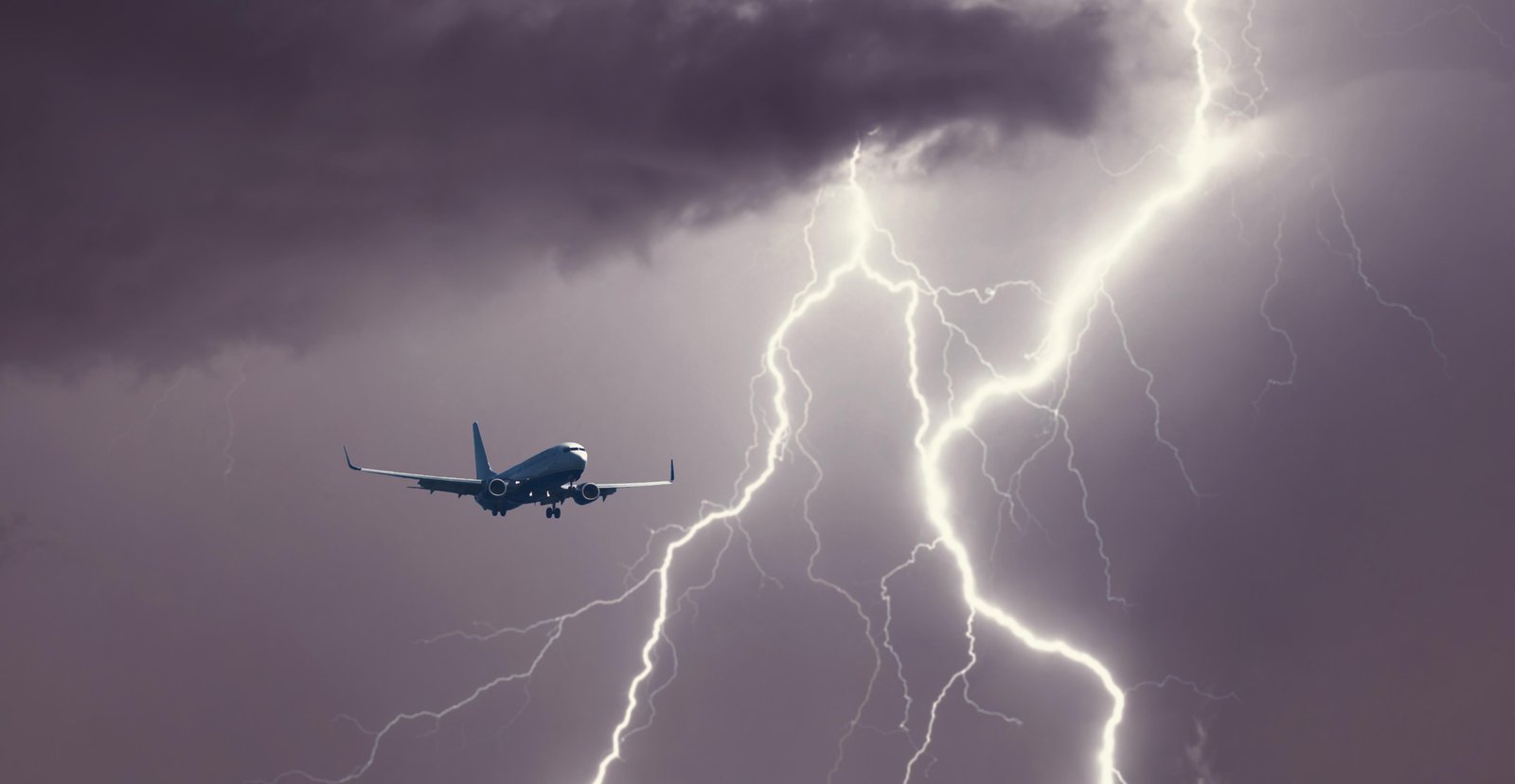
The commercial aviation industry has an outstanding safety record when it comes to lightning strikes, even though there is a lot of electrical energy in the atmosphere during extreme weather. According to statistical data, lightning strikes an operational commercial airliner about once every 1,000 fly hours, or about one strike per aircraft each year. In many cases, the aircraft itself initiates the electrical discharge; the aircraft’s metallic extremities and static friction increase the ambient electrical gradient as it moves through a highly charged precipitation field, causing the strike.
However, the most recent disastrous commercial aircraft failure in the United States that was directly caused by a lightning strike was in 1963. The elimination of this serious threat is the outcome of strict certification requirements, sophisticated material science, and rigorous aerospace engineering rather than statistical chance.
The Faraday Principle and Electromagnetic Shielding
The Faraday cage effect is the fundamental process that safeguards passengers, crew, and vital internal systems. A continuous layer of conductive material will disperse an electrical charge all across its outside surface, therefore neutralizing the electric field inside the enclosure, according to a basic principle of electromagnetism.
Due to their excellent conductivity, aluminum alloys were traditionally used to build commercial airplane fuselages. When a lightning bolt, which can produce localized temperatures of over 25,000°C and carry currents up to 30,000 amperes, connects to an airplane, it usually hits a leading extremity, like the wingtip or nose cone. The conductive outer skin allows the electrical current to move quickly. It then separates from a trailing edge, like the tail empennage, after sweeping aft with the aircraft’s forward motion. The interior cabin environment is unaffected by the current, which stays completely on the outside.
Vulnerabilities in Radome and Avionics
Modern aircraft have significant localized vulnerabilities that call for specialist Lightning Strike Protection systems, even though an aluminum airframe offers a natural conductive channel.
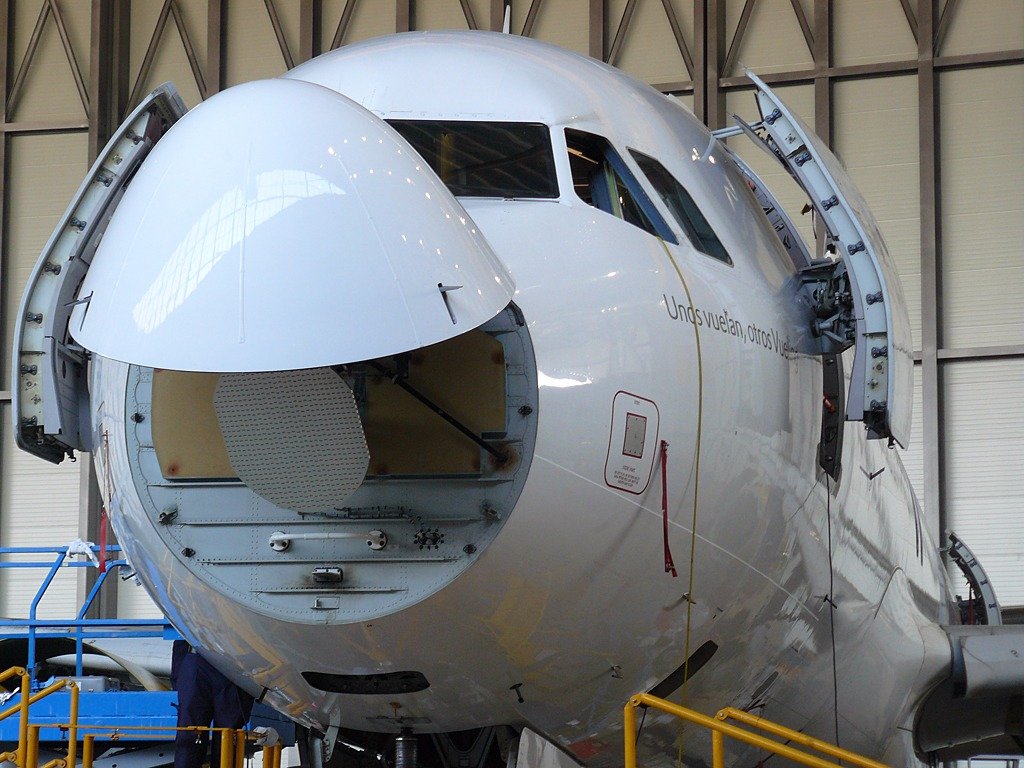
Conductive metals cannot be used to build the nose radome, which contains the aircraft’s weather radar, since doing so would obstruct vital electromagnetic radar signals. Engineers use lightning diverter strips to shield this crucial dielectric composite structure from catastrophic thermal expansion and physical breakage during a strike. The radome’s shell is attached to these perfectly spaced metallic strips. When a lightning strike occurs, they instantly ionize the surrounding air, forming a low-resistance path that safely avoids the delicate radar dish by channeling the immense electrical energy backward into the metallic fuselage.
At the same time, the aircraft’s internal avionics design needs to be protected from electromagnetic interference and high intensity radiation fields. In unshielded wire, a lightning strike’s electromagnetic pulse can cause extreme voltage spikes. As a result, crucial flight control computers run on isolated, highly redundant network designs intended to smoothly isolate and avoid any localized electrical problems, and contemporary flight-critical connections are thickly braided in conductive shielding.
Isolation of the Fuel System and Prevention of Ignition
The safeguarding of the aircraft’s fuel system is the most important safety threshold in lightning mitigation. Due to the extreme flammability of jet fuel, the main fuel tanks are built right into the wing structures, which are vulnerable to swept-stroke damage and lightning attachment.
In accordance with current aviation rules, the fuel tanks’ external skin must be thick enough to avoid melt-through from an extended electrical arc. More importantly, all of the wing structure’s mechanical fasteners, access panels, and structural joints are designed to avoid sparking. Engineers carefully apply dielectric sealants over interior bolt heads and use sophisticated spark-containment fasteners. This guarantees that no electrical arcing or hot gas penetration may take place within the extremely explosive environment of the fuel tank, even under the stress of a multi kiloampere surge.
Expanded Metal Foils and the CFRP Transition
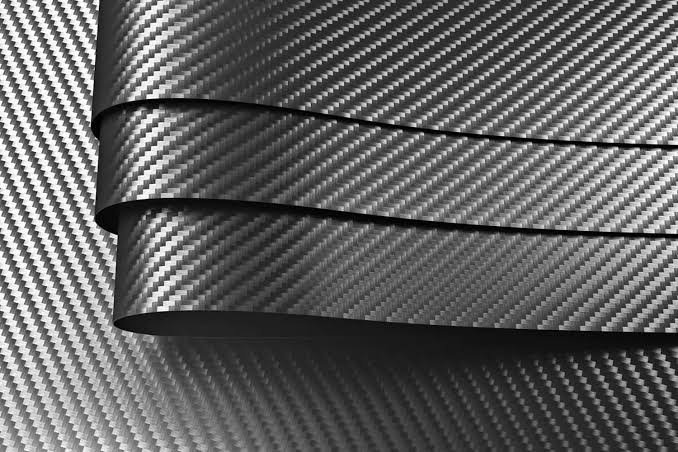
Carbon Fiber Reinforced Polymers are gradually replacing heavy metal as the aircraft industry strives for increased fuel efficiency and payload capacity. These cutting edge composite materials are crucial to aircraft like the Airbus A350 and Boeing 787.
However, due to its low electrical conductivity and great structural integrity, carbon fiber poses a serious engineering difficulty. Severe resistive heating occurs when a high-intensity lightning strike strikes bare carbon composite because the material cannot quickly dissipate the electrical energy. Delamination, explosive resin evaporation, and serious structural deterioration may result from this.
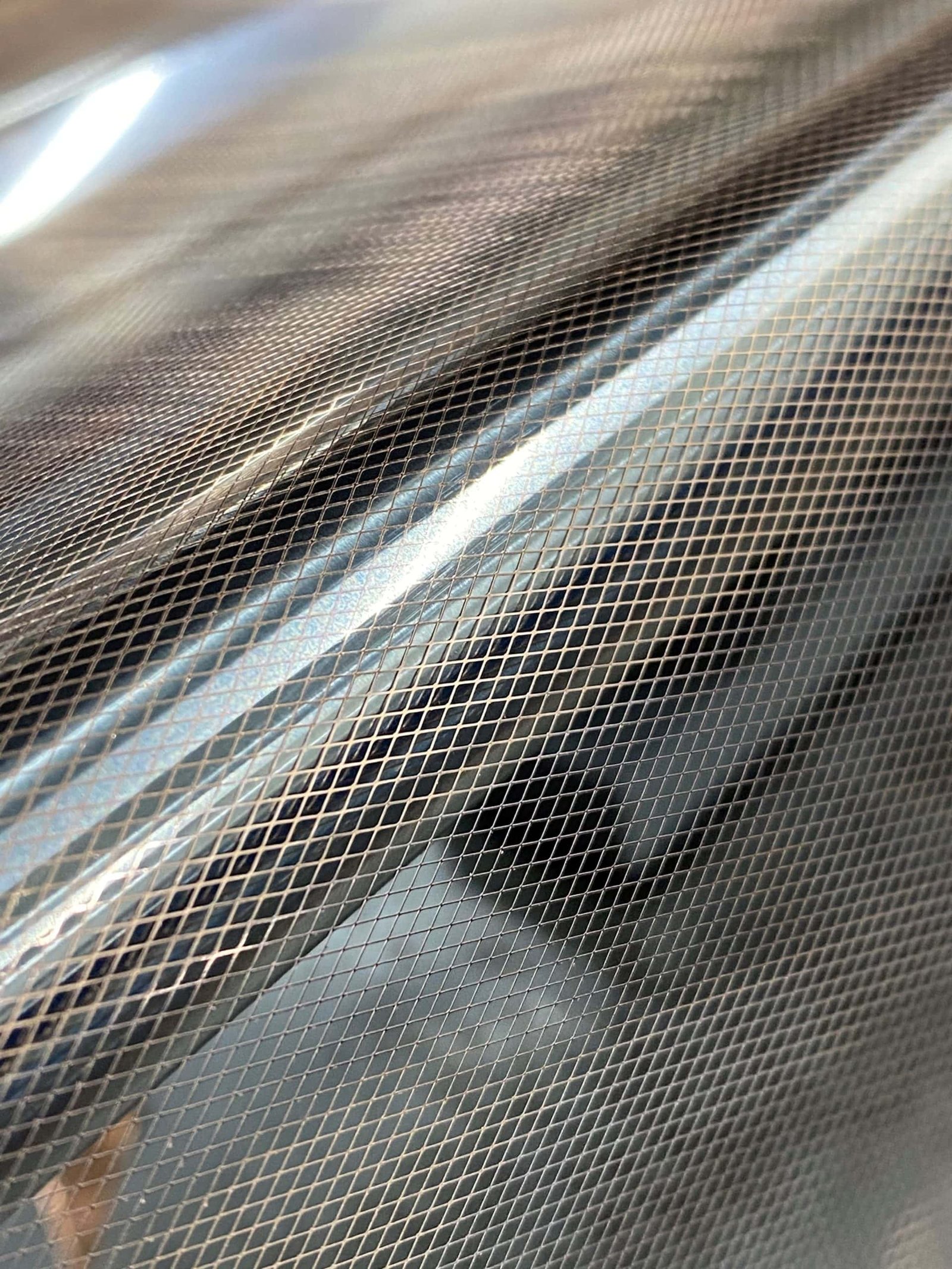
To safely utilize Carbon Fiber Reinforced Polymers, engineers embed a highly conductive Expanded Metal Foil matrix into the aircraft’s outer composite layers. This mesh restores the Faraday cage effect, safely dissipating lightning currents without compromising the material’s structural advantages. Following a suspected strike, maintenance crews use Non-Destructive Testing to inspect the skin for micro-delamination. Because this protection system is highly effective, any resulting damage is predominantly superficial, validating the resilience and safety of modern aerospace engineering.