


Introduction
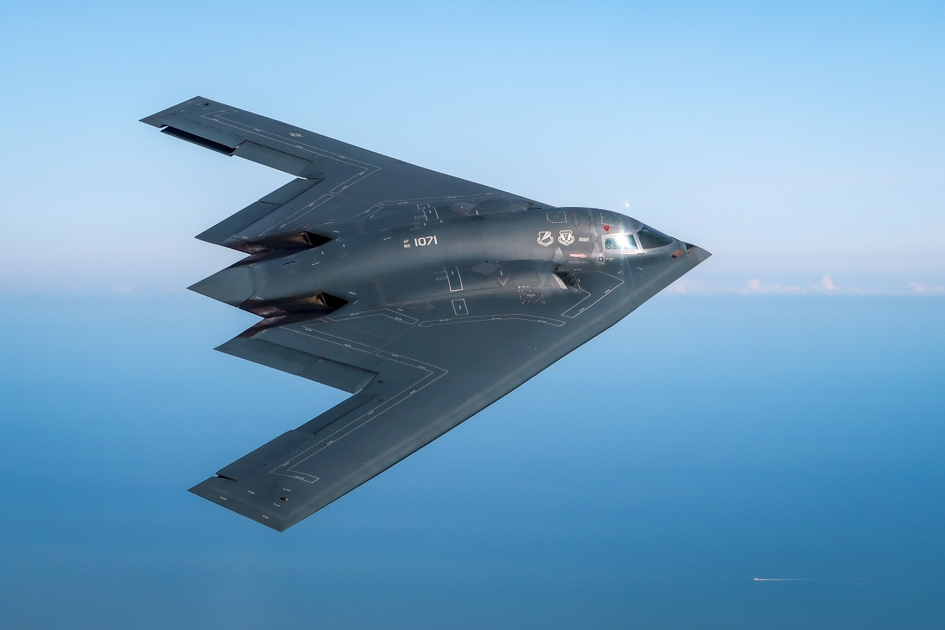
The B-2 Spirit Strategic Bomber, one of the first operational “low-visibility” marvels in military aviation history, is a platform that pushes boundaries not only with its astronomical cost but also with its space-age-inspired aerodynamic design. With a unit cost approaching $2 billion, the aircraft is designed to reach strategic targets without detection by enemy air defense networks. However, this operational capability relies on a complex structure that imposes significant constraints regarding materials science and chemical stability. The key factor in reducing the aircraft’s radar signature to a level equivalent to that of a bird is not only the “flying wing” geometry, which does not reflect radar waves, but also the special Radar Absorbing Material (RAM) architecture covering its fuselage.
Fundamental Operating Principle of Radar-Absorbent Coatings
Radar waves striking the B-2 Spirit’s airframe are attenuated by the surface coating rather than reflecting back to the receiver station, as would occur with standard metals. Dielectric and ferromagnetic fillers within the coating architecture allow electromagnetic energy to penetrate the structure. Sub-micron-sized Carbonyl Iron Powder (Iron Ball Paint) and carbon-based structures embedded in the polymer matrix interact with the electric and magnetic field components of the radar waves. Through this interaction, as the electromagnetic wave propagates within the matrix, it is converted into harmless thermal energy via magnetic hysteresis and conduction losses. By absorbing incoming radio frequencies, the aircraft minimizes its Radar Cross-Section (RCS).
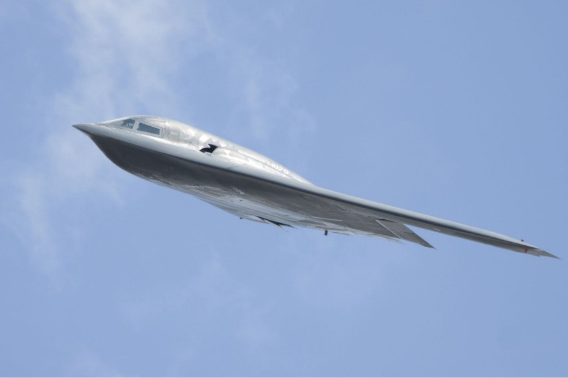
The airframe structure of the B-2 Spirit during flight.
Environmental Factors and Material Degradation
Maintaining this high level of low-observability performance is challenging due to the coating materials’ sensitivity to environmental conditions. The elastomeric coatings used during the early stages of the B-2 Spirit’s service life possessed hydrophilic (water-attracting) chemical properties. This characteristic led to significant technical issues under operational conditions:
•Moisture and Water Ingress: When the aircraft operates in high-humidity climates or passes through clouds, water molecules penetrate the micropores of the coating matrix. Water’s high dielectric constant disrupts the specially engineered impedance match. Consequently, waves reflecting unattenuated from the outer surface cause a sudden increase in the aircraft’s radar cross-section.
•Thermal Friction and Mechanical Stresses: Aerodynamic frictional heat generated during high-subsonic flight causes the coating polymers to become brittle and lose their flexibility. Airframe flexing during maneuvers leads to delamination and the formation of micro-cracks within the RAM (Radar Absorbent Material) layers.
Climate-Controlled Hangars and Maintenance Burden
The sensitivity of RAM coatings to environmental factors has directly impacted the aircraft’s logistical sustainment processes. The B-2 Spirit cannot be housed in standard military hangars; maintaining constant temperature and humidity levels via specialized climate control systems in storage hangars is mandatory. Following every flight mission, technical teams must repair separations, joints, and micro-cracks in the airframe panels by filling them with specialized materials.
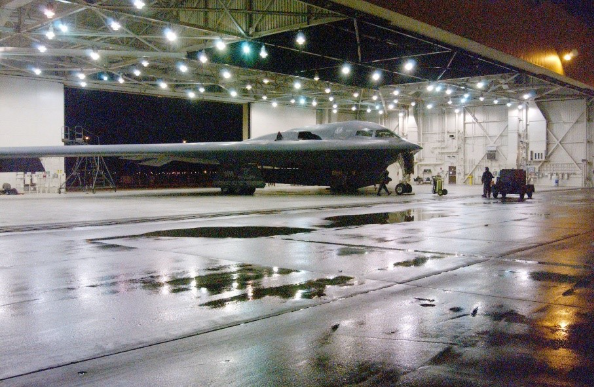
B-2 maintenance process in a climate-controlled hangar.
The long curing times associated with the putties and resins used in the first-generation coating technology required approximately 50 to 60 hours of maintenance labor for every hour of flight. This situation severely restricted the aircraft’s deployment flexibility -limiting operations away from its main base- and impacted combat readiness rates.
Sustainment Optimization via the AHFM Transition
Northrop Grumman developed the Alternative High-Frequency Material (AHFM) project to overcome the issues of excessive maintenance time and costs associated with first-generation coatings. Integrated into the aircraft starting in the 2000s, this next-generation, polyurethane-based hydrophobic coating system brought significant changes to maintenance processes:
1. Spray Application: The new material, in spray form, can be applied to the airframe using robotic arms or specialized equipment.
2. Curing Time: Curing times that previously took days with traditional resins have been reduced to under 6 hours.
3. Moisture Resistance: Its hydrophobic nature reduces the risk of dielectric shift caused by moisture ingress and enhances the aircraft’s operational stability in harsh weather conditions.
Conclusion
The B-2 Spirit stealth bomber represents the pinnacle of aerodynamic design and materials science, while also highlighting the high maintenance costs associated with its strategic stealth capabilities. The electromagnetic attenuation performance of Radar-Absorbing Materials (RAM) is limited by the sensitivity of polymer matrices to heat, moisture, and mechanical stress. Although material improvements such as AHFM have reduced maintenance burdens and curing times, the B-2 Spirit remains a prime example of a high-performance stealth platform requiring constant and meticulous chemical maintenance.
References
- U.S. Government Accountability Office (GAO), “B-2 Bomber: Maintenance Costs and High-Altitude Test Results,” GAO Report GAO/NSIAD-97-181, Washington, D.C., 1997.
- U.S. Government Accountability Office (GAO), “B-2 Stealth Bomber: Sustaining Fleet Availability Requires Resolving Low Observable Maintenance Issues,” GAO Report GAO-03-899, Washington, D.C., 2003.
- E. F. Knott, J. F. Shaeffer, and M. T. Tuley, Radar Cross Section, 2nd ed. Norwood, MA: Artech House, 2004.
- K. J. Vinoy and R. M. Jha, Radar Absorbing Materials: Materials, Design and Applications. Bangalore: Springer, 1996.
- A. E. Fuhs, Fundamentals of Stealth Technology. Cambridge: Cambridge University Press, 2010.