

Few airports in Europe can claim more than a century of aviation history. Even fewer have remained active through so many different eras of flight. In the north of Bucharest, however, there is an airport whose story began when powered aviation was still in its infancy.
Bucharest Baneasa – Aurel Vlaicu International Airport is the oldest airport in Romania still in operation, with ts history as an established aviation site reaching back to 1912. The airport itself also occupies a remarkable place in the history of European aviation, having witnessed the transition from pioneering flights and grass airfields to international passenger services and modern commercial aviation.
And unlike many airports of a similar age, Băneasa still preserves a highly distinctive historic terminal building, one whose unusual shape has become one of the most recognizable pieces of aviation architecture in Romania.
From the first flights to an airport
The history of aviation at Băneasa began even before the airport was formally established. In 1909, Louis Blériot carried out some of the first flights in the area, using a private hippodrome at Băneasa. A year later, on 7 June 1910, Romanian aviation pioneer Aurel Vlaicu demonstrated his aircraft at an aviation meeting held on the Băneasa field. The event was recorded in the contemporary press and represents one of the earliest documented chapters in the site’s aviation history.
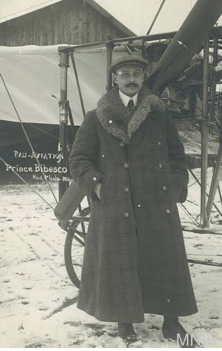
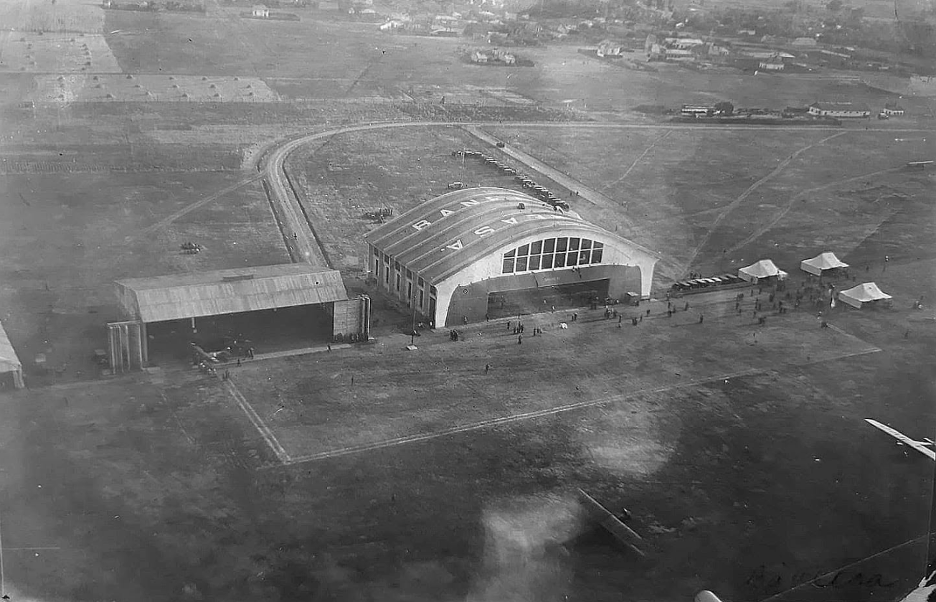
The decisive step came in 1912. On 1 August of that year, the Romanian Air League, led by Prince George Valentin Bibescu, established a flying school at Băneasa for military pilots. The site subsequently developed beyond its original role as a flying field, with civil pilot training, military aviation and the Royal Romanian Aeroclub becoming part of its activities. Băneasa had effectively entered the age of organised aviation.
The birth of Romanian commercial aviation
The 1920s transformed Băneasa from an aviation field into an important centre of commercial air transport.
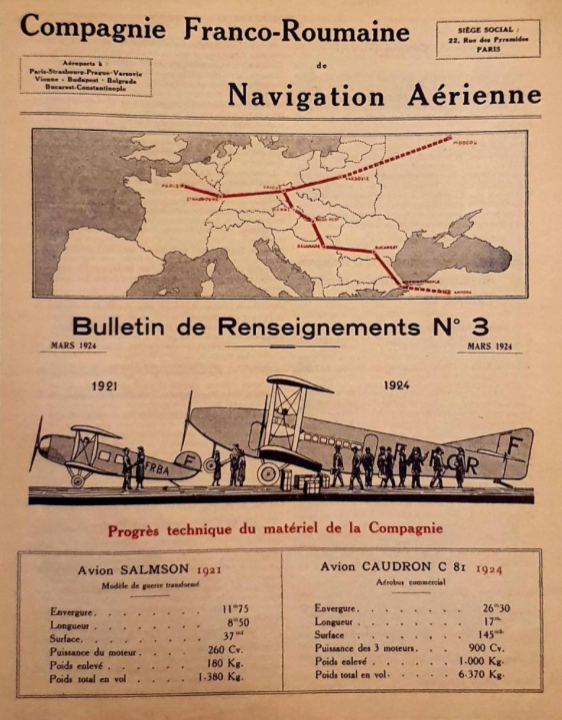
In 1920, the Franco-Romanian Air Navigation Company was established. According to Bucharest Airports, it was the world’s first airline established for the transport of passengers, cargo and mail, using Romanian capital and French technical equipment.
Only two years later, Băneasa became part of an important milestone in international aviation. On November 12th 1922, the first intercontinental air route between Europe and Asia was inaugurated on the route:
Paris – Strasbourg – Prague – Vienna – Bucharest – Constantinopole

The airline operating the route was the Franco-Romanian Company for Air Navigation (CFRNA), one of the pioneers of European commercial aviation. Its French successor, CIDNA, would later become part of the group of airlines that formed Air France in 1933, while its Romanian operations formed part of the early lineage of Romania’s national airline, eventually leading to TAROM. For Bucharest, this was an extraordinary development. Only a little more than a decade after Aurel Vlaicu had demonstrated his aircraft on the Băneasa field, the same location had become a stop on an international air route connecting Western Europe with Constantinople.
An airport that also built aircraft
Băneasa was also closely connected with the development of Romania’s interwar aircraft industry. In Bucharest, the SET (Societatea de Exploatări Tehnice) factory produced a succession of Romanian-designed aircraft, beginning with the Proto-SET prototype and the SET-3 trainer in the late 1920s. This was followed by the SET-31 and its variants, the SET-7 series of training and reconnaissance aircraft, and other designs. SET also produced aircraft under licence, including Fleet F-10G and Nardi FN-305 trainers, as well as IAR-27 and IAR-39 aircraft.
The connection with Băneasa was more than geographical. SET aircraft were tested, demonstrated and flown at Băneasa; for example, a SET-3 won the 1930 competition for the Cupa „Av. Mircea Zorilescu” held at Băneasa, while the SET-31G became famous after Ionel Ghica used it for his 1932 Bucharest–Saigon raid.
The airport was therefore becoming part of a much larger aviation ecosystem: pilot training, airlines, aircraft maintenance, testing and manufacturing were all developing around Bucharest, with Băneasa serving as one of its principal centres.
During the following decade, agreements with Poland and Czechoslovakia helped strengthen Băneasa’s role as an international airport.
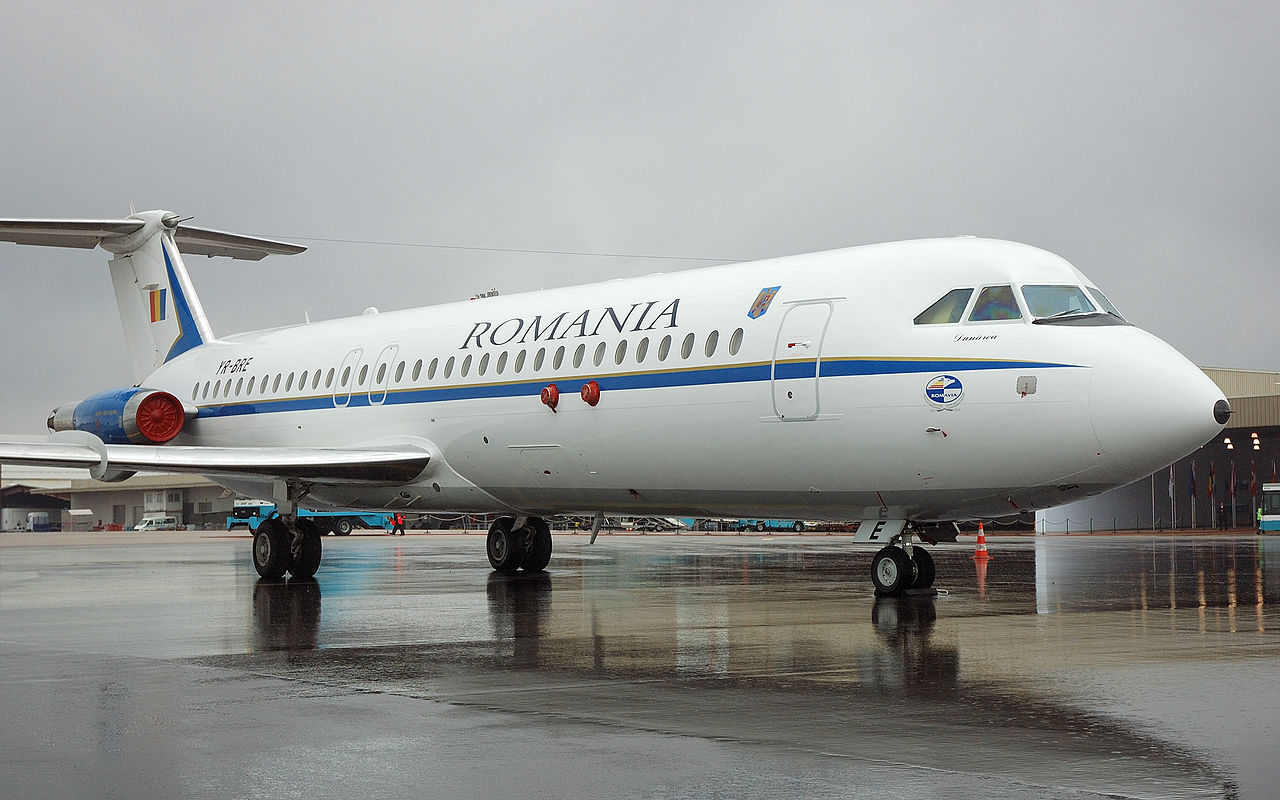
Perhaps the most ambitious aircraft associated with Băneasa’s industrial history was the ROMBAC 1-11. In the late 1970s, Romania reached an agreement with British Aircraft Corporation to produce the BAC 1-11 under licence. The aircraft was assembled at the Bucharest Aircraft Enterprise at Băneasa, with the first Romanian-built example, registered YR-BRA, making its first flight in September 1982. The programme brought Western commercial-jet technology directly into Romania’s aircraft industry, although only nine ROMBAC 1-11 aircraft were ultimately completed before production ended.
The first concrete runway in Romania
Another important milestone came during the Second World War. In 1942, the first concrete runway in Romania was built at Băneasa. This marked another transition in the history of the airport. The early days of aviation had been associated with grass fields and relatively small aircraft. By the 1940s, aircraft were becoming heavier, faster and increasingly dependent on permanent infrastructure. Băneasa was adapting along with them.
The remarkable terminal
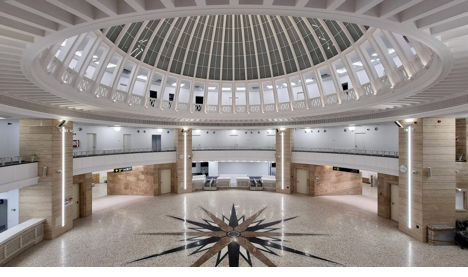
Perhaps the most recognizable part of Băneasa’s history is not the runway, but the building beside it. Between 1947 and 1952, a new passenger terminal was constructed at the airport. Its design was highly unusual. Rather than following the conventional rectangular form that would dominate later airport architecture, the building was conceived in the shape of a three-bladed propeller. The central circular hall forms the hub, while the three wings radiate outward like the blades of an aircraft propeller. Rather than treating aviation simply as the function of the building, its architects incorporated the idea of flight directly into its form, creating one of the most distinctive airport buildings in Romania.
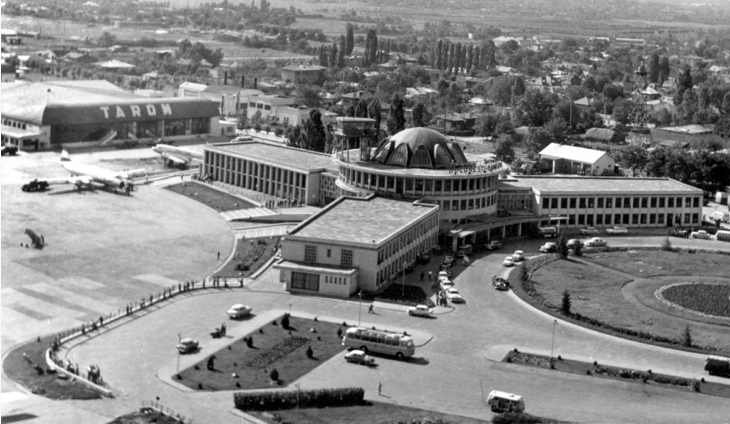
The form is particularly appropriate for an airport with Băneasa’s history. It is not simply decorative architecture placed next to an airfield. The building itself evokes aviation.
The three-wing configuration creates a distinctive visual identity that is difficult to confuse with any other Romanian airport. The central rotunda and sweeping geometry make the building one of the most unusual historic airport terminals still associated with active aviation. Bucharest Airports itself describes the terminal as one of Romania’s architectural jewels.
The historic character of the building has also been deliberately preserved. When parts of the airport were modernised for general aviation, the architectural characteristics of the historic Class A monument were specifically retained.
This makes Băneasa particularly interesting in the context of Europe’s oldest airports. The airport is old, but so is part of the architecture through which passengers and visitors experience it.
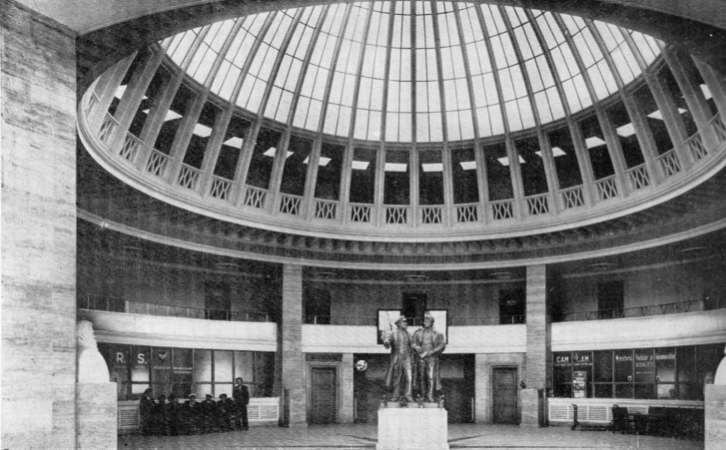
More than seven decades after its construction, the building remains remarkably recognizable. Its circular centre and three projecting wings continue to give Băneasa an architectural identity unlike that of most modern airports, where functionality and expansion have largely replaced the distinctive designs of the early age of air travel.
The terminal is therefore more than a surviving historic building. It is part of the story the airport has been telling for more than a century.
Bucharest’s Main Gateway
For much of the twentieth century, Băneasa was far more than a secondary airport. It was the main gateway to Bucharest and, until the opening of Otopeni in 1970, the city’s only airport serving international air traffic. For generations of Romanian travellers, the distinctive terminal at Băneasa was therefore their first encounter with international aviation.
During these decades, the airport witnessed some of the most important changes in the history of air travel, from the last generations of piston-powered airliners to the arrival of the jet age and the rapid expansion of commercial aviation that followed.
The opening of Otopeni gradually changed Băneasa’s role. As the new airport took over Bucharest’s long-haul and increasingly its international passenger traffic, Băneasa became more associated with domestic services, charter flights and later low-cost operations and general aviation.
Its role may have changed, but Băneasa itself never disappeared. The airport remained an active part of Bucharest’s aviation infrastructure, carrying its history into a new era while the distinctive terminal continued to stand beside the airfield
More Than a Century of Aviation
Perhaps Băneasa’s greatest distinction is not any individual event in its history, but the remarkable continuity of aviation on the site. In 2022, Bucharest Airports marked 110 years since the establishment of the airport, describing Băneasa as the third-oldest airport in the world still in operation and as the oldest airport whose aeronautical activity had remained uninterrupted. Although such rankings naturally depend on how the age and continuity of an airport are defined, there is no doubt about Băneasa’s place in Romanian aviation. It is the country’s oldest airport still in operation, with its history reaching back to the pioneering years of powered flight.
Few places in Romania illustrate the development of aviation quite as clearly. The same area that witnessed Louis Blériot’s early flights and Aurel Vlaicu’s demonstrations would later become home to Romania’s first flying schools, an international passenger airport and the country’s first concrete runway. Over the decades, the aircraft operating from Băneasa changed beyond recognition, yet the airport continued to serve aviation through each successive era.
A Living Piece of Romanian Aviation History
Băneasa’s significance ultimately lies in the way these different layers of history exist alongside one another. The early grass airfield of the pioneering aviators evolved into an international airport, the first concrete runway in Romania was laid here, and generations of increasingly sophisticated aircraft passed through the site. At the same time, the distinctive terminal built in the years immediately after the Second World War survived the transformation of Bucharest’s airport system and remains one of the defining features of the site.
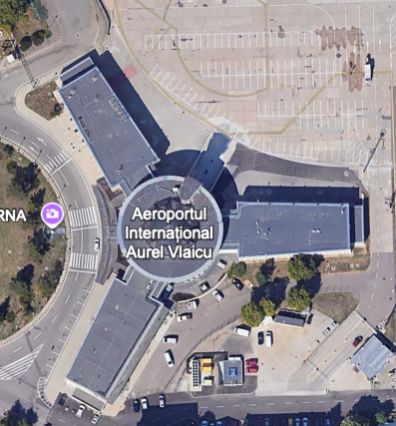
This makes Băneasa unusual even among Europe’s historic airports. It is not simply an old airport that has been preserved as a reminder of a vanished era, nor is it merely the location where aviation once took place. It remains an operational airport, carrying a history that began in the pioneering age of flight into the present day.
More than a century after the first aviators arrived at Băneasa, aircraft are still taking off and landing here. The technology has changed, the city has grown around the airfield, and the role of the airport has evolved considerably, but the connection between Băneasa and Romanian aviation has never been broken.