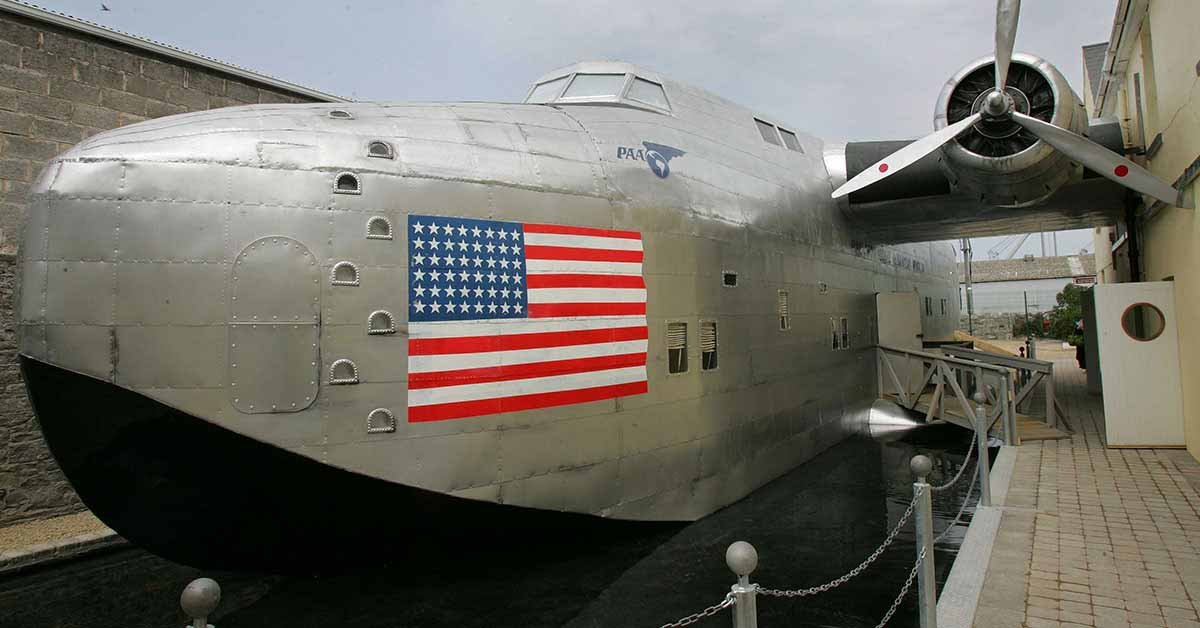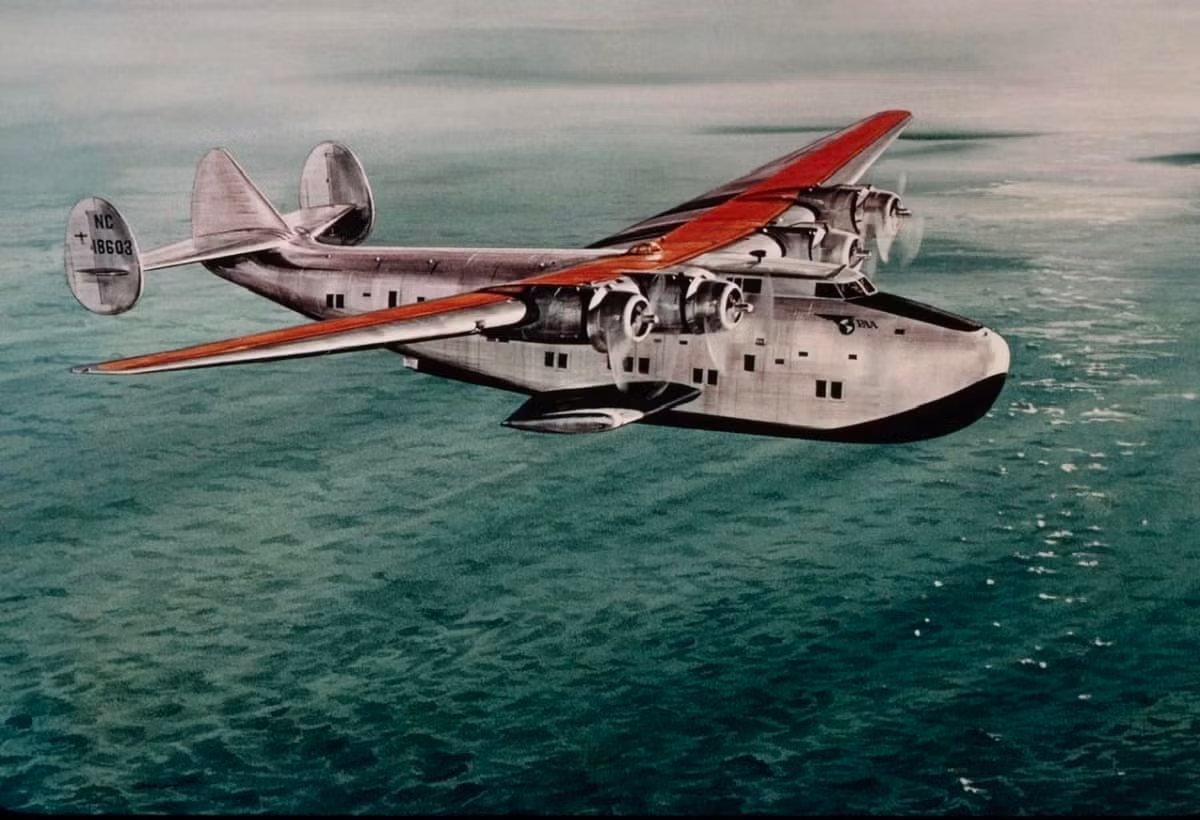

INTRODUCTION
The year is 1943. The Second World War is entering its closing statement, and the Allied Powers have to discuss their next steps in the retaking of Europe.
The chosen venue is Casablanca, in French-held Morocco.
The Battle of Stalingrad is raging on, which means Joseph Stalin, General Secretary of the Soviet Union’s Communist Party is unable to attend. This leaves only British Prime Minister Winston Churchill, representatives of the French military and US President Franklin D. Roosevelt as attendees.
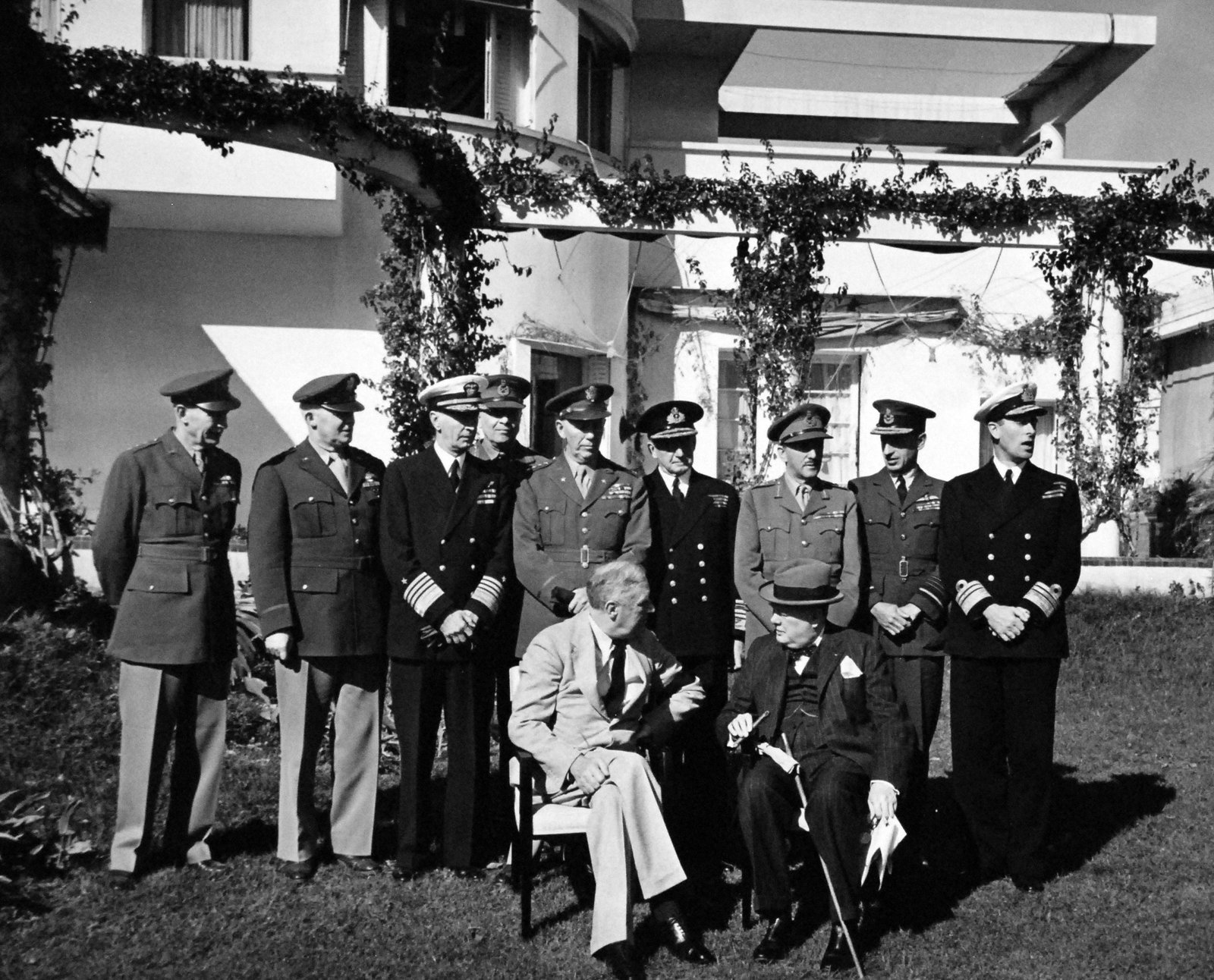
Now, the problem at hand is clear. How do we ship the most important man in the US across the Atlantic in the middle of a war?
A ship would be too slow and would be easily targeted by German U-Boats; Britain and France are warzones, which means enemy anti-air would put the President’s life at risk.
This means the solution is to fly the President and his retinue directly from America to Africa… Which no passenger plane at the time could manage to do, except for the Clipper.
The plan was the following: have two Pan American Boeing 314 “Clipper” flying boats in Miami, painted in grey-sea camouflage. The President would arrive by train and, under a fake name, board one of the Clippers. The second aircraft would trail the first, and it carried military and secret service personnel and communications specialists.
The convoy flew from Miami to Trinidad, then to Brazil and finally crossed the Atlantic, reaching Bathurst, Gambia. The last leg of the journey was made on a pair of Douglas C-54 Skymasters, which took the president to Casablanca.
This entire operation was made possible by the Boeing 314 Clipper, a legendary flying boat which was often compared to a luxury trans-atlantic ship.
To understand why this aircraft became so famous, we have to go back to its initial design process.
DEVELOPMENT
In 1936, the airline Pan American launched a design competition for a high-luxury transoceanic airliner.
Initially, Boeing decided not to submit a design, but a young engineer who worked for the company called Wellwood E. Beall managed to push for a design proposal. They recycled the wing used on their XB-15 bomber prototype, so the design team mostly focused on the fuselage and floatability, as the submission would be a massive flying boat. These types of aircraft were really common in the 30s since big airfields were not available, which meant big aircraft were forced to take off and land on water.
Pan American chose Boeing’s proposal, which was fitted with four massive Wright R-2600 Twin Cyclone engines. These massive 14 cylinder radial piston engines were able to output 1600 horsepower each.
The plane that emerged from this design process had a massive 46 metres wingspan, 32 metres length, with an empty weight of 21954 kilograms, a whopping cruise speed of 303 km/h and, most importantly, a 5930 kilometres flight range.
The first test flight was conducted in June 1938, and in January 1939 the Boeing 314 was finally certified for commercial flights.
COMMERCIAL FLIGHTS WITH PAN AMERICAN
Twelve Boeing 314 (later nicknamed “Clipper” after the 19th century merchant sailing vessels designed for speed) were made for Pan American.
The Clippers did both trans-atlantic and trans-pacific flights, flying from Southampton to New York and from San Francisco to Hong Kong.
These flights would take multiple days, as the Clippers had to stop for fuel. This meant that the passengers on board, who usually were very high standing, had to sleep on the plane. The Clipper’s layout was like a flying hotel. The plane had two decks, one for the crew, one for the passengers.
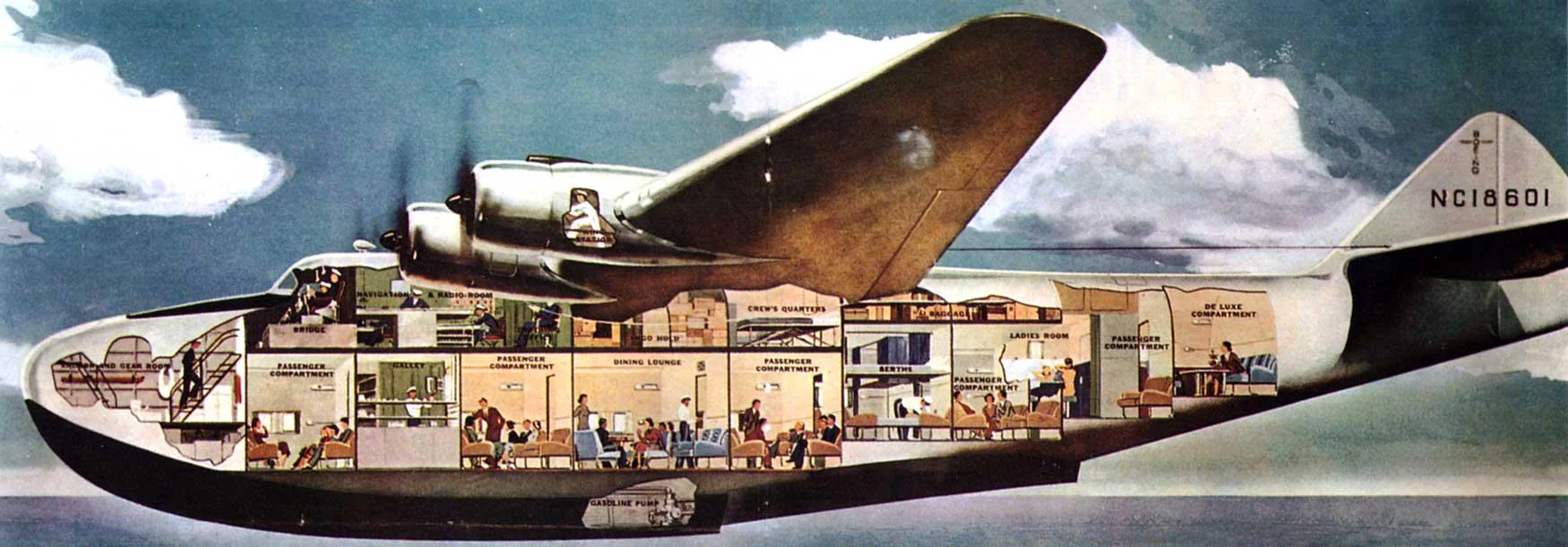
On longer night flights, up to 40 passengers and 16 crew members could sleep in beds in the plane. On shorter, day-only flights, 74 passengers could be fitted in the plane.
Tickets for trans-oceanic flights would cost a small fortune, around 375$ for a one-way trans-atlantic trip, which in modern currency would be around 9000$.
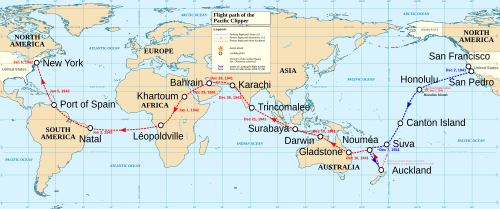
This commercial period ended in 1941, when the USA entered the Second World War. At the outbreak of the war against Japan in the Pacific, one of the Clippers was flying to San Francisco. This aircraft had to fly westwards around the entire globe in order to get back to New York, landing in Surabaya, Karachi, Bahrain, Khartoum and Leopoldville along the way.
THE SECOND WORLD WAR
Pan American’s fleet of Clippers was requisitioned by the government in 1942, but these aircraft were still being flown by their former civilian operators under military orders.
Clippers were used by the USA to transport high-standing personnel such as officers, scientists or politicians. It was the only aircraft able to do the crossing over the South Atlantic, so they were also used for cargo transport to connect with European forces.
Both US President Franklin D. Roosevelt and Prime Minister Winston Churchill flew in the Clippers during the war.
AFTER THE WAR
During the war, many large airfields had been built to support large long-range bombers. This meant that the flying boat as a concept lost a lot of momentum, since large aircraft could be operated from these new airfields.
Flying boats compromise a lot of aerodynamic drag, extra weight, corrosion, maintenance and required pilot ability in order to land and take off from water. This means that the Boeing 314 was quickly outclassed by newer, large commercial aircraft such as the Douglas DC-4.
Pan American got their Clippers back from the government, but three out of the twelve aircraft had crashed. The remaining ones were auctioned to other airlines, but they were either damaged and salvaged for parts, or eventually replaced by newer, safer land planes.
One of them, which was sold to World Airways (which bankrupted soon after), was left on a harbour and, during a storm in 1951, was damaged and sunk. This was the last Clipper to have ever flown.
LEGACY
The Clipper was the last of the great flying boats of the 1930s, a generation of commercial aircraft made to overcome the limitations at the time that big airframes had. It represented the pinnacle of luxury in aviation and was the first commercial aircraft to fly around the entire globe (even though it was done by accident).