

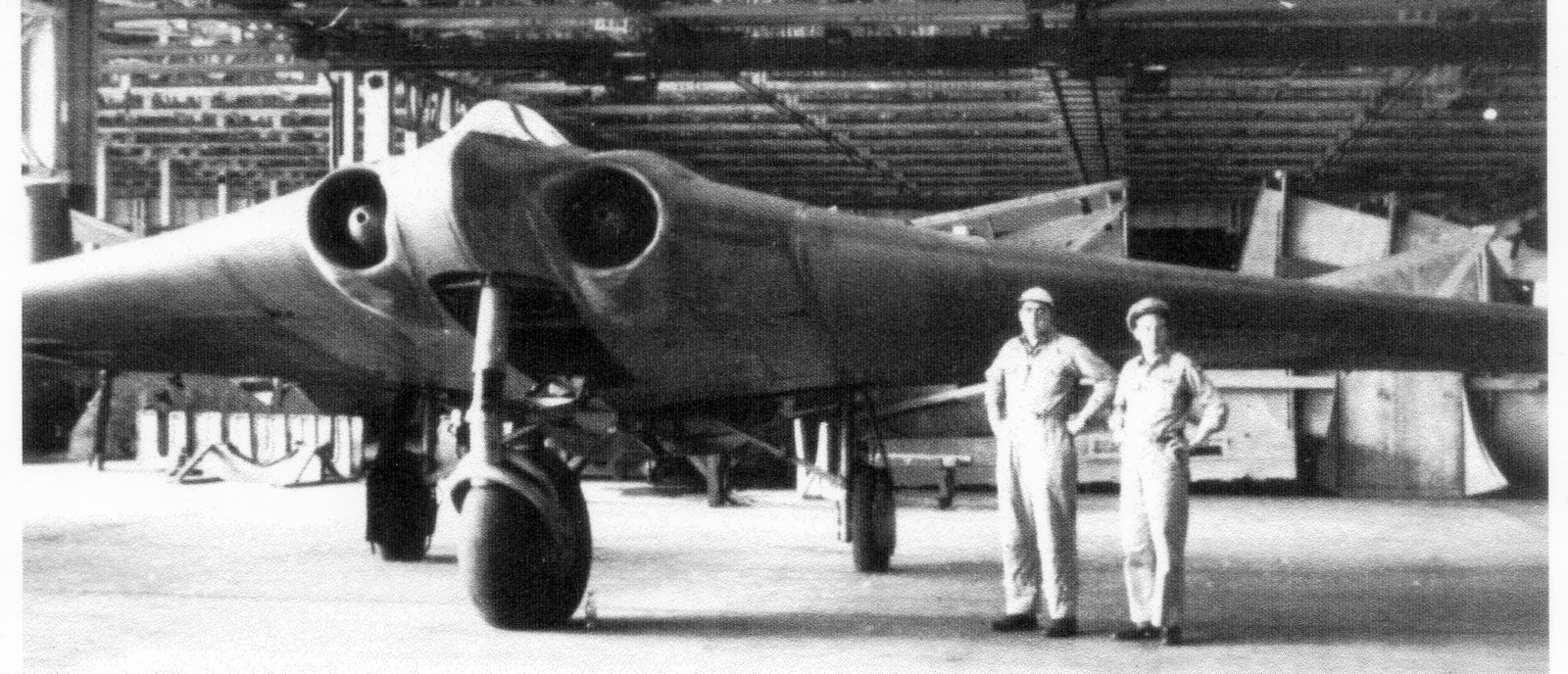

In April 1945, during the final days of the Second World War, a U.S. military special intelligence unit—part of the Operation Paperclip team—entered a secret hangar in the German town of Friedrichroda and was left stunned by what they discovered. In the centre of the hangar stood a twin-jet-engine prototype that bore no resemblance to the propeller-driven, straight-winged aircraft of the era; it was a tailless, sharp-edged craft, reminiscent of a futuristic bat wing: the Horten Ho 229.

The Surviving Horten Ho 229 V3 Center Section
Its appearance was so far ahead of its time that it ignited one of the most enduring conspiracy theories in aviation history. According to these claims, the Nazis had used reverse engineering on wreckage recovered from an extraterrestrial civilization to develop secret craft capable of defying gravity. Some theories go even further, suggesting that the B-2 Spirit bomber—a “stealth” aircraft that the U.S. spent billions of dollars to develop decades later—was, in fact, a direct copy of these clandestine Nazi designs. But was the Horten Ho 229 truly a product of alien technology, or was it an extraordinary engineering solution born from the desperation of war?
Charcoal Dust and Early Radar-Absorbing Materials (RAM)
The primary motivation behind the Ho 229—designed by the Horten brothers, Reimar and Walter—was not alien technology, but rather the severe shortage of raw materials that crippled Germany during the final years of the war. As strategic reserves of aluminum and steel, essential for aircraft production, were exhausted, the Horten brothers were compelled to construct the aircraft’s main fuselage and wing panels using plywood and layers of wood.
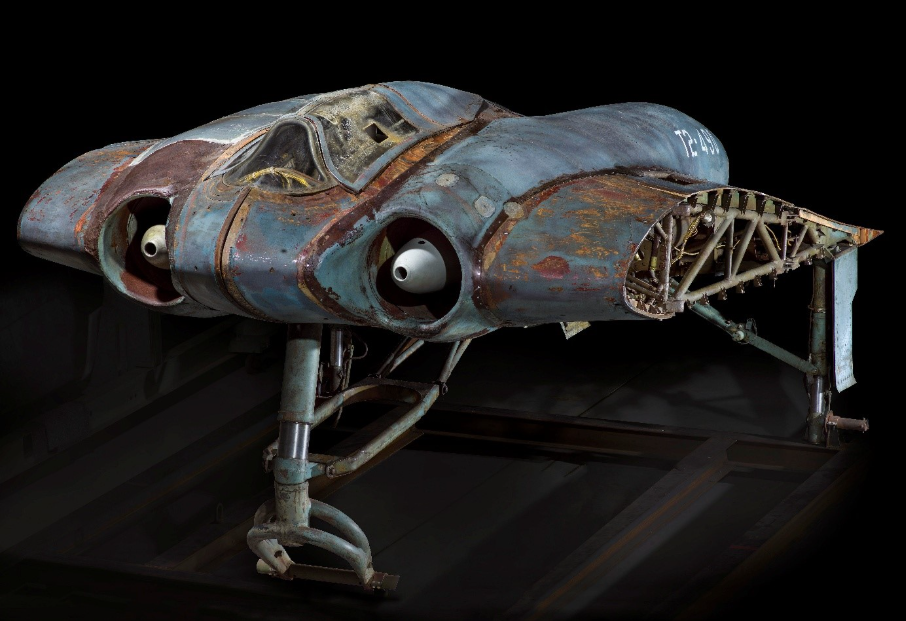
Internal Steel Frame and Charcoal-Bonded Plywood Skin of Horten HO-229
However, this forced choice of materials yielded an unexpected engineering advantage that would alter the course of aviation history. To bond the wooden panels together and ensure they could withstand the aerodynamic loads encountered at high speeds, the brothers developed a specialised mixture of resin and glue. Reimar Horten incorporated charcoal dust and fine sawdust into this adhesive blend. This carbon-based mixture—a primitive precursor to modern composite materials—absorbed, rather than reflected, the high-frequency electromagnetic waves emitted by the “Chain Home” radar system, which served as an early-warning network along the British coast. Thanks to this technology—now known as Radar-Absorbing Material (RAM)—the Ho 229’s radar cross-section (RCS) was reduced by approximately 20% to 37% compared to metal-bodied aircraft, significantly shortening the distance at which it could be detected.
The Price of Tailless Flight: Aerodynamic Instability
The most striking feature that placed the Ho 229 at the heart of various conspiracy theories was its lack of a vertical stabilizer (tail fin). In conventional aircraft, the tail assembly provides directional stability by preventing the plane from veering left or right (yaw). While eliminating the tail drastically reduces aerodynamic drag—granting an aircraft exceptional range and speed—it also introduces a major engineering nightmare: yaw instability and “adverse yaw.”
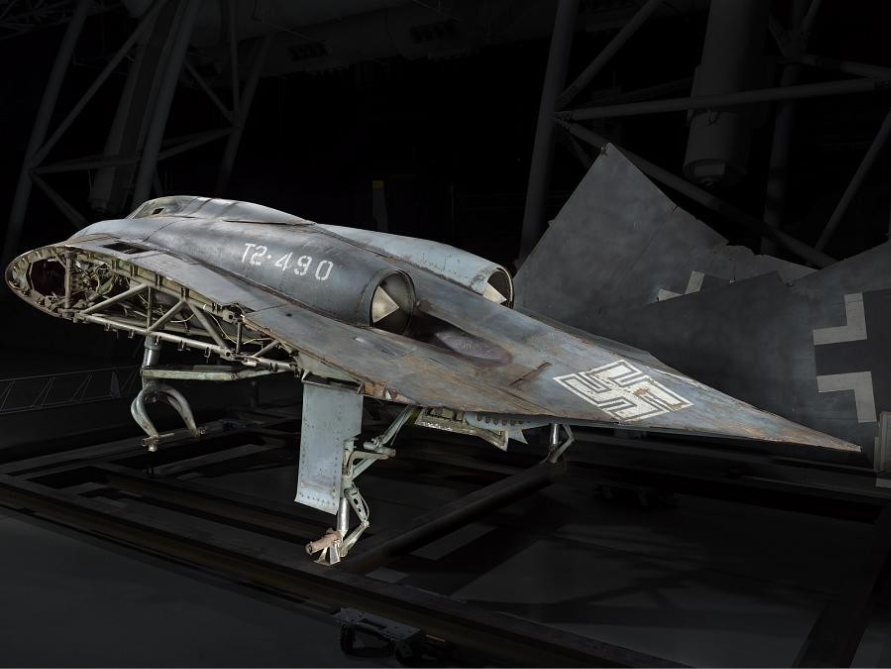
Side Profile of the Ho 229 V3: Aerodynamic Geometry Without a Vertical Stabilizer
To overcome this physical hurdle, the Horten brothers reconfigured the wing geometry. By employing a “bell-shaped lift distribution” across the wings, they were able to balance the vortices and drag at the wingtips. For directional control, they designed “drag rudders”—split surfaces at the wingtips that, when deployed, created air resistance to turn the aircraft in the desired direction. However, in 1945—long before the advent of modern fly-by-wire computerized flight control systems—pilots found this tailless design extremely difficult to handle. In fact, during a test flight in February 1945, one of the engines caught fire; the resulting asymmetric thrust caused the tailless airframe to enter an uncontrollable spin, leading to a crash that claimed the life of the test pilot.
A Legend, or an Engineering Legacy?
After the war, the Ho 229 V3 prototype was taken to the United States, where it remained hidden in storage for years—a fact that only fueled the growing legend of “Nazi UFOs.” However, in 2008, engineers at Northrop Grumman—the manufacturer of the B-2 Spirit bomber—sought to solve the mystery scientifically by constructing a full-scale replica of the Ho 229, adhering strictly to the original blueprints and using the same materials: wood and charcoal dust.
Actual radar cross-section tests revealed a striking truth: the Ho 229 was certainly not the product of alien technology, yet it possessed an astonishingly low visibility to the radar systems of its era. Had it reached mass production, British radar would likely not have detected the aircraft until it was just minutes away from the coastline.
Conclusion
The story of the Horten Ho 229 demonstrates how severe engineering constraints—such as acute metal shortages and inherent tailless instability—can catalyze revolutionary design breakthroughs. By pairing a low-drag flying-wing airframe with carbon-infused wooden composites, the Horten brothers inadvertently pioneered the foundational principles of low-observable aircraft design. Far from being a product of reverse-engineered alien technology, the Ho 229 stands as a testament to human ingenuity turning material scarcity into an aerodynamic milestone.
References
- Myhra, David (2002). The Horten Brothers and Their All-Wing Aircraft. Schiffer Publishing.