

The date is 20 of july, 1969. You switch on the television, joining hundreds of millions of people around the world. Families gather in the living room, news anchors speak with anticipation, and all eyes are fixed on a grainy black-and-white image transmitted from nearly 400,000 km away.
Moments later, Neil Armstrong steps onto the lunar surface and speaks the words that will echo through history: “That’s one small step for man, one giant leap for mankind.”
What you are witnessing is more than the first human footsteps on the Moon. It is the culmination of decades of scientific breakthroughs, political rivalry, engineering innovation, and the determination of hundreds of thousands of people who turned one of humanity’s oldest dreams into reality.
Looking up: Where the Dream Began
Long before rockets existed, humanity dreamed of exploring the skies. Ancient civilizations studied the stars, philosophers imagined traveling beyond Earth, and writers such as Jules Verne envisioned journeys to the Moon decades before technology made them possible. The scientific foundations of spaceflights emerged during the late nineteenth and early twentieth centuries thanks to pioneers who believed rockets could one day escape Earth’s gravity. Among them were Konstantin Tsiolkovsky, often regarded as the father of astronautics, Robert Goddard, who launched the first liquid fueled rocket in 1926, and Hermann Oberth, whose work inspired an entire generation of engineers.
Following the Second World War, rocket technology advanced at an unprecedented pace. The V-2 rocket, designed under the leadership of Wernher von Braun, proved that reaching the edge of space was no longer science fiction. After the war, both the United States and the Soviet Union recruited German scientists, turning rocket development into a strategic priority. Few could have predicted that this competition would soon evolve into one of history’s greatest technological races.
The Space Race: More Than Science
The Space Race was never just about exploration. During the Cold War, every achievement in space represented technological knowledge, military capacities, and national honour. The Soviet Union quickly established itself as the early leader. One breakthrough followed another, surprising the world and placing enormous pressure on the United States.
Some of the Soviet Union’s most significant milestones included:
Sputnik 1 (1957): the first artificial satellite to orbit Earth.
Yuri Gagarin (1961): the first human in space.
Valentina Tereshkova (1963): the first woman in space.
Alexei Leonov (1965): the first person to perform a spacewalk.
Each success widened the perceived technological gap between the two superpowers. Determined to change the course of history, President John F. Kennedy addressed the United States Congress in May 1961 with an ambitious challenge: to land a man on the Moon and return him safely to Earth before the decade was over.
At the time, the United States had only accumulated minutes of human spaceflight experience. Kennedy’s goal appeared almost impossible, but it became the driving force behind one of the largest engineering projects ever undertaken.
Building the Road to the Moon
The Apollo 11 mission was not achieved overnight. It was built on years of experimentation through NASA’s Mercury and Gemini programs, which gradually developed the knowledge required for lunar exploration. Astronauts learned how to survive in space, how spacecraft could dock while in orbit, and how long-duration missions affected the human body. Every mission solved a new engineering challenge, bringing NASA one step closer to its ultimate objective. Progress, however, came at a cost.
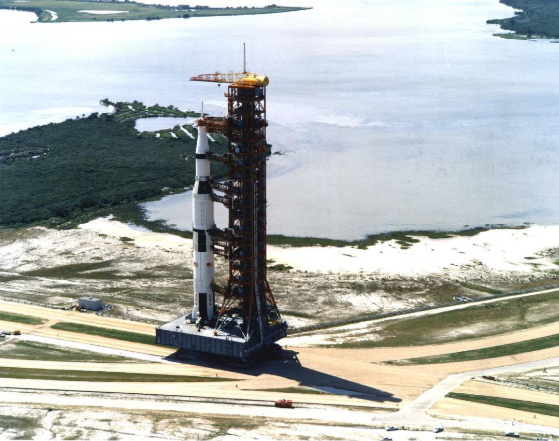
One of the greatest challenges was developing the technology capable of carrying astronauts safely to the Moon and back. NASA engineers designed the Saturn V, a three-stage launch vehicle that remains one of the most powerful rockets ever built. At the same time, entirely new systems had to be created for navigation, onboard computing, life support, and communication over distances never before attempted by humans.
The Apollo Guidance Computer, despite being far less powerful than today’s smartphones, represented a remarkable engineering achievement and played a crucial role in guiding astronauts throughout their journey. Every successful test flight, whether unmanned or crewed, provided valuable data and increased confidence that a lunar landing was within reach.
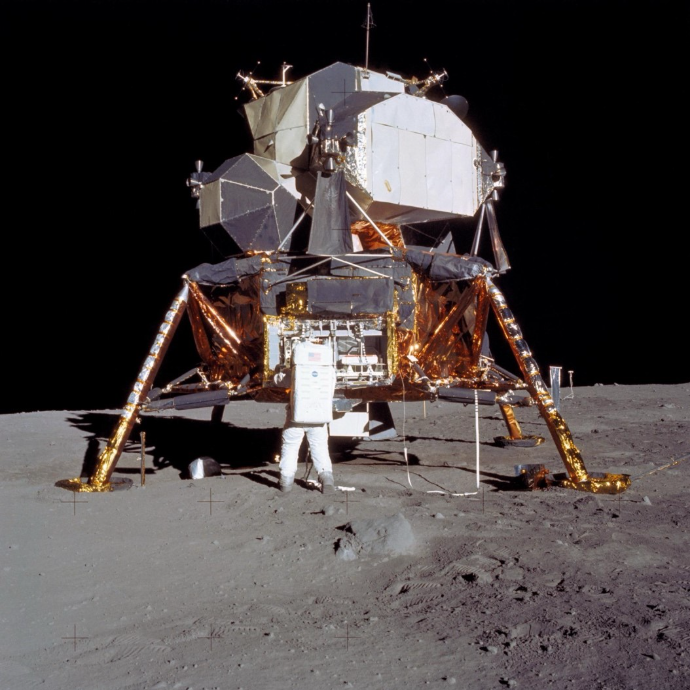
Unfortunately, in January 1967, the crew of Apollo 1 lost their lives during a launch pad test when a fire engulfed the spacecraft. The tragedy shocked NASA and the entire nation, leading to major redesigns that significantly improved spacecraft safety. Rather than ending the lunar program, the accident reinforced NASA’s determination to succeed.
Apollo 11: Humanity Reaches Another World
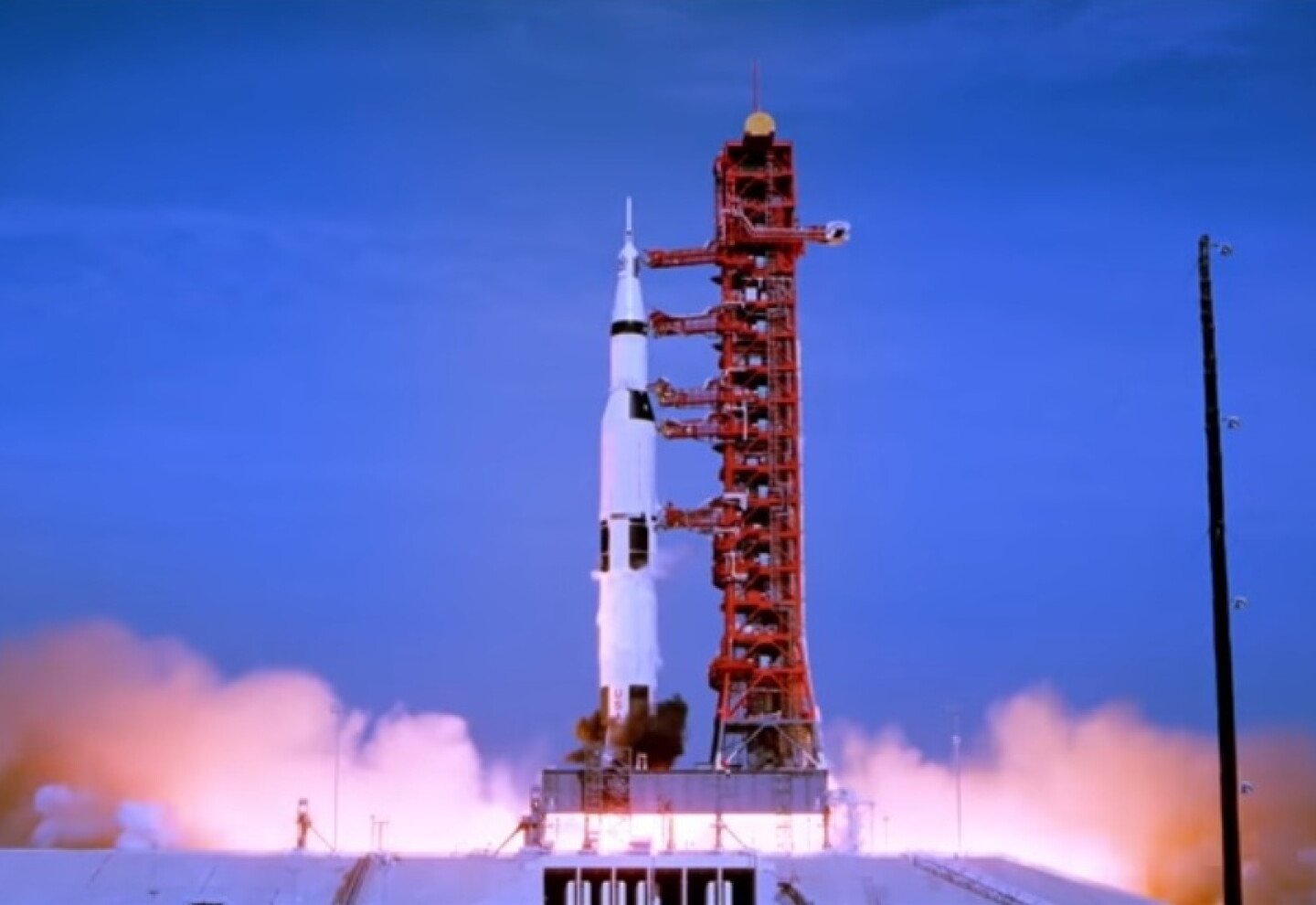
On July 16th, 1969, the Saturn V, still one of the most powerful rockets ever built, lifted off from Kennedy Space Center carrying three of the most famous astronauts:
- Neil Armstrong – Mission Commander
- Buzz Aldrin – Lunar Module Polot
- Michael Collins – Command Module Pilot
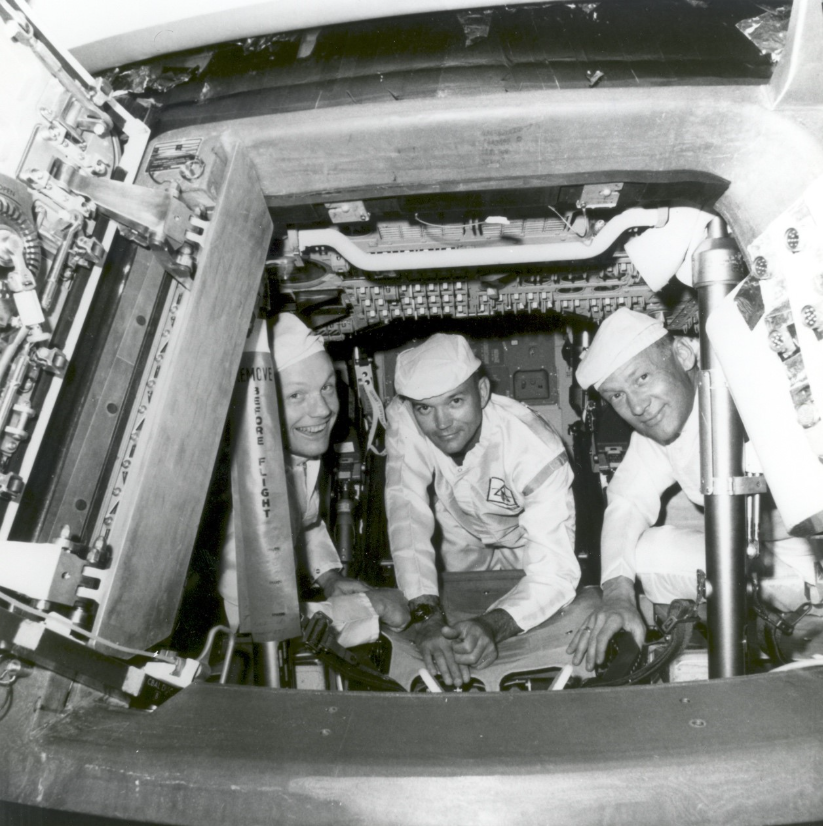
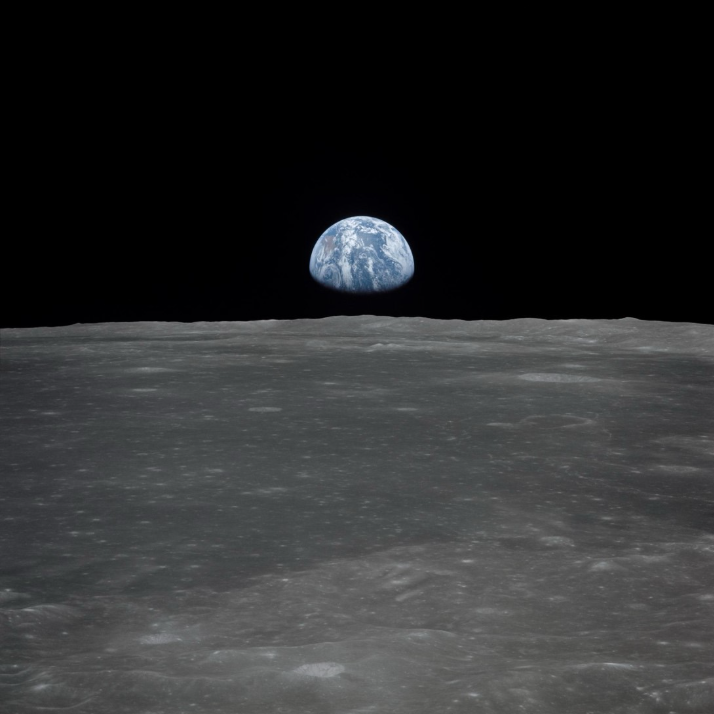
After travelling nearly 400,000 km through space, the Lunar Module Eagle separated from the Command Module Columbia and began its descent toward the lunar surface.
The landing was anything but routine. As the spacecraft approached the Moon, onboard computers triggered several alarms, while the planned landing site proved to be covered with rocks and craters. Taking manual control, Armstrong carefully guided the module to a safer location, leaving less than half a minute of fuel remaining.
Then came the words that mission controllers had waited years to hear:
“Houston, Tranquility Base here. The Eagle has landed.”

Several hours later, Armstrong became the first person to walk on the Moon, followed shortly by Buzz Aldrin. During their moonwalk, they deployed scientific instruments, collected approximately 22 kilograms of lunar samples, photographed the landing site, and left behind a commemorative plaque carrying a simple message:
“We came in peace for all mankind”
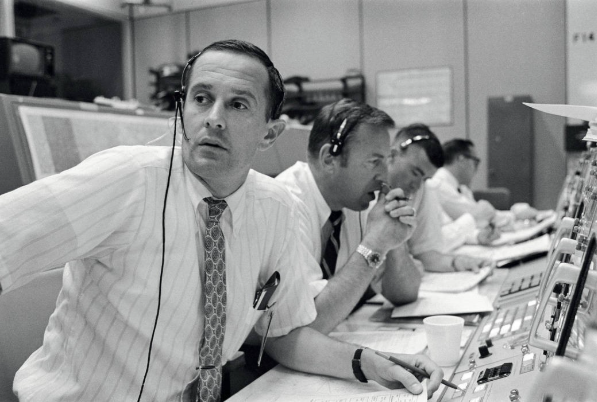
Meanwhile, Michael Collins continued orbiting the Moon alone, ensuring his crewmates would have a spacecraft waiting for their return to Earth.
The Thousands Behind the Three Astronauts
Although history often remembers the astronauts, Apollo 11 was truly the achievement of an enormous team. More than 400,000 engineers, scientists, technicians, programmers, mathematicians, and support staff contributed to the Apollo Program.
- Among the most influential figures were:
- John F. Kennedy, whose vision set the challenge.
- Wernher von Braun, chief architect of the Saturn V rocket.
- Gene Kranz, NASA Flight Director during several Apollo missions.
- Margaret Hamilton, whose software engineering team developed the onboard flight software that proved critical during the lunar landing.
Apollo 11 remains one of history’s greatest demonstrations of interdisciplinary collaboration, showing what can be achieved when science, engineering, and determination come together.
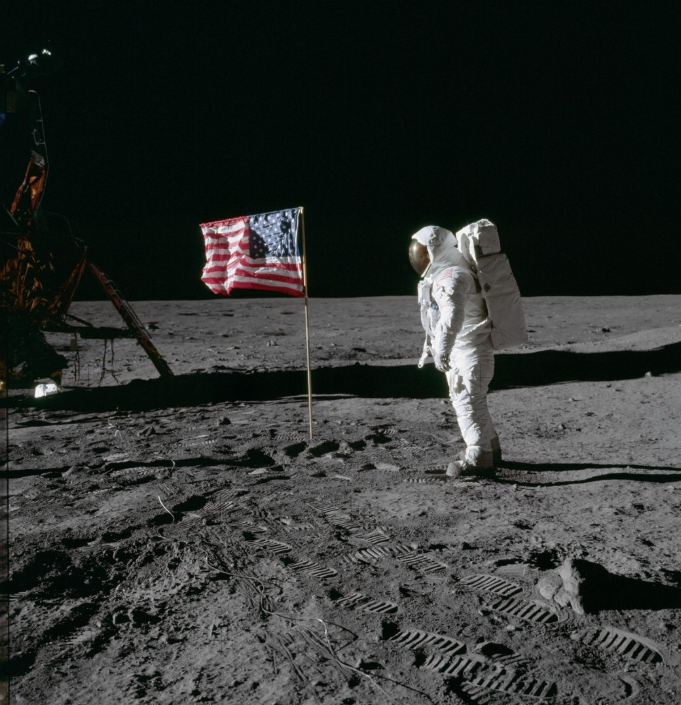
But Apollo 11 was only the beginning. Between 1969 and 1972, NASA successfully landed astronauts on the Moon six times through the Apollo program (Apollo 11, 12, 14, 15, 16, and 17), while Apollo 13 became famous for a very different reason. After an oxygen tank exploded en route to the Moon in 1970, the landing was aborted, and the mission turned into a dramatic struggle for survival. Thanks to the ingenuity of the crew and mission control, all three astronauts returned safely to Earth, making Apollo 13 one of NASA’s greatest demonstrations of problem-solving under pressure. Apollo 17, in December 1972, remains the most recent mission to land humans on the Moon.
Why Do Some People Still Believe It Was Fake?
Despite overwhelming evidence, the Moon landing has remained one of the world’s most persistent conspiracy theories.
Arguments commonly focus on details such as the American flag appearing to wave, the absence of visible stars in photographs, or unusual-looking shadows. While these claims may seem convincing at first glance, each has straightforward scientific explanations. The flag contained a horizontal support rod that caused it to ripple when moved, the camera exposure prevented stars from appearing against the brightly lit lunar surface, and the Moon’s uneven terrain naturally altered the direction and appearance of shadows.
Perhaps the strongest evidence comes not from NASA, but from independent verification. Lunar rocks collected during the Apollo missions have been analysed by researchers worldwide, laser reflectors left on the Moon continue to be used for scientific experiments, and modern satellites have photographed the Apollo landing sites, revealing the descent stages, scientific equipment, and even the astronauts’ footprints.
Today, there is no credible scientific evidence supporting claims that the Moon landing was staged.
A Legacy That Still Inspires
More than fifty years later, Apollo 11 continues to influence aerospace engineering, scientific research, and space exploration. Technologies developed for the program found applications far beyond the Moon, contributing to advances in computing, telecommunications, materials science, and navigation.
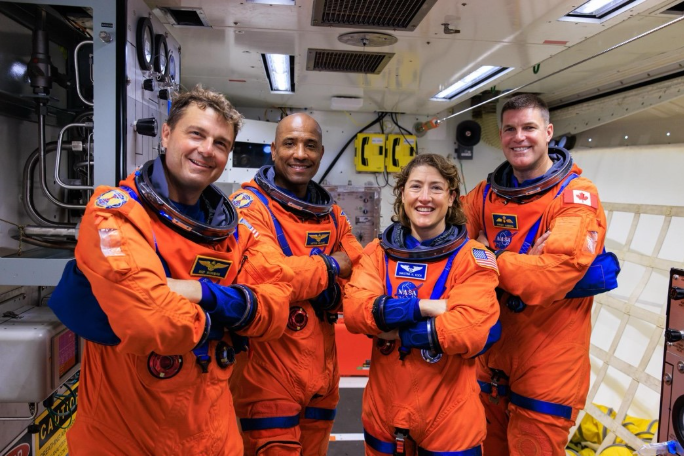
Perhaps its greatest legacy, however, is inspiration. The success of Apollo encouraged generations of students to become engineers, scientists, and astronauts. Today’s missions, including NASA’s Artemis program and international plans to establish a sustained human presence on the Moon, build upon the achievements of those who first ventured beyond Earth. International space agencies and private companies are once again setting their sights on the Moon to establish a long-term human presence on its surface. Beyond marking humanity’s return, these missions are expected to pave the way for future exploration of Mars and deeper ventures into our Solar System. More than half a century after Apollo, a new era of lunar exploration is beginning, one that continues to build on the legacy of those first historic footsteps.
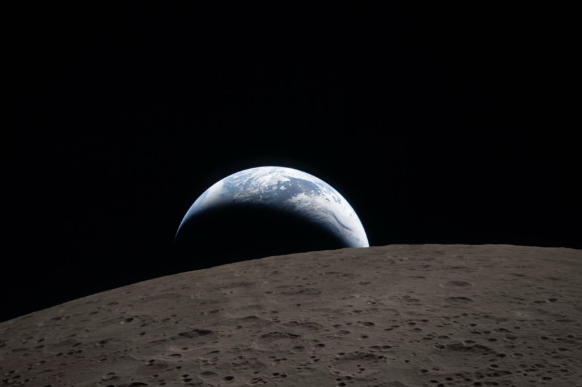
The Moon landing was never just about planting a flag or winning the Space Race. It was proof that when humanity combines curiosity with determination, even the most distant horizons can become destinations.
More than half a century later, that first step on the Moon still reminds us that the greatest adventures often begin with the courage to imagine the impossible