


During the mid 20th century, Chairman Mao Zedong popularised the use of the chinese phrase zhǐlǎohǔ (纸老虎), meaning “Paper Tiger”. This was used to describe something that claims or appears to be powerful, threatening or formidable, but is actually weak or ineffective.
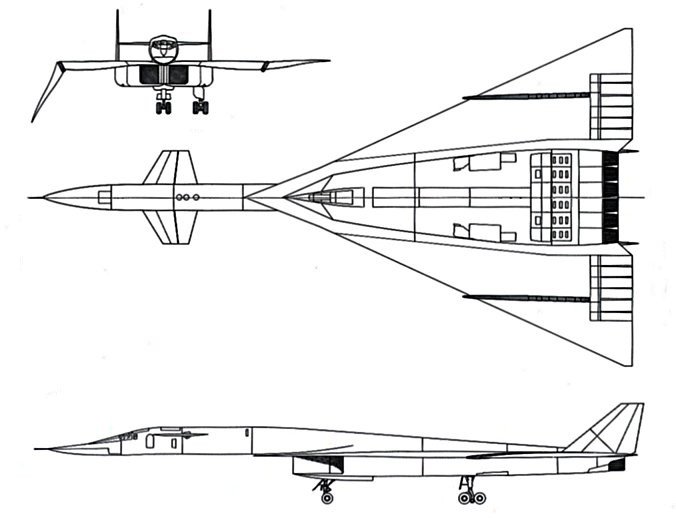
This article will take us through the most infamous Paper Tiger situation in the history of military aviation. During the early Cold War, United States military doctrine focused on long range, high altitude and speed, nuclear capable bombers. This doctrine reached its highest point by the late 1950s, when the US designed a new state-of-the-art prototype supersonic bomber, the XB-70. This beast of a plane, powered by 6 turbojet engines, was capable of surpassing Mach 3, faster than most air defense systems and with a ceiling of 21 km. The development of this bomber was a direct threat to Soviet national security.
Thus, the Mikoyan-Gurevich Design Bureau was commissioned to find a solution to this problem, in the form of an interceptor capable of fighting the new bombers. They were faced with the following problems:
- The plane had to be able to reach Mach 3+.
- The plane had to be easily mass-producible to cover the entirety of Soviet Airspace.
- It had to be able to carry as many long-range missiles as possible.
- The cost had to be kept as low as possible, and the plane had to be easily repaired.
- The plane had to be able to fly as soon as possible.
Thus, many compromises had to be made to accomplish this herculean task.
If a plane flies faster than Mach 3, friction and the heat generated by it can become extreme, thus titanium alloys are often employed to manufacture fuselages and wing parts. Taking into account the Soviet Union’s budget at the time, this was not feasible for a mass-produced plane. Thus, a heavy steel and nickel alloy was employed for the plane’s structure.
This meant the weight was extreme, around 20 tons of empty weight (in contrast, the later F-15 weighed around 13 tons). This mass had to be beaten by the aerodynamic forces of the wings, which had to be made extremely large for an interceptor.
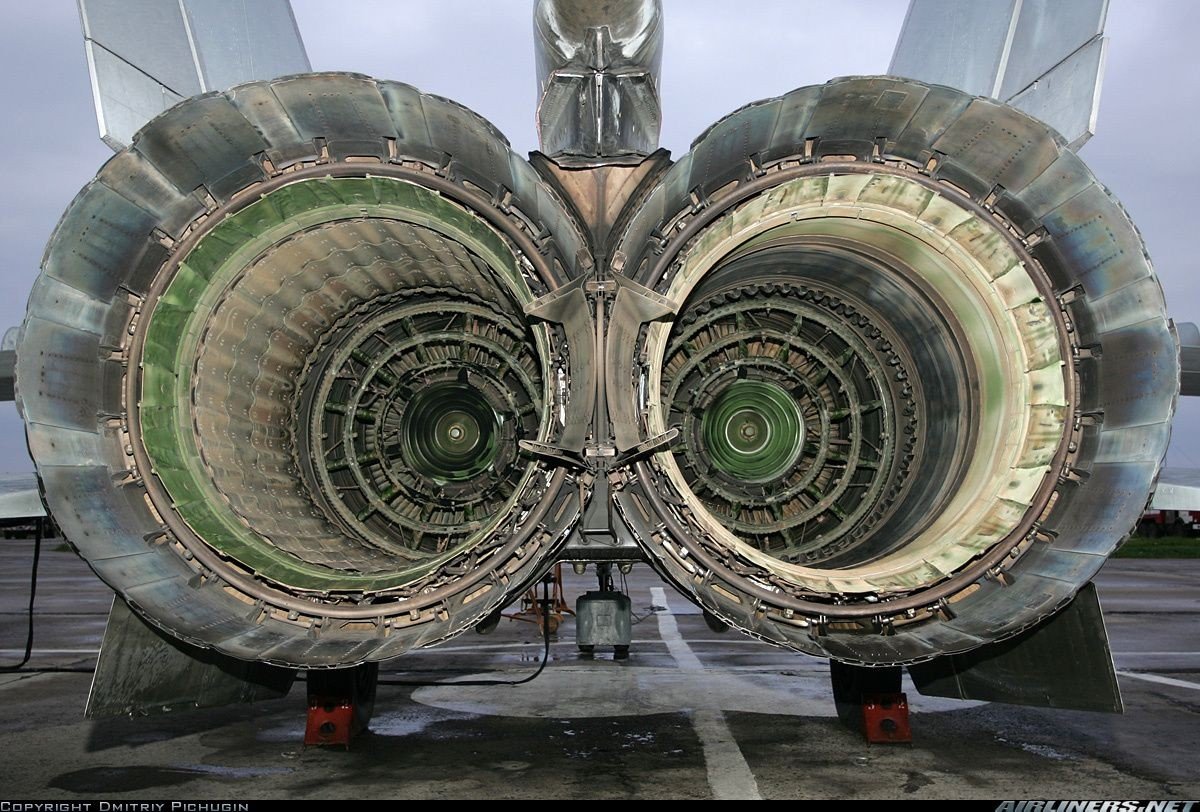
The Soviet Union did not have any fighter jet engine capable of moving this absolute monstrosity of a plane at the time, so the new aircraft was equipped with two massive Tumansky R-15 turbojet engines, which were designed for cruise missiles and targeting UAV applications. These engines were extremely unreliable and had a lifespan of 150 hours, but were very cheap and could be replaced easily.
The aircraft was equipped with an upwards-looking radar system and carried 4 massive R-40R radar-guided missiles.
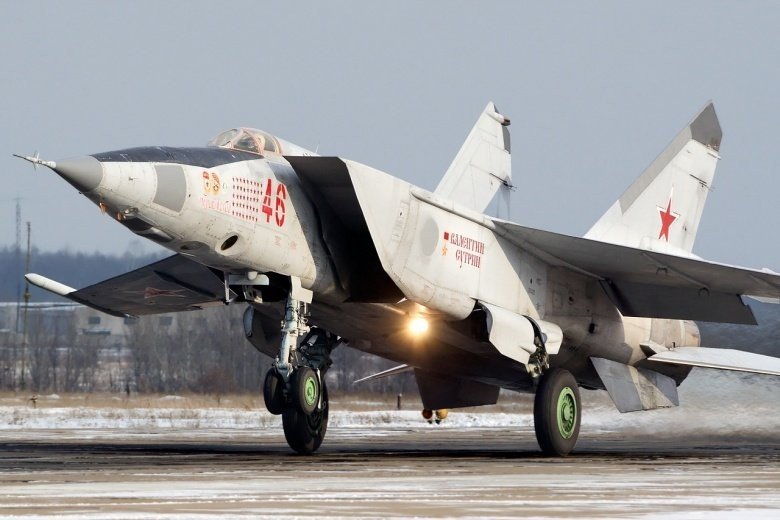
All in all, considering its original intentions, the project was a success. The Soviet Union had managed to develop a fast flying (reaching Mach 2.83 in level flight, but able to go faster for short bursts of time), cheap, easily maintained interceptor, which flew for the first time in 1964. Thus, the Mikoyan-Gurevich MiG-25 was born.
The first time the world saw this aircraft was in 1967, at the airshow celebrating the 50th anniversary of the October Revolution. A formation of four MiG-25 prototypes suddenly appeared, to the absolute horror of western analysts.
The MiG-25 seemed terrifying:
Massive wingspan, suggesting a highly maneuverable and nimble aircraft and massive engines and air intakes, suggesting an incredible high speed and altitude performance. Furthermore, western radar and satellite surveillance systems detected the new planes flying at incredible speeds, confirming some of the West’s fears.
US media outlets and press went feral after seeing this. Dozens of papers detailing how the new MiG-25, dubbed “Foxbat” by NATO, was much better than anything the West ever had, speculating about a new titanium “super alloy” that they thought the Soviets had developed for the new fighter jet. The rumours had gone so far that United States Secretary of the Air Force, Robert Seamans, publicly admitted that the soviets had created a machine that far surpassed anything in NATO’s arsenal.
All of this made the US heavily accelerate the development of what would later become the F-15 Eagle, often considered the most successful fighter jet in history.
The illusion, however, was unveiled in 1976, when suddenly a MiG-25 dramatically crash-landed at an airport in Hokkaido, northern Japan. The pilot was Lieutenant Viktor Ivanovich Belenko, who feigned engine failure during a routine flight and was defected from the Soviet Union.

His aircraft was immediately torn apart by US engineers, examined closely, and had all of its secrets revealed to western intelligence.
They found an aircraft that was not suitable for dogfighting or air-to-ground, extremely heavy, not maneuverable, and with a radar system without look-down capabilities. The same American media outlets that were terrified by the interceptor, now mocked it openly. Additionally, the US changed its military doctrine, the B-70 never materialized, and the threat of intercontinental supersonic bombers faded away, in favour of long-range ballistic missiles.
All in all, 1186 MiG-25s were produced throughout the entirety of the Cold War, most of which were sold to smaller eastern block republics around the world as the MiG-25 started growing old for the evolving technological battlefield of the 80s.

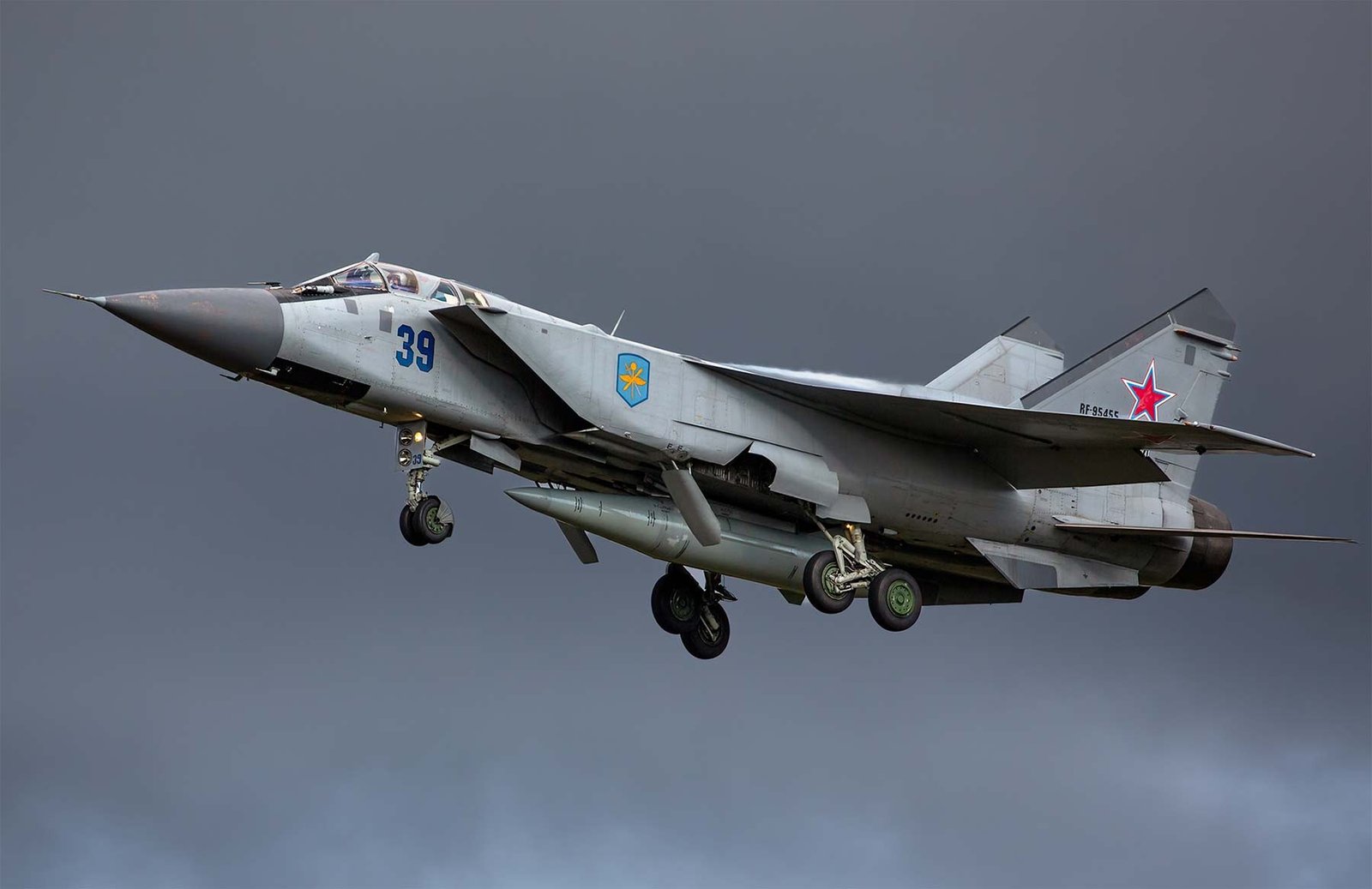
Eventually the plane was modernized, allowing it to take more roles such as air-to-ground and air superiority. It was then replaced by the MiG-31, basically a complete overhaul of the old Foxbat with a similar structural layout and design philosophy, but with a bigger focus on flexibility.
The Foxbat was a symbol of the arms and intelligence race during the Cold War and is, to this day, the fastest interceptor to ever take to the skies.