

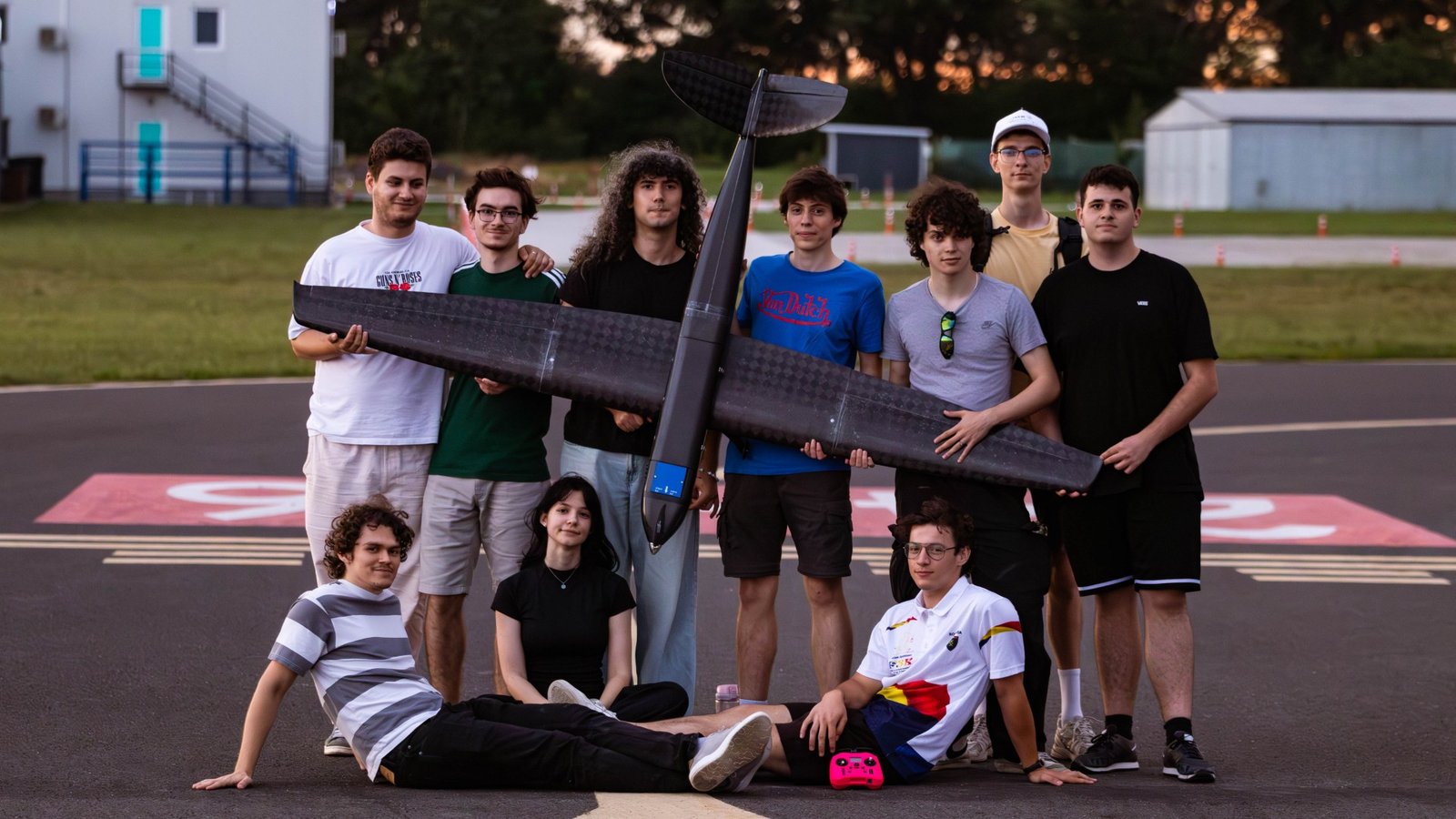

NOVA at Air Cargo Challenge 2026
Hello EUROAVIAns,
This July, we are celebrating one of the proudest moments in recent EUROAVIA București history: Team NOVA’s outstanding performance at Air Cargo Challenge 2026 (ACC26), held in Stuttgart, Germany, from June 30th to July 3rd.
For those who do not yet know them, NOVA is a team of 20 passionate students from Universitatea POLITEHNICA din București, all members of EUROAVIA București, working across two divisions: fixed-wing aircraft and multicopter drones. The team operates as part of the CAMPUS research institute, within the SAS Laboratory for unmanned systems, and gives its members the chance to design, build, and test real UAVs and UAS for international competition. The team is led by Octavian Balog, who heads the Fixed Wing Division, and Ioan Corjuc, who leads the Drone Division.
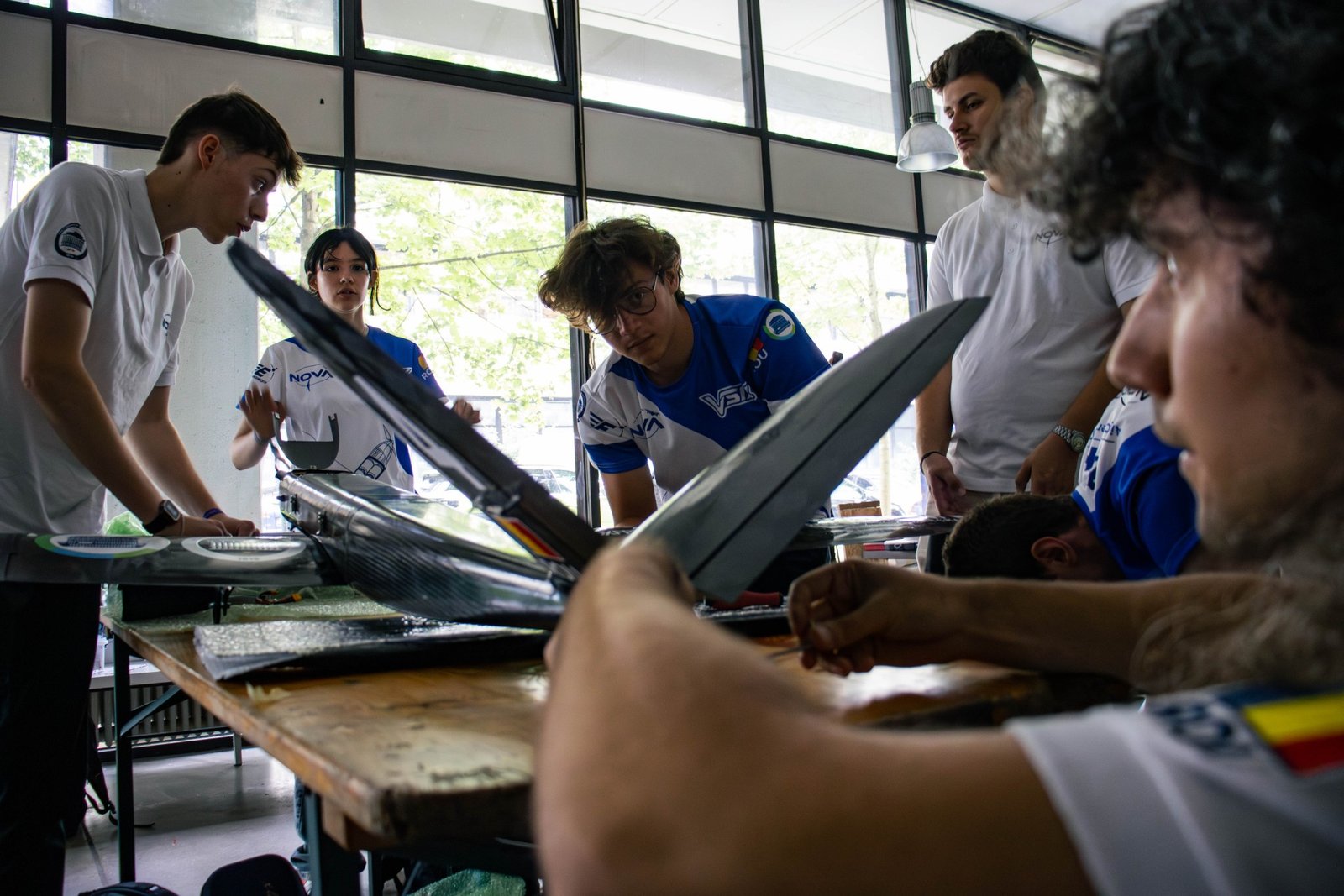
Air Cargo Challenge is the largest aeromodelling competition in Europe, held biennially and steeped in a long industry history. Following tradition, the winning team from the 2024 edition took on hosting duties this year in Stuttgart. This year’s mission tested fully electric UAVs in a long-distance cargo transport challenge, requiring teams to carry standard 330mL cans weighing 350g each, all while contending with strict power constraints and the need to fit the aircraft into a mandated transport case. ACC26 marked the third appearance of a NOVA fixed-wing UAV at this competition, a milestone for both the team and Romania’s growing presence in the field.
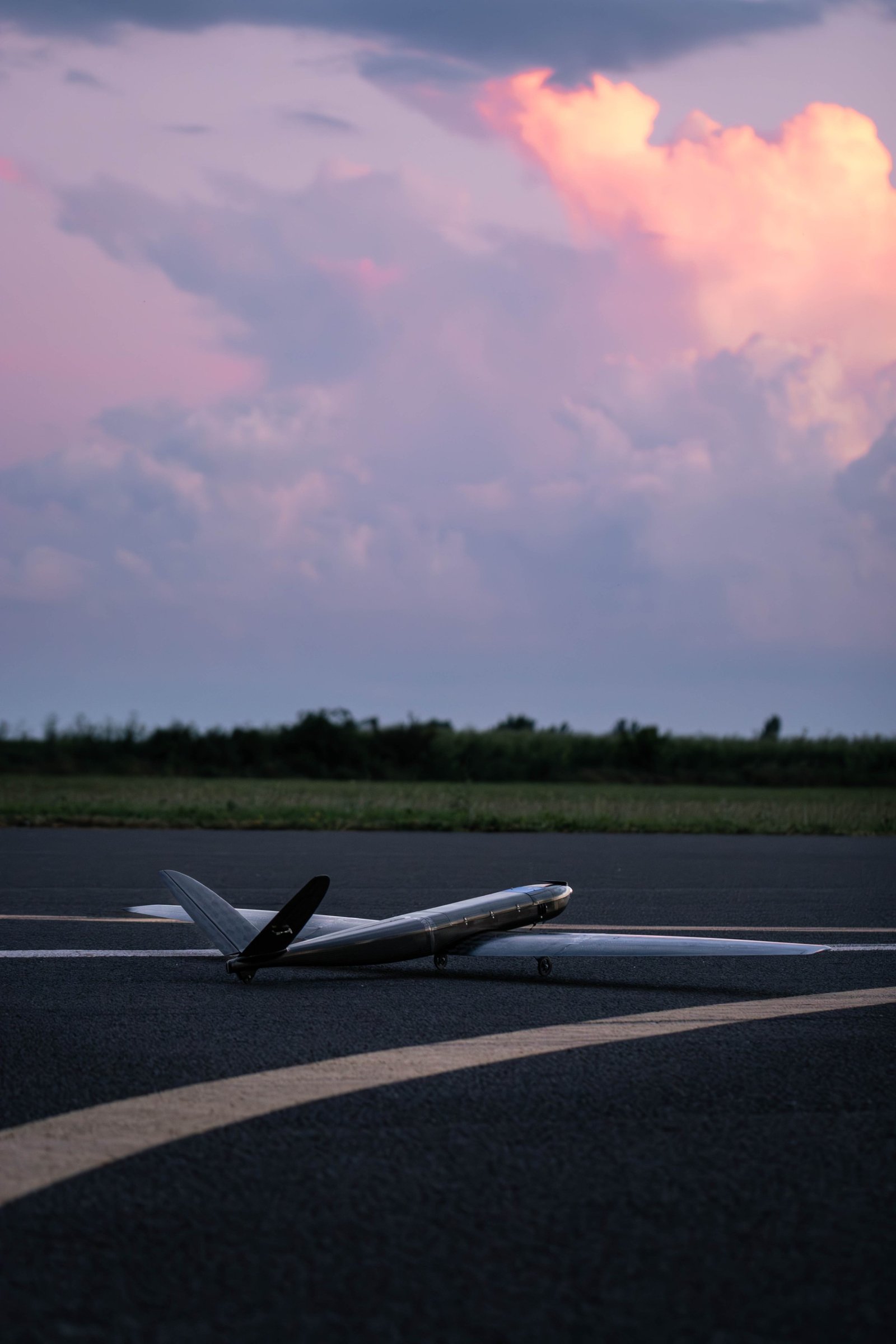
The aircraft developed for this edition, named V-SIX, is a robust RC airplane engineered with a design trade-off favoring top speed, and its polished finish and refined aerodynamic shape speak to the growing technical maturity of the team. It has a wingspan of 2.5 meters and a length of 1.5 meters, with a wing surface area of 0.6 square meters. Its empty mass is 2.63 kilograms, and with a full payload of 2.1 kilograms, corresponding to six cans, it reaches an MTOW of 4.73 kilograms. V-SIX cruises at 25 meters per second, or 90 kilometers per hour, and can reach a top speed of 36 meters per second, or roughly 130 kilometers per hour, while needing only 30 to 35 meters for takeoff. It is a single-motor, low-wing aircraft with a semi-elliptical wing and a V-tail configuration, purpose-built to carry a full payload while maximizing speed on course.
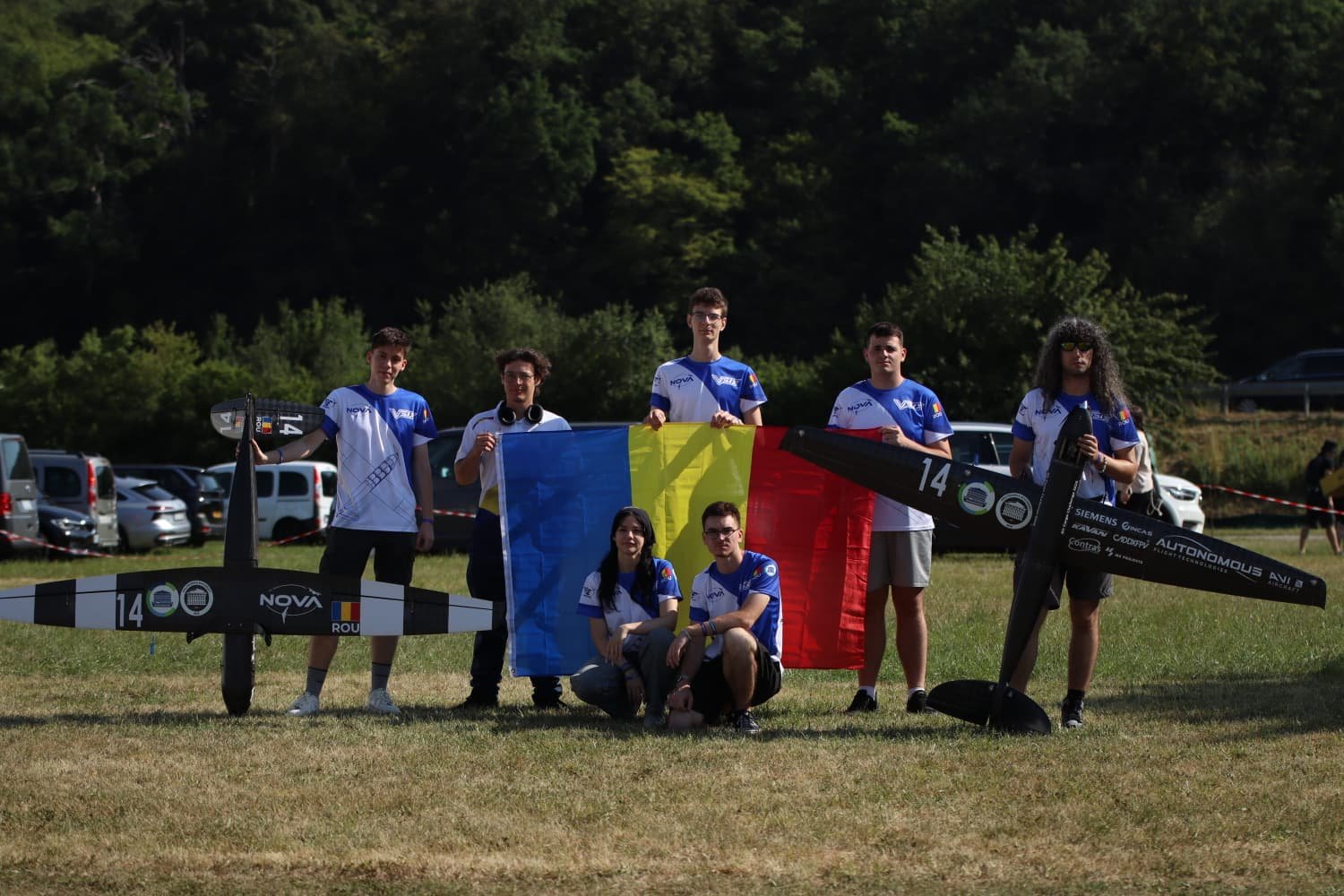
After all the design work, testing, and preparation, Team NOVA finished the competition ranked 9th out of 34 teams, a top-10 result that places them shoulder to shoulder with legacy teams boasting far greater resources and years of accumulated know-how. Behind that result was serious groundwork: the team manufactured two competition aircraft and ran an extensive flight-testing campaign, gathering telemetry data to validate their design choices and refine their race strategy ahead of the competition in Stuttgart.
Huge congratulations go out to the entire ACC26 roster: Octavian Balog as Team Leader, Bogdan Zeriu as Design Lead, Antonia Onisoru as Aerodynamics Lead, Dan Ionescu as Structures Lead, Lucian Apostolescu as Pilot, and team members Mihai Voicu, Sebastian Ciocan, Tudor Gheorghiță, Cătălin Goia, Andreea Marin, Alex Luca, and Octavian Matei.
NOVA’s recurring presence at ACC is more than just a competition result; it’s a marker of Romania’s return to the international UAV stage. Edition after edition, the team is closing the gap with established European teams, proving that ambition, hands-on engineering, and strong teamwork can go a long way, even against far better-resourced competitors.
Congratulations, NOVA, we cannot wait to see what you build next!
Until next time,
EUROAVIA București