

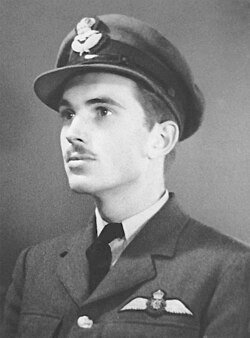

Among the many characters remembered in aviation for heroic deeds or inventions, some are also worthy for quieter reasons. Their actions may seem irrelevant at first glance, yet they can still carry meaning.
This young poet-aviator, with his raw enthusiasm and desire for beauty and purpose, is as worthy an example as the explorers and engineers who approached flight as a practical challenge.
The flying poet
John Gillespie Magee was born in Shanghai, China, in 1922 to an American father and a British mother who were both Anglican missionaries. He spent his youth in England, becoming fascinated by poetry during his studies and developing a desire to become a poet himself.
In 1939, the outbreak of WWII found him in the US and prevented him from coming back to England. During this period, the growing desire to contribute to the British war effort convinced him to leave behind the safe and peaceful life in America. He decided to join the Royal Canadian Air Force (RCAF) in October 1940, when the Battle of Britain was coming to an end.
The Birth of a Masterpiece
After flight training, he was deployed in Britain in the summer of 1941. There he would receive specific Spitfire training until September. During these few months, he wrote his poem High Flight, which would become one of the most famous pieces of literature regarding aviation. It was later cited by Apollo 11 astronaut Michael Collins in his memoir and eventually even chosen as the official poem of the RCAF.
High Flight
Oh! I have slipped the surly bonds of Earth
And danced the skies on laughter-silvered wings.
Sunward I’ve climbed, and joined the tumbling mirth
Of sun-split clouds—and done a hundred things
You have not dreamed of—wheeled and soared and swung.
High in the sunlit silence, hov’ring there
I’ve chased the shouting winds along and flung
My eager craft through footless halls of air.
Up, up the long delirious burning blue
I’ve topped the wind-swept heights with easy grace
Where never lark, or even eagle flew
And, while with silent, lifting mind I’ve trod
The high untrespassed sanctity of space,
Put out my hand and touched the face of God.
RCAF Service
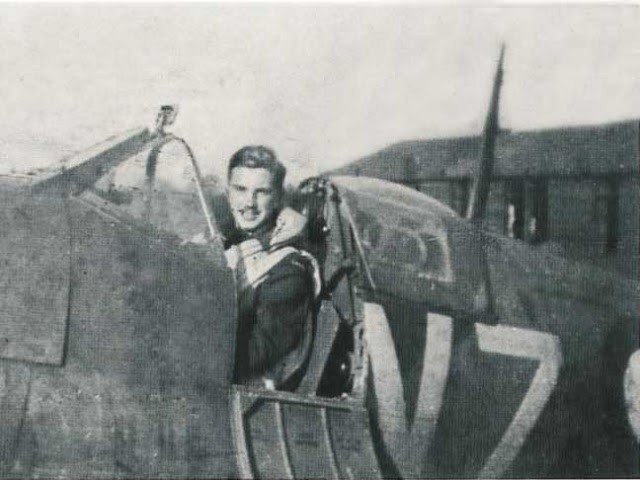
Magee began service at RAF Digby, near Lincoln, England, at the end of September 1941. During autumn, he took part in several patrolling missions on his AD291 Spitfire Mk. V, but only met the Luftwaffe once. On 8 November 1941, he flew as a fighter escort on a bombing raid over Lille, France. Even though his wing was attacked, he ended up being the only survivor of his section.
On 11 December 1941, he collided during a training flight with an Airspeed Oxford flying beneath him, forcing him to bail out of the aircraft. Because the altitude was too low, the parachute failed to deploy. He was only 19 years old.